The D2C Playbook Rewrites Itself in 2026: How India’s Direct-to-Consumer Brands Are Pivoting From Online-First to Omnichannel Dominance

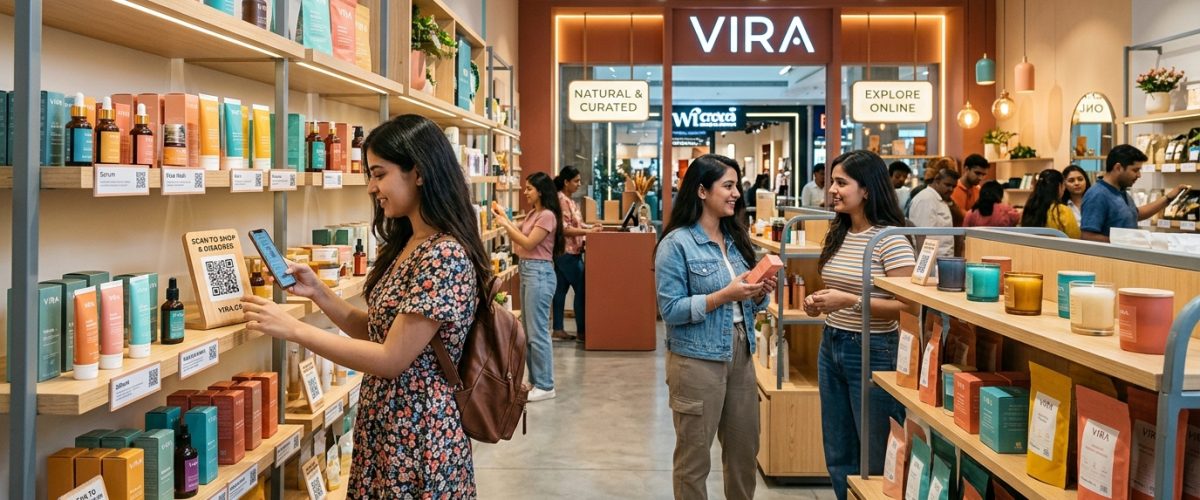
The narrative around India’s direct-to-consumer revolution is undergoing its most fundamental shift since the D2C boom of 2020-21. The brands that once defined themselves by their digital-first DNA—building audiences through Instagram, selling through their own websites, and scaling through marketplace partnerships—are now rewriting their playbooks. The new mantra for 2026 is omnichannel dominance: controlling the full spectrum of distribution from online storefronts and quick commerce platforms to physical retail, modern trade, and even traditional kirana networks.
The Logic Has Flipped: Physical First Is the New Disruptive
For years, the Indian D2C story followed a predictable arc: launch online, build a social media following, achieve product-market fit through digital channels, then gradually expand into offline retail. Brands like Nykaa, Mamaearth, Minimalist, boAt, and Bombay Shaving Company built their early playbooks this way.
But as PwC’s Ravi Kapoor, who leads the retail and consumer sector practice, observes, this logic has fundamentally flipped. A new generation of brands—Koskii, Kama Ayurveda, Wonderchef, Wagh Bakri, Cello, Neeru’s, and Lahori Zeera—has crossed the ₹100 crore revenue threshold by building strong physical retail presences first and then leveraging e-commerce for scale and geographic expansion.
This reverse-D2C model challenges the assumption that digital-first is inherently superior. For many product categories—particularly in food and beverages, personal care, and home goods—the tactile experience of physical retail drives trial and builds trust more effectively than digital advertising. The physical store serves as a brand-building engine, while digital channels provide convenience-driven repeat purchases.
Quick Commerce: The Double-Edged Sword Reshaping D2C
Perhaps no development has disrupted D2C strategy more profoundly than the rise of quick commerce. Platforms like Blinkit, Zepto, and Swiggy Instamart—which promise delivery in 10-30 minutes—have added an entirely new dimension to how D2C brands think about distribution, pricing, and inventory management.
On one hand, quick commerce offers D2C brands unparalleled access to urban consumers with high purchase intent. The convenience premium means that consumers are less price-sensitive, creating opportunities for premium positioning. Several D2C brands report that quick commerce now accounts for 15-25 per cent of their online sales, with higher average order values than traditional e-commerce platforms.
On the other hand, quick commerce introduces complex challenges. The platforms’ limited shelf space means only winning SKUs get visibility, forcing brands to consolidate their product lines around bestsellers rather than offering their full range. The algorithmic promotion of deals and discounts can erode brand equity if not managed carefully. And the logistics requirements—dark store placement, micro-inventory management, freshness guarantees—add operational complexity that favours larger, better-capitalised players.
The quick commerce revolution represents a broader shift in India’s consumer economy, connecting D2C brands to the same digital infrastructure transformation that is powering UPI’s 20 billion monthly transactions and India’s digital payments landscape.
Owned Channels Take Priority: The Data and Margin Imperative
A defining strategic shift for D2C brands in 2026 is the renewed emphasis on owned channels—brand websites, mobile apps, and flagship stores—as the primary customer relationship platforms. While marketplaces and quick commerce drive discovery and convenience, they provide limited access to customer data and typically command 15-30 per cent commissions that compress margins.
Leading D2C brands are investing heavily in building direct customer relationships through loyalty programmes, subscription models, and personalised communication. Brands like Mamaearth, mCaffeine, and The Whole Truth Foods have developed sophisticated CRM systems that segment customers by purchase behaviour, enable targeted promotions, and create repeat purchase loops that reduce customer acquisition costs over time.
The emphasis on owned channels also reflects investor expectations. VCs funding D2C brands are increasingly focused on metrics such as owned-channel revenue share, customer lifetime value (CLV), customer acquisition cost (CAC) ratios, and cohort retention rates. Brands that can demonstrate strong performance on these metrics command premium valuations, while those overly dependent on marketplace traffic face valuation pressure.
Category Winners: Who Is Getting the D2C Model Right
In beauty and personal care, brands like Minimalist, Plum, and Dot & Key have achieved scale by combining ingredient-transparency messaging with sophisticated digital marketing and targeted retail expansion. The category benefits from high repeat purchase rates, strong emotional connection with consumers, and the ability to communicate product differentiation through content marketing.
In food and beverages, Lahori Zeera, Sleepy Owl, and Slurrp Farm have demonstrated that D2C can work in a category traditionally dominated by FMCG giants. The key has been identifying specific consumer needs—regional flavour preferences, specialty coffee culture, healthy children’s nutrition—that mass-market brands have underserved.
Fashion and apparel D2C brands face the most challenging unit economics, given high return rates and seasonal demand fluctuations. However, brands that have focused on specific niches—ethnic wear (Libas, FabIndia), activewear (Clovia, Cultsport), or size-inclusive fashion—have built loyal customer bases willing to pay premium prices.
The Funding Landscape: Selective Capital for Proven Models
Venture capital for D2C brands has become markedly more selective in 2026. Investors who deployed capital aggressively during the 2021 D2C boom—many of whom saw their portfolio companies struggle with customer acquisition costs, inventory management, and margin pressures—are now applying stricter evaluation criteria.
The new investment thesis centres on “profitable growth”—brands that can demonstrate gross margins above 50 per cent, positive contribution margins at the unit level, and a clear pathway to operating profitability within 12-18 months of funding. Companies that meet these thresholds are finding willing investors, while those relying on aggressive discounting to drive growth are struggling to raise capital. This mirrors the broader funding discipline in India’s startup ecosystem, as detailed in our analysis of how Indian startups raised $228 million in March 2026’s third week.
The Incumbents Fight Back: FMCG Giants Go D2C
The competitive landscape for D2C brands has intensified with established FMCG companies launching their own direct-to-consumer initiatives. Hindustan Unilever, ITC, Marico, and Dabur have all invested in D2C capabilities, leveraging their manufacturing scale, distribution networks, and brand equity to compete with digital-native challengers.
HUL’s acquisition strategy—acquiring brands like Minimalist, Dermalogica (for India operations), and other digital-first brands—represents a particularly significant competitive threat. These acquisitions combine the acquired brand’s digital expertise and consumer insight with HUL’s manufacturing efficiency, regulatory expertise, and distribution reach, creating formidable competitors.
Looking Ahead: The D2C Consolidation Phase
The Indian D2C sector is entering a consolidation phase where the winners and losers will become increasingly apparent. Brands that have built genuine consumer loyalty, achieved supply chain efficiency, and maintained financial discipline will survive and thrive. Those that relied on venture-subsidised growth without building sustainable unit economics face an existential reckoning.
The sector’s evolution mirrors broader trends in India’s consumer economy, where premiumisation, digital commerce, and growing aspirational spending are creating opportunities for brands that can deliver quality, convenience, and emotional connection. The D2C brands that master this trifecta in 2026 will not just survive the consolidation—they will define the next chapter of Indian consumer business.

- Kiran Mani Joins OpenAI to Lead Asia-Pacific Growth After JioStar Exit - March 25, 2026
- Euler Motors Raises Rs 437 Crore as India’s Commercial EV Startup Ecosystem Accelerates in 2026 - March 25, 2026
- Startup India at 10: A Decade of Disruption and the Founders Who Shaped the Ecosystem - March 24, 2026