ISRO’s Ambitious 2026 Mission Calendar: From EOS-N1 to Gaganyaan, India’s Space Programme Enters a New Era

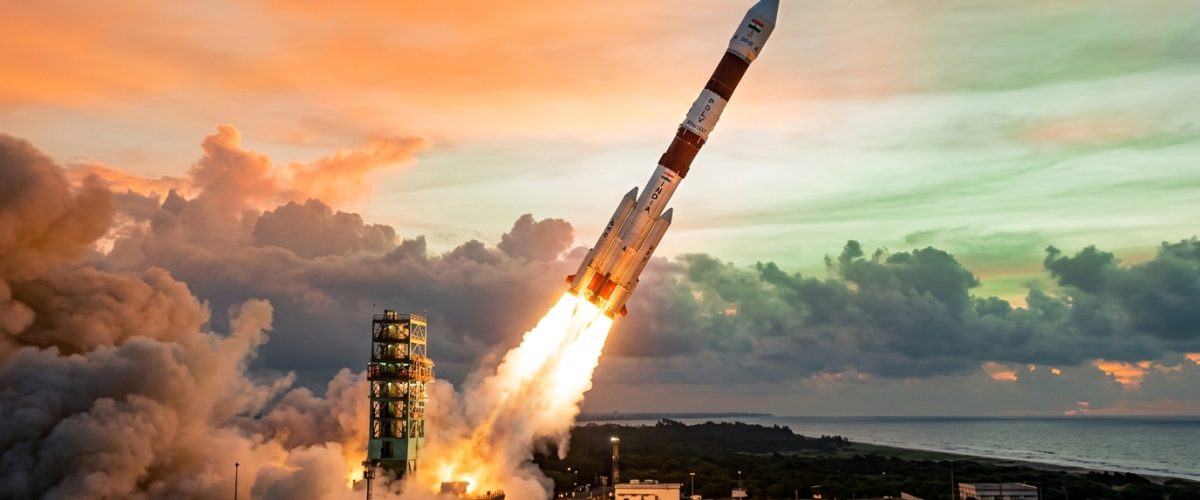
The Indian Space Research Organisation has entered 2026 with arguably its most ambitious and strategically consequential mission calendar in its six-decade history. With the successful launch of EOS-N1 aboard PSLV-C62 in January already completed, ISRO’s 2026 agenda encompasses a breathtaking array of missions spanning Earth observation, navigation, communication, international collaboration, and—most significantly—the progressive realisation of India’s human spaceflight programme through the Gaganyaan project. This year marks a decisive pivot from ISRO’s legacy of episodic mission successes to a sustained, high-cadence operational tempo that positions India as a serious contender in the new global space race.
EOS-N1: January’s Opening Statement
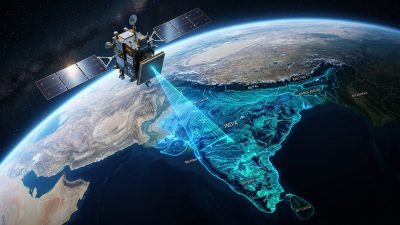
The year opened with the launch of Earth Observation Satellite N1 (EOS-N1) on January 12, 2026, atop ISRO’s workhorse Polar Satellite Launch Vehicle in its PSLV-C62 configuration. EOS-N1, designed to enhance India’s remote sensing capabilities, carries advanced multispectral and hyperspectral imaging payloads that significantly improve the spatial and temporal resolution of India’s Earth observation data constellation.
The satellite’s primary applications span agriculture monitoring, urban planning, disaster management, and environmental surveillance—domains of critical importance for a nation managing the developmental aspirations of 1.4 billion citizens. EOS-N1’s data products are expected to directly support India’s agricultural productivity programmes, providing near-real-time crop health assessments that can inform irrigation scheduling and fertiliser application at unprecedented granularity.
What makes EOS-N1 particularly significant is its role within ISRO’s broader strategy of building integrated satellite constellations rather than deploying standalone missions. The satellite is designed to operate in tandem with existing EOS-series assets, creating a multi-sensor observation network that can revisit any point on the Indian subcontinent with remarkable frequency.
NISAR: The Indo-American Scientific Partnership Takes Flight
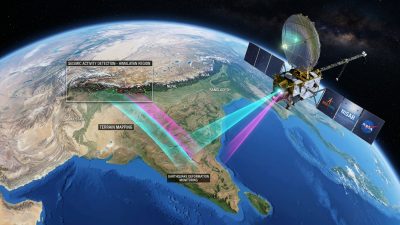
Perhaps the most technically ambitious mission on ISRO’s 2026 calendar is the NASA-ISRO Synthetic Aperture Radar (NISAR) satellite, scheduled for launch aboard GSLV-F16 in July 2026. NISAR represents one of the most significant international space collaborations of the decade—a joint venture between NASA’s Jet Propulsion Laboratory and ISRO that has been over a decade in development.
The satellite will carry dual-frequency synthetic aperture radar systems—an L-band radar provided by NASA and an S-band radar built by ISRO—enabling it to measure changes in the Earth’s surface with millimetre-level precision. NISAR’s scientific objectives are transformative: the mission will systematically map nearly all of the Earth’s land and ice surfaces every twelve days, generating an unprecedented dataset for understanding ecosystem disturbances, ice sheet dynamics, and natural hazard processes including earthquakes, tsunamis, and volcanic activity.
For India, NISAR carries particular strategic significance. The S-band radar data will provide crucial inputs for monitoring the Himalayan glacial systems that feed India’s major river networks—systems whose behaviour under climate change directly affects water security for hundreds of millions of people. The mission also demonstrates India’s capacity to participate in frontier-class scientific endeavours as an equal technology partner rather than merely a launch service provider.
Gaganyaan: India’s Human Spaceflight Horizon
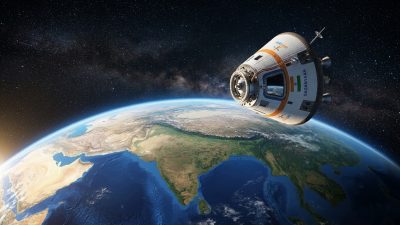
The centrepiece of ISRO’s 2026 programme is unquestionably the Gaganyaan human spaceflight mission, which is progressing through its critical uncrewed test flight phase. ISRO leadership has mapped out a series of demonstration missions leading up to India’s first crewed orbital flight, with 2026 representing a pivotal year in this trajectory. Hardware for the uncrewed orbital flight is already at ISRO’s Sriharikota launch facility, and integration activities are well underway.
The Gaganyaan programme encompasses far more than a single mission. It requires the development of an entirely new ecosystem of human-rated launch vehicles, life support systems, crew escape mechanisms, recovery protocols, and mission control capabilities. ISRO has been methodically validating each of these subsystems through a phased testing programme that includes crew escape demonstrations, parachute deployment tests, and integrated systems validation.
The strategic implications of Gaganyaan extend well beyond national prestige. A successful human spaceflight capability would position India alongside the United States, Russia, and China in an exclusive club of nations capable of independently sending humans to orbit. This capability is increasingly viewed as a gateway technology that enables subsequent programmes in space station development, lunar exploration, and deep space science. As India’s regulatory landscape evolves across sectors—from India’s AI Summit 2026 and the structural gaps exposed to space governance—the intersection of technology policy and space ambition becomes increasingly complex.
START 2026: Building India’s Space Workforce
Beyond hardware and missions, ISRO has recognised the critical importance of human capital development for sustaining India’s space ambitions. The Space Science and Technology Awareness Training (START 2026) programme, inaugurated on March 11, 2026, represents ISRO’s flagship initiative for nurturing the next generation of space scientists, engineers, and technologists.
START 2026 targets undergraduate and postgraduate students across India’s science and engineering institutions, offering intensive training modules covering satellite design, launch vehicle engineering, space applications, and mission operations. The programme is designed to address a growing workforce gap—as ISRO’s mission tempo increases and the private space sector expands, the demand for trained space professionals is outstripping the supply from India’s existing educational pipeline.
The programme also serves a broader national objective of democratising space science education. By reaching students in institutions beyond the traditional elite engineering colleges, ISRO aims to tap into talent pools across India’s diverse geographical and socioeconomic landscape—a strategy that could yield both innovation dividends and social inclusion benefits.
Private Sector Integration and Commercial Launches
ISRO’s 2026 calendar is also notable for its increasing integration with India’s burgeoning private space sector. The establishment of IN-SPACe (Indian National Space Promotion and Authorisation Centre) as a regulatory and promotional body has catalysed private investment in space technology, with startups such as Skyroot Aerospace, Agnikul Cosmos, and Pixxel advancing their own launch and satellite programmes in parallel with ISRO’s activities.
This public-private ecosystem is beginning to mature in meaningful ways. ISRO’s PSLV, traditionally operated as a government asset, is increasingly available for commercial rideshare missions, while private launch vehicles are approaching operational readiness. The resulting competitive dynamics are driving down launch costs, improving service reliability, and expanding the range of missions that India’s space infrastructure can support. Much like India’s telecom sector, which has seen transformative competition drive prices down and access up, the space sector is poised for a similar expansion in capability and affordability.
Strategic Context: India in the Global Space Race
ISRO’s 2026 mission calendar must be understood within the context of intensifying global space competition. China’s space programme continues to expand aggressively, with its Tiangong space station fully operational and lunar sample return missions progressing. NASA is pursuing its Artemis programme for crewed lunar return, while private operators led by SpaceX are pushing the boundaries of reusable launch technology and mega-constellation deployment.
India’s comparative advantage lies in its cost efficiency, reliability record, and strategic autonomy. ISRO has consistently delivered mission success at a fraction of the cost of comparable international programmes—a capability that makes India an attractive partner for international scientific collaborations and commercial launch services. The 2026 mission calendar, with its blend of national capability demonstration and international partnership, exemplifies this strategic positioning.
As the year unfolds, ISRO’s ability to execute this demanding schedule on time and within budget will be closely watched—not just by the Indian scientific community, but by an international space ecosystem that increasingly views India as a critical node in humanity’s expanding presence beyond Earth. The coming months will determine whether 2026 becomes the year that India’s space programme transitions from impressive achievement to sustained operational excellence.

- ISRO and AIIMS Sign Landmark MoU for Space Medicine Research Ahead of Gaganyaan Mission - March 25, 2026
- Rising Temperatures Reshape Wildlife Behaviour Across India as Scientists Sound Climate Alarm - March 25, 2026
- UPI Crosses 800 Million Daily Transactions as CRED Gets Payment Aggregator Licence From RBI - March 25, 2026