Lakshadweep Tourism Boom 2026: New Resorts, Flight Routes, and Coral Conservation Efforts

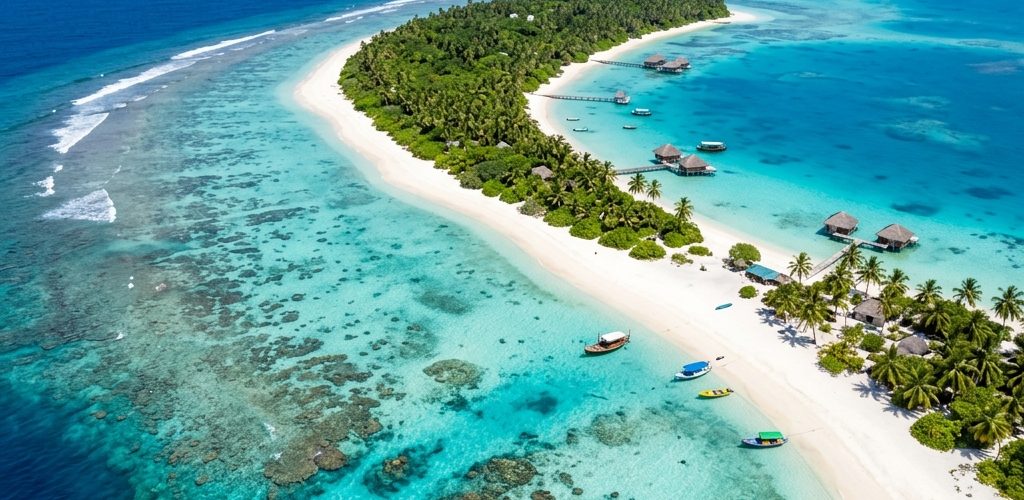
Lakshadweep, India’s smallest Union Territory — a constellation of 36 coral islands scattered across 32 square kilometres of the Arabian Sea — has catapulted from relative obscurity to the forefront of India’s tourism conversation in 2026. Following high-profile advocacy, a surge of social media interest, and strategic government investment, the archipelago is experiencing a tourism boom that is simultaneously exciting and delicate, bringing world-class resort development, new flight connectivity, and urgent coral conservation efforts into sharp focus.
Taj Hotels Anchors the Luxury Push
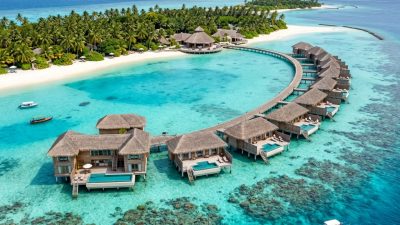
The most significant development in Lakshadweep’s tourism transformation is the announcement by the Indian Hotels Company Limited — the Tata Group hospitality arm that operates the Taj brand — of two flagship resorts on Suheli and Kadmat islands, scheduled to commence operations in 2026. Taj Suheli will feature 110 rooms, including 60 beach villas and 50 water villas — India’s first over-water accommodation offering in the style of the Maldives — surrounded by a ring-shaped coral reef and pristine lagoon. Taj Kadmat, on the marine-protected Cardamom Island, will offer 110 rooms with 75 beach villas and 35 water villas, positioned near seagrass beds and marine turtle nesting grounds.
Both properties are being designed with a sustainability-first approach, incorporating solar power generation, desalination plants, bio-waste treatment facilities, and construction materials sourced with minimal ecological disruption. The resorts aim to position Lakshadweep as a credible alternative to the Maldives for Indian luxury travellers — a proposition made compelling by the archipelago’s comparable natural beauty, significantly shorter travel distances, and the absence of visa requirements.
New Flight Routes Transform Accessibility
Historically, reaching Lakshadweep required a 14-18 hour ship voyage from Kochi — a journey that, while scenic, limited the islands’ appeal to all but the most committed travellers. In 2026, the connectivity equation has changed dramatically. The Agatti Aerodrome, the archipelago’s sole airport, has been upgraded to handle larger aircraft, and IndiGo, Air India Express, and Alliance Air now operate daily flights from Kochi, with IndiGo adding a thrice-weekly direct service from Bengaluru in February 2026.
The Lakshadweep Administration has also commissioned a new high-speed catamaran service connecting Kochi to Kavaratti and Agatti, reducing the sea journey to approximately five hours. These connectivity improvements have reduced the travel friction that previously deterred casual tourists, opening Lakshadweep to a broader demographic including families, honeymooners, and short-break travellers.
Coral Conservation: The Critical Balance
Lakshadweep’s tourism potential is inseparable from its ecological fragility. The archipelago hosts some of the most biodiverse coral reef systems in the Indian Ocean, supporting over 100 species of reef-building corals, 600 species of fish, and critical populations of marine turtles, dolphins, and reef sharks. The 2016 and 2020 mass coral bleaching events — driven by rising sea temperatures — devastated significant portions of the reef system, underscoring the existential threat that climate change poses to both the ecosystem and the tourism economy it supports.
In response, the Lakshadweep Administration, in partnership with the National Centre for Coastal Research and the Wildlife Institute of India, has launched an ambitious Coral Restoration Programme in 2026. The programme deploys coral nurseries — underwater structures where coral fragments are cultivated before being transplanted to degraded reef areas — across ten sites in Kavaratti, Agatti, and Bangaram. Early results are encouraging, with survival rates of transplanted corals exceeding 70 per cent in monitored nurseries.
The programme also incorporates citizen science elements, training local fishermen and dive instructors to monitor reef health and report bleaching incidents in real time via a dedicated mobile application. This community-driven approach ensures that conservation efforts benefit from local knowledge while creating alternative livelihoods for islanders who might otherwise depend solely on fishing. The integration of technology and community engagement mirrors broader national patterns, including India’s growing emphasis on technology-driven solutions to complex challenges highlighted at recent policy summits.
Responsible Tourism Regulations
Recognising the risks of unregulated tourism growth, the Lakshadweep Administration has implemented a comprehensive Responsible Tourism Framework for 2026. Key provisions include a daily visitor cap for each inhabited island, mandatory environmental orientation briefings for all tourists upon arrival, strict regulations on snorkelling and diving activities to prevent coral damage, a ban on single-use plastics across the archipelago, and designated marine sanctuary zones where all human activity is prohibited.
Tour operators seeking to conduct activities in Lakshadweep must obtain certification from the administration, demonstrating compliance with environmental standards including the use of reef-safe sunscreen, mooring buoys rather than anchors in coral areas, and adherence to maximum group sizes during marine excursions. Penalties for violations are substantial and enforced rigorously, reflecting a determination to avoid the environmental mistakes made in other tropical island destinations.
What the Islands Offer: Beyond the Beach
While Lakshadweep’s pristine beaches and crystal-clear lagoons are the primary draw, the islands offer experiences that extend beyond conventional beach tourism. Kavaratti, the administrative capital, features a marine aquarium and water sports centre where visitors can try kayaking, glass-bottom boat rides, and certified scuba diving courses. Bangaram, an uninhabited island currently operated as an exclusive resort destination, offers arguably the finest snorkelling in India, with visibility extending to 30 metres in calm conditions.
Minicoy, the southernmost island, is culturally distinct from the rest of Lakshadweep, with deep Maldivian influences visible in its language, cuisine, and traditional tuna fishing practices. The island’s iconic lighthouse, built in 1885, offers panoramic views of the surrounding reef, and its traditional boat-building yards — where master craftsmen construct racing dhonis using techniques unchanged for centuries — provide a window into the archipelago’s maritime heritage.
Planning a Lakshadweep Visit in 2026
Travellers planning a Lakshadweep trip in 2026 should note that entry permits remain mandatory for all visitors and must be obtained through the Lakshadweep Administration’s online portal or through registered tour operators. The optimal visiting season is October through May, with March and April offering the best water clarity for diving and snorkelling. Accommodation options range from the upcoming Taj luxury resorts to government-operated beach cottages and homestays on inhabited islands.
Budget-conscious travellers can combine Lakshadweep with a broader Kerala itinerary, flying into Kochi and spending a few days exploring Kerala’s beautiful backwater regions before taking the catamaran or flight to the islands. For those exploring India’s wider beach destinations, South Goa’s increasingly sophisticated coastal tourism scene provides another excellent pairing option for a comprehensive Indian beach holiday.
A Fragile Paradise at a Crossroads
Lakshadweep’s tourism boom in 2026 presents both extraordinary opportunity and profound responsibility. The islands possess natural assets that rival any tropical destination on earth, yet their ecological fragility demands a tourism model fundamentally different from the high-volume approaches that have degraded coastal ecosystems elsewhere. If the administration’s conservation programmes succeed and the responsible tourism framework holds, Lakshadweep could become a global model for sustainable island tourism — a place where economic development and environmental preservation are not competing priorities but mutually reinforcing imperatives. For Indian travellers, the archipelago represents something even more compelling: a piece of paradise in their own territorial waters, finally within reach and worth every effort to protect.

- South India Travel 2026: Hampi, Alleppey and Coorg Top Domestic Search Charts This Spring - March 26, 2026
- India’s Social Media Habits Are Shifting: Why Short Video and AI Companions Are Replacing Traditional Feeds - March 26, 2026
- Northeast India Emerges as 2026’s Hottest Travel Destination as Jorhat-Majuli Searches Spike - March 25, 2026