Ladakh Opens New Trekking Corridors for 2026: Responsible Tourism Guidelines and Must-Visit Trails

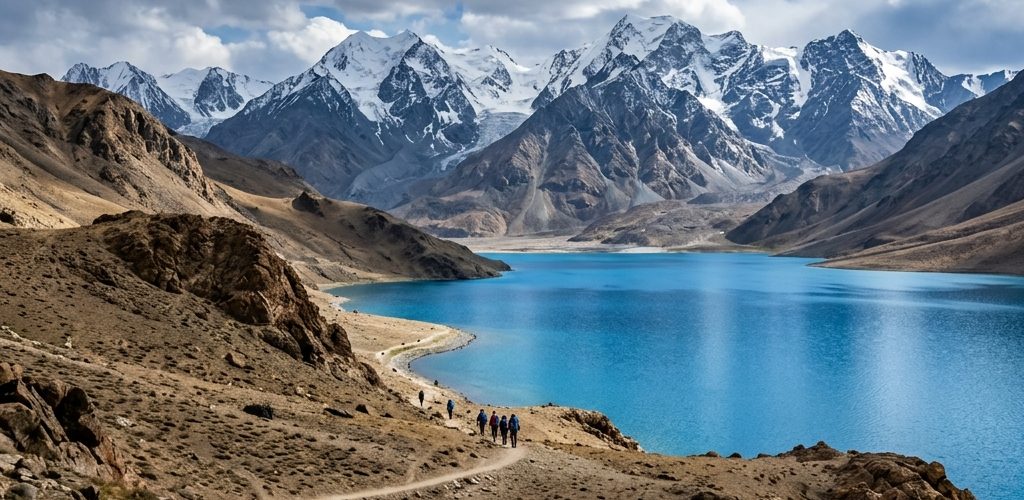
Ladakh, the high-altitude desert kingdom nestled between the Karakoram and Himalayan ranges, has long captivated adventurers with its dramatic landscapes, ancient monasteries, and the raw, elemental beauty of the Indian trans-Himalayan region. In 2026, the Union Territory is opening new trekking corridors that promise to expand the possibilities for mountain enthusiasts while implementing responsible tourism guidelines designed to protect the fragile ecology of one of the world’s most vulnerable environments.
Three New Corridors: Expanding Ladakh’s Trekking Map
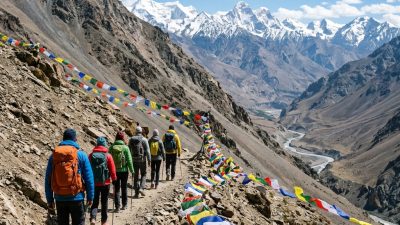
The Ladakh Administration, in collaboration with the Indian Mountaineering Foundation and the Adventure Tour Operators Association of India, has officially designated three new trekking corridors for the 2026 season. The first, the Zanskar Skyway Trail, is a 12-day route connecting Lamayuru in western Ladakh to Padum in Zanskar via a series of high passes — including the newly mapped Kanji La (5,260 metres) and the Singge La (5,010 metres) — that traverse some of the most remote and visually spectacular terrain in the Indian Himalayas. The trail passes through the ancient rock formations of the Moonland region, crosses the Zanskar River at multiple points, and offers opportunities to spot snow leopards, Himalayan blue sheep, and lammergeiers.
The second corridor, the Nubra Heritage Trek, is a gentler seven-day route through the Nubra Valley that connects the Diskit Monastery to the hot springs of Panamik, incorporating visits to abandoned Silk Road caravanserais, pre-Buddhist rock carvings, and the double-humped Bactrian camel herds of Hunder. The third, the Changthang Nomad Trail, is a cultural immersion route that follows the seasonal migration paths of the Changpa nomads across the eastern Changthang plateau, offering trekkers the rare opportunity to camp alongside nomadic families and witness their traditional pashmina goat herding practices.
Responsible Tourism: The New Operating Framework
The opening of new corridors comes with the implementation of Ladakh’s most comprehensive Responsible Tourism Framework to date. Developed through an eighteen-month consultation process involving the administration, environmental scientists, community leaders, and tourism operators, the framework establishes binding rules for all trekking activities in the Union Territory.
Key provisions include mandatory group size limits of twelve trekkers per party on high-altitude routes, a requirement to use only certified and locally trained guides and porters, a strict “leave no trace” policy with penalties of up to Rs 50,000 for littering, a ban on single-use plastics above 3,500 metres, and mandatory use of portable toilet systems on all routes lacking permanent facilities. Trekking operators must also contribute to a Ladakh Ecology Fund — a levy of Rs 500 per trekker per day — that finances trail maintenance, waste collection, and ecological monitoring programmes.
The Carbon Offset Imperative
Perhaps the most forward-thinking element of the framework is its carbon offset provision. Recognising that air travel to Ladakh generates significant greenhouse gas emissions — a flight from Delhi to Leh produces approximately 0.2 tonnes of CO2 per passenger — the administration has partnered with a verified carbon offset platform to offer trekkers the option of compensating for their travel emissions. Offset funds are directed towards renewable energy installations in remote Ladakhi villages, solar-powered water heating systems for monasteries, and the restoration of traditional water channels that have fallen into disuse due to glacial retreat.
While the offset programme is currently voluntary, the administration has signalled its intent to make it mandatory by 2027, positioning Ladakh as potentially the first Indian tourism destination to require carbon neutrality from all visitors. This progressive stance aligns with India’s broader sustainability commitments and has drawn praise from international conservation organisations.
Community Benefits: Tourism as Livelihood
The new trekking corridors have been designed with community benefit as a central objective. Each corridor passes through multiple villages, and the framework mandates that trekking groups patronise local homestays, purchase meals from village-run kitchens, and hire porters and pack animals from the communities along the route. This model ensures that tourism revenue is distributed broadly rather than concentrating in the hands of Leh-based operators.
In Zanskar, where winter isolation and limited agricultural productivity have driven steady outmigration of young people, the Zanskar Skyway Trail is expected to generate seasonal employment for over 300 local residents, including guides, cooks, porters, and homestay operators. The Ladakh Administration has partnered with the Indian Institute of Tourism and Travel Management to conduct training programmes in trekking guiding, wilderness first aid, and hospitality management, ensuring that community members can participate meaningfully in the tourism economy.
Must-Visit Trails for the 2026 Season
Beyond the three new corridors, Ladakh’s established trekking routes continue to offer world-class experiences. The Markha Valley Trek, a six-day circuit through pastoral valleys and over the 5,150-metre Kongmaru La, remains the most popular introduction to Ladakhi trekking and is ideal for fit beginners. The Stok Kangri summit attempt (6,153 metres) attracts mountaineers seeking a non-technical high-altitude peak, while the Frozen River Trek along the iced-over Zanskar River — known as the Chadar — offers one of the most unique adventure experiences on the planet during January and February.
For those seeking a less strenuous engagement with Ladakh’s landscape, the newly established Leh Heritage Walks programme offers guided day walks through the old town, connecting the 17th-century Leh Palace, ancient mosques and gompas, and traditional Ladakhi homes that have been converted into cultural interpretation centres. These walks provide an accessible entry point for travellers who may not be ready for high-altitude trekking but wish to experience Ladakh’s extraordinary cultural landscape.
Practical Planning for 2026
Trekkers planning a Ladakh expedition in 2026 should note that the primary season runs from June through September, with July and August offering the best weather for high passes. Inner Line Permits, required for several border-area routes including the Changthang Nomad Trail, can now be obtained online through the Ladakh Administration’s portal. Acclimatisation remains critical — a minimum of two days in Leh before commencing any trek above 4,000 metres is strongly recommended to prevent altitude sickness.
Leh is accessible via daily flights from Delhi, Mumbai, and Srinagar, as well as the iconic Manali-Leh and Srinagar-Leh highways, which typically open by late June. Travellers combining Ladakh with broader Himalayan itineraries might consider pairing their trek with Uttarakhand’s increasingly popular Kedarkantha and Brahmatal spring treks for a comprehensive Indian mountain experience across different ecosystems and altitude ranges.
Preserving the Last Frontier
Ladakh’s new trekking corridors represent a calibrated bet — that it is possible to expand tourism access while strengthening environmental protection, and that economic development and ecological preservation need not be adversaries. As the first trekking groups set out on the Zanskar Skyway and the Changthang Nomad Trail in 2026, they carry with them the responsibility to tread lightly on landscapes that are as ancient as they are vulnerable. For the adventurous traveller, the reward is immense: the chance to walk through one of the last true wildernesses on earth, guided by communities who have called these mountains home for millennia, in a region where India’s passion for sport and spectacle gives way to the quiet majesty of stone, sky, and snow.

- South India Travel 2026: Hampi, Alleppey and Coorg Top Domestic Search Charts This Spring - March 26, 2026
- India’s Social Media Habits Are Shifting: Why Short Video and AI Companions Are Replacing Traditional Feeds - March 26, 2026
- Northeast India Emerges as 2026’s Hottest Travel Destination as Jorhat-Majuli Searches Spike - March 25, 2026