Himalayan Adventure Tourism Booms in Spring 2026 But Overtourism and Climate Risks Sound Alarm

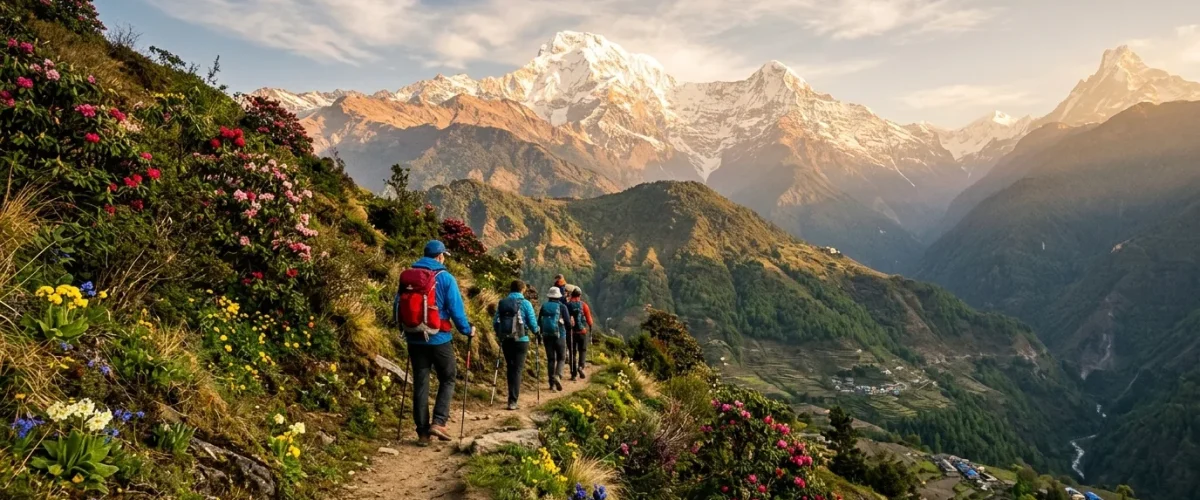
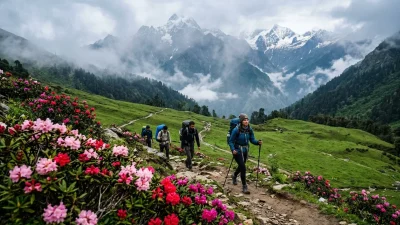
Himalayan adventure tourism is booming in spring 2026, with trekking operators across Uttarakhand, Himachal Pradesh, Ladakh and Sikkim reporting record advance bookings. The Indiahikes platform alone has registered 85,000 trekkers for the March-to-June season — a 40 per cent increase from the same period in 2025. But the surge in mountain tourism is raising urgent questions about sustainability, as fragile ecosystems face mounting pressure from waste, infrastructure strain and the accelerating effects of climate change on Himalayan glaciers and biodiversity.
Himalayan Adventure Tourism 2026: The Scale of the Boom
The numbers paint a picture of explosive growth. Uttarakhand, India’s most popular mountain trekking destination, issued over 200,000 trekking permits in the 2025 season — more than double the figure from 2019, the last pre-pandemic year. Ladakh received 450,000 domestic tourists in 2025, up from 300,000 in 2023, with the Chadar (frozen river) trek and Pangong Lake attracting particular interest from adventure-seeking younger travellers.
The drivers of this growth are multiple. Post-pandemic travel preferences have shifted decisively towards experiential and outdoor tourism, with mountain destinations benefiting from urban Indians’ desire for escape from congested cities. Social media has amplified the appeal of Himalayan landscapes — Instagram posts from Spiti Valley, Kedarkantha and Hampta Pass attract millions of views and inspire bookings. Improved road connectivity, including the new expressways transforming road connectivity, has reduced travel times to many mountain destinations.
The adventure tourism industry has also professionalised significantly. Operators like Indiahikes, Trek the Himalayas and Bikat Adventures offer well-organised itineraries with trained guides, safety equipment and medical support. The price point — typically Rs 8,000 to Rs 25,000 for a multi-day trek — positions Himalayan trekking as accessible to India’s growing middle class. The broader domestic travel trend is evident across the country, with South India travel destinations in 2026 and Northeast India’s travel boom also highlighting Indians’ enthusiasm for exploring their own country.
Popular Trails Under Pressure
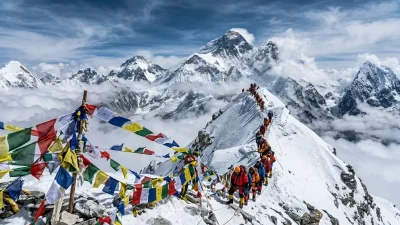
The concentration of trekkers on a handful of popular trails is creating significant environmental stress. The Kedarkantha trek in Uttarakhand, one of India’s most sought-after winter treks, now sees over 15,000 trekkers per season on a trail designed to handle a fraction of that volume. The meadows at the base camp show visible degradation from camping, and water sources along the route are under strain.
The Roopkund trek, famous for its high-altitude glacial lake, was temporarily closed in 2024 after environmental assessments revealed trail erosion and waste accumulation. It reopened in 2025 with strict daily limits of 50 trekkers, demonstrating that regulation can work but requires enforcement resources that cash-strapped state forest departments often lack.
Ladakh faces different but equally pressing challenges. The surge in tourist vehicles on narrow mountain roads has created traffic congestion that damages road surfaces and increases carbon emissions in a high-altitude desert ecosystem. The Pangong Lake shoreline, popularised by Bollywood films, now features semi-permanent camps and food stalls that generate waste in an area with no municipal waste management infrastructure.
Waste Management: The Mountain’s Most Visible Crisis
Waste remains the most visible and emotionally resonant challenge facing Himalayan tourism. Despite the efforts of clean-up campaigns — Indiahikes’ Green Trails programme has removed over 40 tonnes of waste from popular trails since 2018 — the volume of trash generated by tourists continues to exceed the capacity of local disposal systems. Plastic water bottles, food packaging, wet wipes and human waste are found along even remote high-altitude trails that are days from the nearest road.
The Green Trails initiative requires all Indiahikes trekkers to collect and carry out waste equivalent to their own body weight. The programme has been remarkably effective within its scope — trails maintained by Indiahikes are demonstrably cleaner than those without such programmes — but it represents a fraction of the total trekking activity in the Himalayas. Independent trekkers and smaller operators who lack waste management protocols account for the majority of mountain waste.
State governments have responded with mixed effectiveness. Himachal Pradesh’s ban on single-use plastics, introduced in 2019, has been partially successful in reducing plastic waste in tourist areas. Uttarakhand introduced a Rs 500 “green cess” for trekking permits in 2025, with proceeds dedicated to trail maintenance and waste management. However, enforcement remains inconsistent, and the fundamental infrastructure for waste processing in remote mountain areas is largely absent.
Climate Change: The Invisible Threat to Mountain Tourism
Climate change poses an existential threat to Himalayan tourism that is less visible than waste but far more consequential. Himalayan glaciers have lost approximately 40 per cent of their area since the Little Ice Age, with the rate of retreat accelerating in recent decades. The glaciers that feed the rivers, waterfalls and alpine lakes that attract tourists are diminishing — a process that will fundamentally alter mountain landscapes within a generation.
Rising temperatures are also shifting the timing and character of mountain seasons. Snowfall patterns have become less predictable, affecting winter treks that depend on snow cover. The tree line is migrating upward, changing the character of alpine meadows that define popular trekking routes. Flash floods and landslides, intensified by extreme weather events, have become more frequent and have caused tourist casualties in recent years.
Scientists at the Wadia Institute of Himalayan Geology warn that the current rate of glacier retreat will significantly reduce water availability in Himalayan river basins by 2050, with consequences for both downstream agriculture and mountain tourism. The irony is stark: the carbon emissions generated by tourist travel to mountain destinations contribute to the very climate change that threatens those destinations’ appeal.
Sustainable Tourism Models: Lessons and Innovations
Efforts to develop sustainable mountain tourism models are gaining momentum. Bhutan’s high-value, low-volume tourism policy — which imposes a daily sustainable development fee on tourists — has been studied by Indian policymakers as a potential framework for ecologically sensitive regions. Sikkim’s organic state certification and its restrictions on plastic packaging in tourist areas offer a domestic example of policy-driven sustainability.
Community-based tourism initiatives, where local communities manage tourism infrastructure and retain economic benefits, have shown promise in several Himalayan regions. The Himalayan Homestay programme in Ladakh and the Kumaon community trekking cooperatives provide employment and income for village residents while keeping tourist numbers within manageable limits. These models demonstrate that mountain tourism can support local livelihoods without overwhelming fragile environments.
The Path Forward for Himalayan Tourism
Himalayan adventure tourism in 2026 stands at a crossroads. The demand is unprecedented, the economic benefits for mountain communities are real, and the experience of trekking through some of the world’s most spectacular landscapes continues to inspire hundreds of thousands of Indians each year. But without serious investment in waste management infrastructure, enforceable carrying capacity limits, and climate-responsive planning, the very landscapes that draw visitors will degrade beyond recognition. The mountains have endured for millions of years; the question is whether their newest visitors will treat them with the respect that endurance deserves.