India PC Gaming Market Explodes as Affordable GPUs and Local Esports Leagues Drive a New Golden Age in 2026

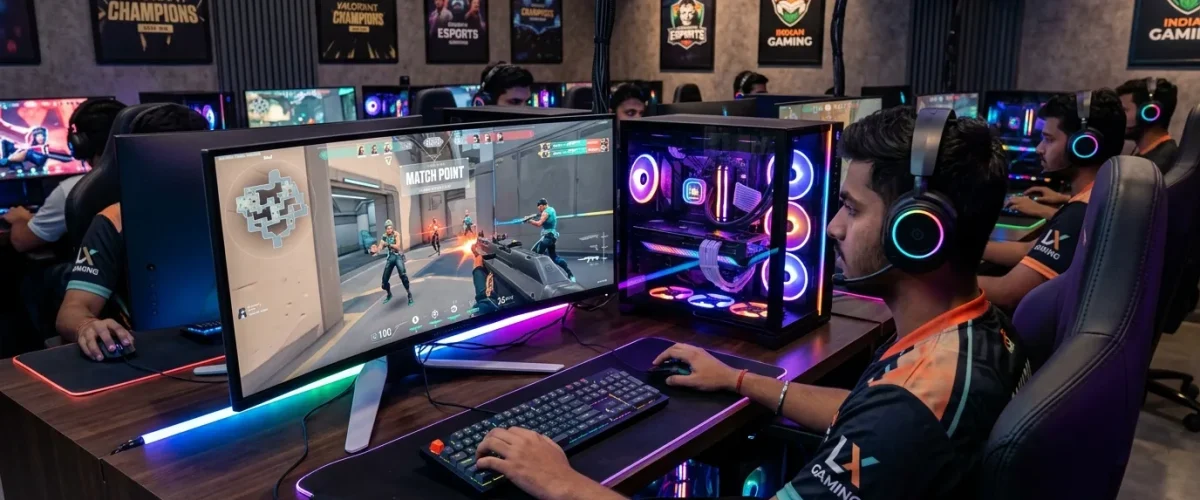
The India PC gaming market is experiencing explosive growth in 2026, driven by a convergence of affordable graphics card launches, expanding local esports infrastructure and a generation of gamers graduating from mobile to desktop platforms. Industry research firm Niko Partners estimates that India’s PC gaming revenue will cross $1.5 billion this year, representing a 42 per cent year-on-year increase that makes it the fastest-growing PC gaming market in the world.
The transformation is built on two pillars. First, NVIDIA and AMD have both launched budget-friendly GPU lineups specifically targeting the Indian market, making high-performance gaming accessible at price points under Rs 25,000. Second, the esports ecosystem has matured significantly, with India’s National Esports Championships 2026 squad selection creating a clear pathway from casual player to professional competitor that incentivises investment in PC hardware.
Affordable GPUs Open the Floodgates
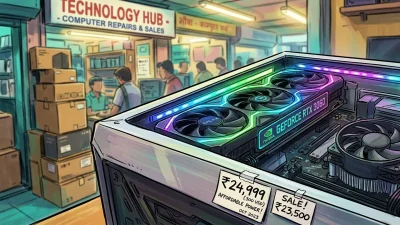
NVIDIA’s RTX 5060, launched in India in February 2026 at Rs 22,999, has been the catalyst for a wave of new PC gaming builds. The card delivers performance comparable to the previous generation’s RTX 4070 at less than half the price, making 1440p gaming at 60 frames per second achievable for mainstream Indian consumers for the first time.
AMD has responded with the RX 8600 XT, priced at Rs 19,999, which offers competitive performance and 12 GB of video memory. Both companies have partnered with Indian system builders like Ant-PC, Zoukart and Elitehubs to offer pre-built gaming PCs starting at Rs 45,000 — a price point that was unthinkable for a capable gaming machine just two years ago.
Steam’s India user base has crossed 35 million active accounts, up from 22 million in 2024. The platform’s regional pricing strategy, which offers games at 60 to 70 per cent lower prices than Western markets, has made legal game purchases affordable for Indian students and young professionals. For all the latest tech and gadget reviews, the GPU revolution is one of the most transformative developments this year.
Esports Leagues Create Professional Pathways
India’s PC esports infrastructure has matured rapidly. The Esports Federation of India’s partnership with Nodwin Gaming has created a structured league system spanning Valorant, Counter-Strike 2, Dota 2 and League of Legends. The National PC Esports League, launched in January 2026, features a Rs 5 crore annual prize pool and broadcasts on JioStar and YouTube Gaming.
Major Indian companies are investing in franchise esports teams. Tata’s sponsorship of the Mumbai Orcas and Mahindra’s backing of the Delhi Sentinels have brought corporate legitimacy to PC esports. Team salaries for top-tier players now range from Rs 8 to 25 lakh per month, making professional PC gaming a viable career option.
The growth parallels what is happening across the broader gaming ecosystem, where India’s mobile gaming revenue crossing $3 billion in a year that is proving transformative for Indian gaming across all platforms. Educational institutions are also responding — IIT Bombay and BITS Pilani have both established official esports clubs with dedicated practice facilities.
Gaming Cafés Undergo a Premium Makeover
The humble internet café has been reimagined as a premium gaming lounge. Chains like JENESYS, Game Palacio and The Starter Hub have opened over 200 new outlets across metro and tier-2 cities in the past 12 months. These venues feature RTX 5070-equipped PCs, 240Hz monitors, ergonomic gaming chairs and fibre-optic internet connections.
Pricing models have evolved too. Most premium gaming lounges charge Rs 100 to 200 per hour, with monthly subscription plans offering unlimited access for Rs 3,000 to 5,000. The social aspect is central to the business model — venues host weekly tournaments, watch parties for major international events and coaching sessions by professional players.
The gaming lounge boom is particularly significant in tier-2 cities like Indore, Jaipur, Lucknow and Coimbatore, where home PC ownership is lower but enthusiasm for competitive gaming is high. Franchise models are enabling rapid expansion, with JENESYS alone targeting 500 outlets by the end of 2027.
Indian Game Studios Eye the PC Market
India’s game development industry is increasingly targeting PC as a primary platform. Studios like Ogre Head Studio (Raji: An Ancient Epic), SuperGaming and Mayhem Studios are developing titles that prioritise PC performance and take advantage of modern hardware capabilities.
The government’s Animation, Visual Effects, Gaming and Comics promotion scheme has allocated Rs 200 crore for Indian game studios in 2026-27, with a focus on PC and console titles that can compete internationally. India Games Developer Conference, held in Hyderabad in March 2026, attracted over 5,000 developers and showcased 150 indie games in development.
International publishers have also taken notice. Valve’s Steam Next Fest in February 2026 featured eight Indian-developed PC games, the highest representation from any Asian country outside Japan and South Korea. Explore more gaming industry news and updates on our dedicated section for the latest developments from Indian studios and international events.
Challenges: Internet Speeds and Import Duties
Despite the momentum, challenges remain. India’s average fixed broadband speed of 65 Mbps, while improved, still lags behind markets like South Korea (225 Mbps) and Japan (195 Mbps). Latency issues in competitive online games remain a frustration, though Reliance Jio’s dedicated gaming servers in Mumbai, Chennai and Hyderabad have significantly improved the experience for premium subscribers.
Import duties on gaming hardware, currently at 18 per cent GST, add a significant cost burden. Industry bodies have petitioned the government to reduce GST on gaming peripherals to 12 per cent, arguing that the sector’s employment and revenue potential justifies preferential treatment. A decision is expected in the GST Council’s July 2026 meeting. For those comparing the PC gaming boom with the mobile segment, check our coverage of best flagship tech devices launching in March 2026 to understand the broader tech hardware landscape shaping Indian gaming.

- India’s Startup Funding Crosses $7.2 Billion in H1 2026 - July 1, 2026
- After Ireland Shock, India’s T20I Side Faces Bigger Test - July 1, 2026
- Ireland Stun World Champions India 2-0 in Belfast, Sooryavanshi Debate Rages On - June 29, 2026