Gujarat FDCA Seals 18 Food Units and Destroys Over 700 Kg of Stock in Statewide Paneer Crackdown

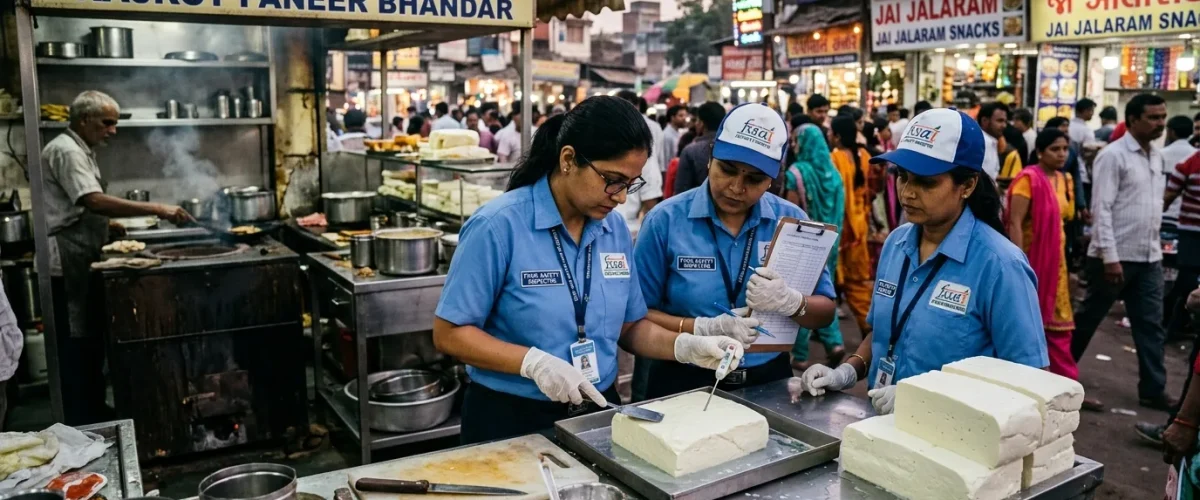
Gujarat’s Food and Drug Control Administration (FDCA) sealed 18 food establishments, issued 210 compliance notices, and destroyed more than 700 kg of substandard food during a week-long enforcement drive targeting paneer and analogue paneer violations across the state. The mega special drive, conducted between 4 and 9 April 2026, covered 2,527 food business units including restaurants, dhabas, street food vendors, and manufacturers.
What Triggered the Crackdown
On 4 April, the FDCA issued a formal order requiring all food business operators to clearly disclose whether they use milk-based paneer or analogue paneer — a substitute made from vegetable fat, starch, or other non-dairy ingredients. The order specified that products made with substitutes must not be labelled or sold as “paneer” and must instead be described as “paneer analogue” or simply “analogue.”
The distinction matters because analogue paneer is significantly cheaper to produce than genuine cottage cheese, and restaurants can increase margins by passing off substitutes as the real product. Consumers who are unaware of the switch may be paying premium prices for an inferior ingredient — a concern that has grown as India’s restaurant and food delivery market expands rapidly.
Enforcement Results: The Numbers
| Action | Count |
|---|---|
| Units inspected | 2,527 |
| Units sealed or shut down | 18 |
| Compliance notices issued | 210 |
| Food stock destroyed | 703 kg |
| On-spot destruction | 103 kg |
| Fines collected | ₹2.48 lakh |
| Formal samples for lab analysis | 65 |
Among the penalised establishments, units in Ahmedabad, Surat, and Rajkot accounted for the bulk of the fines. The Surat Municipal Corporation recorded penalties of ₹52,300, while Rajkot Municipal Corporation levied ₹3,600.
A Broader Food Safety Push
The paneer drive builds on ongoing enforcement under the Food Safety and Standards Act, 2006. Between January and March 2026, the Ahmedabad Municipal Corporation alone collected 2,049 food samples, of which 74 were found substandard. Across Gujarat, earlier drives in the same period resulted in fines totalling ₹1.41 lakh on 17 food establishments and the destruction of approximately 615 kg of non-conforming stock.
Why Regional Cuisine Standards Matter
Paneer is a staple of Indian cuisine, particularly across North and West India. From Gujarati paneer bhurji to Punjabi shahi paneer, the ingredient’s authenticity directly affects flavour, nutrition, and consumer trust. The FDCA’s crackdown reflects a growing national awareness around food transparency and clean labelling, mirroring trends seen in India’s D2C food brands.
What Consumers Should Know
The FDCA warned that any attempt to mislead consumers or provide incorrect information about paneer products would attract strict legal action. Consumers dining out in Gujarat can now expect clearer labelling at restaurants. The 65 samples collected during the drive have been sent to accredited laboratories for detailed chemical analysis, with results expected within weeks.
Food safety experts say the Gujarat model could set a precedent for other states grappling with similar issues. The regulatory environment in India is tightening across sectors, and food is no exception.