India Housing Sales Slip 4 Per Cent in Q1 2026 as Global Uncertainty Weighs on Mumbai and Delhi-NCR

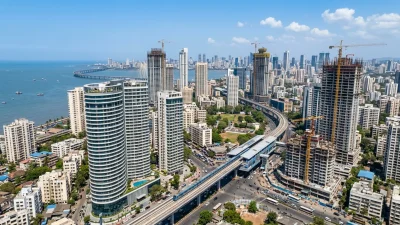
India’s residential housing market recorded a 4 per cent decline in sales volume during the first quarter of 2026 compared to the same period last year, according to Knight Frank’s quarterly report on the Indian real estate market. The pullback was led by Mumbai and Delhi-NCR, India’s two largest property markets, which saw steeper declines amid global economic uncertainty, elevated interest rates and the ripple effects of the West Asia energy crisis.
The headline figure, however, masks a divergence. Premium housing — apartments priced above Rs 1 crore — continued to record healthy demand, driven by affluent buyers less sensitive to interest rate movements. The affordable and mid-segment categories, particularly in the Rs 30 lakh to Rs 75 lakh range, showed the greatest weakness, with prospective buyers delaying purchases amid concerns about job security, rising construction costs and uncertain global conditions.
Mumbai and Delhi-NCR Lead the Decline
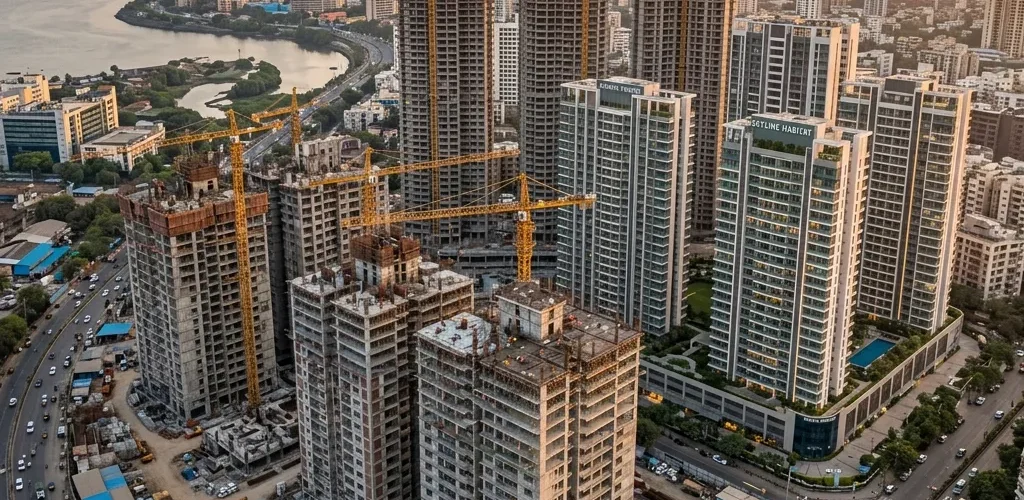
Mumbai, which accounts for roughly 30 per cent of India’s total residential transaction volume, recorded the most significant drop. New project launches in the Mumbai Metropolitan Region slowed during the quarter, with developers citing higher input costs — cement, steel and labour — as factors constraining new supply. The West Asia crisis has added a layer of uncertainty, with construction material imports from the Gulf region experiencing logistical delays.
Delhi-NCR experienced similar weakness, particularly in the Noida and Greater Noida markets where unsold inventory has remained elevated. Gurugram’s luxury segment was the exception, with continued demand for premium apartments and branded residences near the Delhi airport and Cyber Hub commercial zones.
Bengaluru, Hyderabad and Pune performed better, with sales volumes holding relatively stable. These markets have benefited from continued IT sector hiring and the return-to-office trend that has increased demand for homes near technology parks. The India IT industry’s projected 6.1 per cent growth to $315 billion in FY26 provides a demand floor that Mumbai’s more diversified economy lacks.
The Premium Segment Defies the Trend
India’s luxury housing market has been the standout performer. Properties above Rs 1 crore accounted for a growing share of total transactions, reflecting a structural shift in buyer preferences. High-net-worth individuals are treating premium real estate as both a lifestyle upgrade and an inflation hedge, particularly as the stock market’s volatility discourages some investors from equity exposure.
Branded residences — apartments developed in partnership with luxury hotel and lifestyle brands — are a growing niche. Projects bearing names like Four Seasons, Ritz-Carlton and Lodha have seen brisk sales in Mumbai’s south and central zones. These properties command significant premiums over comparable unbranded offerings, but affluent buyers appear willing to pay for the cachet and service standards associated with established brands.
The trend reflects a broader shift in India’s wealth distribution. The country now has over 350,000 high-net-worth individuals, and their housing preferences are reshaping urban skylines. Developers are responding with larger apartments, dedicated concierge services and amenities packages that compete with five-star hotels.
Interest Rates and the RBI Factor
The RBI’s decision to hold the repo rate at 5.25 per cent in its April 2026 policy review has provided limited relief to homebuyers. While the rate has come down from its peak, home loan EMIs remain approximately 15 to 20 per cent higher than they were in 2021, when the repo rate bottomed at 4 per cent. For a buyer financing a Rs 50 lakh apartment over 20 years, the difference translates to an additional Rs 5,000 to Rs 7,000 per month in EMI payments.
The income tax reforms, including the introduction of Form 130 replacing Form 16, have simplified the documentation process for homebuyers applying for loans. However, these administrative improvements have not yet translated into meaningful demand stimulus.
What Developers and Buyers Can Expect
Industry analysts expect the housing market to stabilise in Q2 and Q3 2026, supported by the traditional festive buying season that typically begins in August. Developers in Mumbai and Delhi-NCR are likely to offer targeted incentives — payment flexibility, reduced booking amounts and furnishing packages — to move unsold inventory. The startup ecosystem and expanding gig economy are expected to create new buyer segments in Tier 2 cities, even as metro market growth moderates.
For prospective buyers, the current environment offers negotiating advantages that were absent during the 2023 and 2024 boom years. With developers motivated to sell and interest rates potentially moving lower if the RBI continues its easing cycle, the second half of 2026 could present favourable entry points for those with stable employment and adequate savings for down payments.
Co-Living and Rental Markets Show Strength
While home sales volumes have softened, the co-living and organised rental markets are showing robust growth, particularly in Bengaluru, Pune and Hyderabad where young IT professionals increasingly prefer flexibility over ownership. Platforms offering managed apartments with all-inclusive pricing have scaled rapidly, attracting institutional investment from domestic and international real estate funds. This segment’s growth reflects a generational shift in housing preferences: many buyers under 35 are choosing to rent in expensive metro locations while investing in properties in their home towns or Tier 2 cities where price-to-income ratios are more favourable.
The broader Indian economy’s resilience, supported by the corporate sector’s navigation of global trade headwinds, provides a foundation for housing demand recovery. Real estate remains the preferred asset class for a majority of Indian households, and the current softness is widely viewed as a cyclical adjustment rather than a structural downturn. Industry bodies expect a return to positive year-on-year growth by the fourth quarter of 2026.