India Orders OpenAI and Google to Accept AI Copyright Royalty Framework Within 30 Days as Anthropic Opens Bengaluru Office

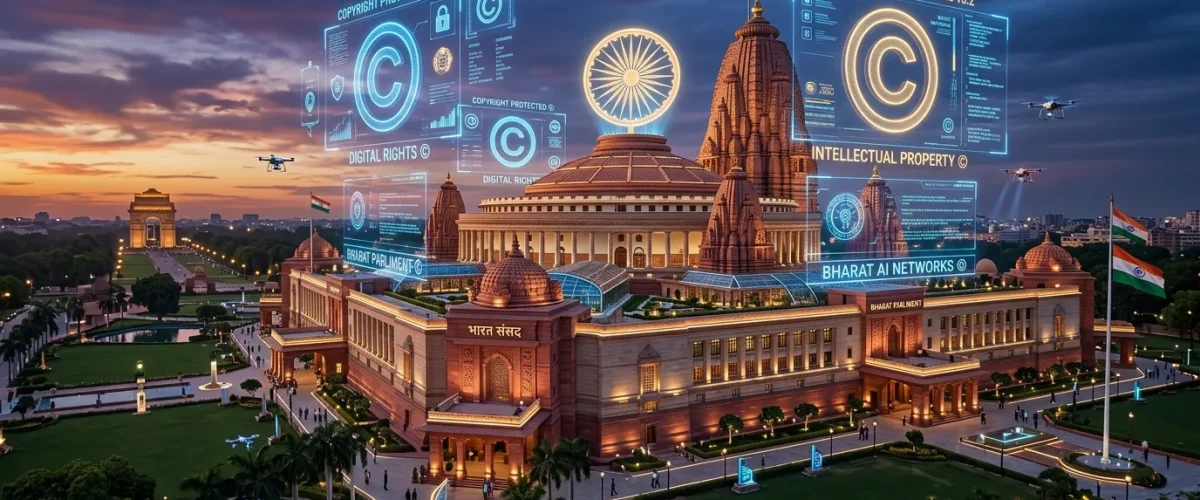
India is making its most aggressive regulatory moves yet in the artificial intelligence space, with two landmark developments in a single week that could fundamentally reshape how global AI companies operate in the world’s most populous nation. On April 16, 2026, the Department for Promotion of Industry and Internal Trade (DPIIT) proposed a mandatory royalty framework requiring AI companies to compensate content creators whose copyrighted material is used for training models. Days later, on April 18, Anthropic — the San Francisco-based company behind the Claude AI assistant — officially opened its first India office in Bengaluru.
Together, these events signal a new era in India’s relationship with artificial intelligence: one where the government is simultaneously welcoming global AI investment while asserting sovereignty over how Indian data and content are used. For AI, this represents the most significant policy shift since India’s Digital Personal Data Protection Act of 2023.
The Copyright Royalty Framework: What India Is Demanding
The DPIIT’s proposed framework, circulated to stakeholders on April 16, gives major AI companies — including OpenAI, Google, Meta, and Anthropic — 30 days to formally accept or negotiate terms for a structured royalty system. The proposal was developed in consultation with the Ministry of Electronics and Information Technology (MeitY), the Ministry of Information and Broadcasting, and representatives from India’s publishing, music, and film industries.
Key provisions of the draft framework include a mandatory licensing requirement for all AI models trained on copyrighted Indian content (text, images, audio, video), a royalty rate structure ranging from 0.1 percent to 2 percent of an AI company’s India-specific revenue (depending on the volume and nature of copyrighted content used), the creation of a centralised “AI Content Licensing Authority” under DPIIT to manage royalty collection and distribution, and a mandatory content audit requirement where AI companies must disclose training data sources for any model deployed in India.
The Delhi High Court’s ongoing case of ANI vs OpenAI — where India’s largest news agency sued OpenAI for using its content to train ChatGPT without permission — served as the immediate catalyst. The court has reserved judgment, but the DPIIT framework appears designed to pre-empt a purely judicial resolution by establishing a regulatory mechanism. As previously reported in Which of the 6 Best Indian Mobile Brands Will Work for You?, the intersection of AI and copyright is becoming a defining issue for India’s tech landscape.
Anthropic Opens Bengaluru Office: Claude Comes to India
In a move that underscores India’s growing importance as an AI market, Anthropic officially inaugurated its Bengaluru office on April 18, 2026. The office — located in the Outer Ring Road tech corridor — will serve as Anthropic’s Asia-Pacific engineering hub, focusing on localizing Claude for Indian languages, developing enterprise AI solutions for the Indian market, and conducting safety research tailored to India’s diverse linguistic and cultural context.
Anthropic CEO Dario Amodei, who attended the launch virtually, described India as “one of the most exciting AI markets in the world” and announced that Claude would receive dedicated support for Hindi, Tamil, Telugu, Bengali, and Marathi within Q3 2026. The company plans to hire 200 engineers in Bengaluru by year-end, with starting salaries for senior AI researchers reportedly exceeding ₹80 lakh per annum.
The Bengaluru office makes Anthropic the fourth major Western AI company to establish direct operations in India, joining OpenAI (which partnered with Tata Group in 2025), Google DeepMind (which expanded its Bengaluru presence in 2024), and Microsoft (through its extensive Azure AI infrastructure). For Tech, this influx of AI investment is transforming India’s technology ecosystem at an unprecedented pace.
India Mandates AI Curriculum From Class 3: The Education Push
Complementing its regulatory and investment moves, India’s Ministry of Education announced on April 15 that AI education will be mandatory in all CBSE and state board-affiliated schools starting from Class 3, effective academic year 2027-28. The curriculum, designed by IIT Madras in collaboration with NCERT, will introduce age-appropriate concepts including basic computational thinking and pattern recognition for Classes 3-5, introduction to machine learning concepts and simple coding for Classes 6-8, hands-on AI project building and ethical AI discussions for Classes 9-10, and advanced AI and data science electives for Classes 11-12.
The initiative builds on the National Education Policy 2020’s emphasis on 21st-century skills and represents the most comprehensive AI education mandate by any major country. IIT Madras Director V. Kamakoti stated: “India has 250 million school-going children. If even 10 percent become AI-literate, we will have the largest AI-skilled workforce on the planet within a decade.” RBI Digital Rupee Crosses 10 Million Wallets as India’s Fintech E
The Sovereign AI Movement: BharatGen and Beyond
India’s AI ambitions extend beyond regulation and education. The government’s “Sovereign AI” initiative, announced in the February 2026 Union Budget with a ₹10,500 crore allocation, is accelerating rapidly. The flagship project — BharatGen, a large language model trained exclusively on Indian language data — received its single largest tranche of funding (₹1,058 crore) in April 2026, with IIT Bombay leading the development consortium.
Sarvam AI, India’s most prominent AI startup, closed a $350 million funding round at a $1.5 billion valuation in April 2026, making it the poster child of India’s sovereign AI movement. The company’s Sarvam-1 model, trained on 22 Indian languages, is being deployed across government services including the DigiLocker platform and the upcoming Census 2026 digital portal. As covered in BSNL Orders 20,000 New 4G Sites as Jio Airtel and Vi Prepare Mid-, India’s startup ecosystem is increasingly aligned with national technology priorities.
Meanwhile, the government has funded 12 sovereign AI projects through MeitY’s AI Mission, spanning healthcare (AI-powered malnutrition detection by IIT-AIIMS Jodhpur), agriculture (crop disease prediction for smallholder farmers), and language technology (real-time translation for 22 scheduled languages).
Global Implications: How India’s AI Framework Could Set a Precedent
India’s simultaneous moves on copyright royalties, AI education, and sovereign AI development are being closely watched by other emerging economies. Brazil, Indonesia, and South Africa have all expressed interest in India’s approach, which balances market openness with regulatory sovereignty — a contrast to the EU’s restrictive AI Act and the US’s largely hands-off approach.
For global AI companies, the message is clear: India’s 1.4 billion-person market is open for business, but on India’s terms. The 30-day deadline for the copyright royalty framework response means that by mid-May 2026, the world will know whether OpenAI, Google, and their peers are willing to accept India’s conditions — or whether the country’s ambitious AI vision will face its first major international confrontation.
The coming months will be pivotal. India’s ability to simultaneously attract AI investment, protect its creative economy, and build sovereign AI capabilities will determine whether the country becomes the world’s most important AI market after the United States and China — or whether bureaucratic complexity and regulatory uncertainty slow its remarkable momentum.