BSNL Orders 20,000 New 4G Sites as Jio Airtel and Vi Prepare Mid-2026 Tariff Hike of Up to 20 Per Cent

BSNL Orders 20,000 New 4G Sites as Jio Airtel and Vi Prepare Mid-2026 Tariff Hike of Up to 20 Per Cent
India’s telecommunications industry is entering a defining period in 2026 as state-run BSNL accelerates its long-awaited 4G network expansion with an order for 20,000 additional sites while the three private operators, Reliance Jio, Bharti Airtel, and Vodafone Idea, prepare a coordinated tariff increase of 10 to 20 per cent expected by mid-year. The parallel developments will reshape the competitive landscape of India’s telecom sector, affecting over 1.15 billion mobile subscribers and influencing how Indians access the internet, communicate, and consume digital services.
The tariff reset, the first significant industry-wide price increase in nearly two years, comes as telecom operators seek to bolster revenues, repair balance sheets stretched by 5G investment, and increase returns on the massive capital deployed during the spectrum auctions and network rollouts of recent years.
BSNL’s 4G Push: 20,000 Sites to Strengthen Coverage
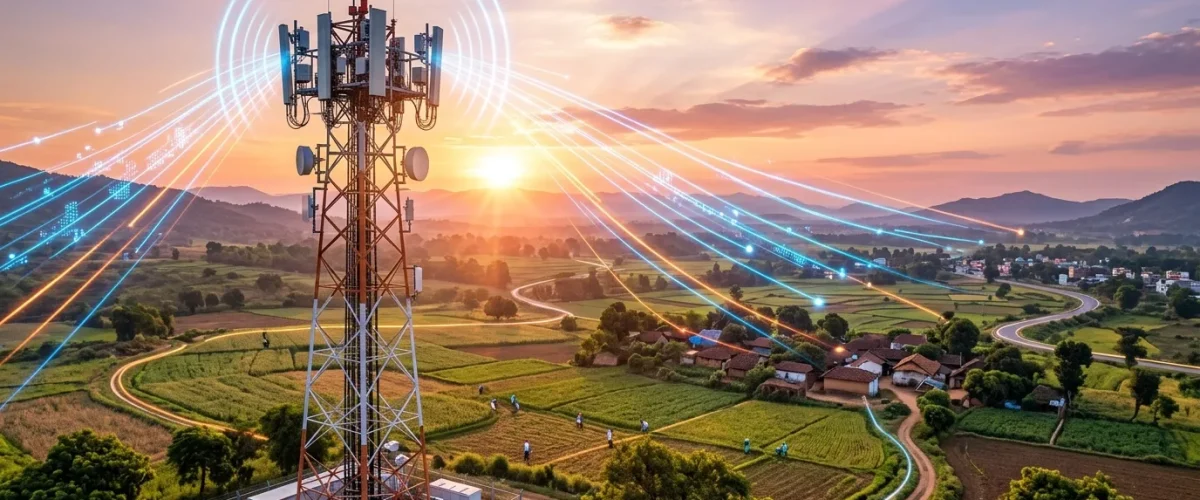
Bharat Sanchar Nigam Limited is pressing ahead with its fourth-generation network expansion into FY2026-27, having floated tenders for approximately 20,000 additional 4G sites to complement the sites already deployed. BSNL’s CMD Robert Ravi confirmed that the company is progressing well with its rollout and is evaluating strategies for future indigenous technology upgrades, including a potential path toward 5G using domestically developed equipment.
BSNL’s 4G network, built on technology developed by the Centre for Development of Telematics and Tata Consultancy Services rather than foreign equipment vendors like Ericsson, Nokia, or Huawei, represents India’s most ambitious telecommunications self-reliance project. The approach aligns with the government’s broader push for technology sovereignty but has resulted in deployment timelines that have lagged behind private operators’ 5G rollouts.
The 20,000 additional sites are expected to strengthen BSNL’s coverage across rural, semi-urban, and tier-three cities where the company has traditionally held a strong subscriber base. Many of these areas are underserved by private operators, who have prioritised 5G deployment in urban centres where revenue per user is higher. BSNL’s mandate to provide universal coverage means it serves as the connectivity provider of last resort in areas where commercial operators find the economics challenging.
Airtel Expands 5G Footprint Across UP East
Bharti Airtel’s aggressive 5G expansion continues, with the company announcing the deployment of more than 4,300 new 5G sites across eastern Uttar Pradesh over the past 12 months. The expansion makes UP East one of Airtel’s most strategic markets and demonstrates the company’s commitment to building a digital backbone that reaches beyond metro cities into the heartland of India’s most populous state.
Amit Gupta, CEO of Bharti Airtel UP East, described the deployment as enabling growth, inclusion, and innovation across the region. The company has complemented its network investment with consumer-facing plans designed to drive adoption, including a fully unlimited data plan for 28 days priced at Rs 399 that provides unlimited 4G and 5G data alongside unlimited calls. The plan targets smartphone users who want seamless streaming, studying, and working without worrying about data limits.
India’s overall 5G infrastructure has crossed 469,000 base stations and 250 million subscribers as of early 2026, with Jio and Airtel accounting for the vast majority of deployments. The scale of India’s 5G rollout is impressive by global standards, though the monetisation challenge remains as operators search for use cases beyond faster mobile broadband that can justify the capital invested.
Tariff Hike: Why It Is Coming and What to Expect
The anticipated tariff increase of 10 to 20 per cent by mid-2026 has been flagged by multiple industry analysts, with Jefferies modelling a headline hike of 15 per cent that would translate into approximately 14 per cent growth in average revenue per user by FY27. The hike is being described as an operational necessity rather than an opportunistic price increase, driven by the need to generate returns on 5G investment, service debt obligations, and fund ongoing network expansion.
All three private operators are expected to move in roughly coordinated fashion, as no single player can afford to raise prices unilaterally without risking subscriber churn to competitors. The pattern mirrors the tariff hikes of 2021 and 2024, where operators announced increases within weeks of each other, creating a de facto industry-wide reset that lifted the revenue floor for all participants.
For consumers, the impact will vary depending on plan choice and usage patterns. Prepaid subscribers, who constitute the majority of India’s mobile user base, will see the most direct impact as recharge prices increase. Postpaid subscribers may be partially insulated through bundled plans and corporate connections that absorb some of the cost increase. The key question is whether the hike will be severe enough to trigger downtrading, where subscribers move to lower-value plans, or whether the value delivered by 4G and 5G services justifies the higher prices.
Vodafone Idea’s Recovery Depends on Execution
For Vodafone Idea, the tariff hike is particularly crucial as the company continues its recovery following years of financial distress, spectrum debt, and subscriber losses. Vi has begun its own 4G and 5G network expansion following a rights issue that raised capital for investment, but it remains significantly behind Jio and Airtel in terms of coverage, speed, and subscriber numbers.
Industry observers note that Vi’s ability to retain and attract subscribers during the tariff hike period will be a key indicator of whether the company’s turnaround is sustainable. If Vi can match the price increases of its competitors without disproportionate subscriber losses, it will signal that the three-player market structure that regulators prefer is stabilising. However, if Vi loses share during the transition, the effective duopoly of Jio and Airtel could deepen further.
Impact on Digital India and the Broader Economy
The telecommunications sector’s evolution has implications far beyond phone bills. India’s digital economy, from UPI payments to e-commerce to telemedicine, runs on mobile connectivity, and any change in the cost or quality of that connectivity ripples through the broader economy. The tariff hike could modestly slow the growth of data consumption among price-sensitive users while simultaneously funding the network improvements that enable more advanced digital services.
The government’s Digital India programme and the expansion of services like Credit Line on UPI depend on universal, affordable mobile connectivity. Policymakers are watching the tariff situation carefully, balancing the operators’ legitimate need for higher revenues against the risk that price increases could exclude low-income users from the digital economy at precisely the moment when digital inclusion is becoming a policy priority.
BSNL’s 4G expansion provides a partial safety net, as the government-owned operator typically offers plans at lower price points than private competitors. However, BSNL’s network quality and coverage gaps mean it cannot yet serve as a full substitute for subscribers who switch away from private operators due to price sensitivity. The coming months will reveal how effectively the Indian telecom market balances the competing demands of network investment, consumer affordability, and industry sustainability.

- India’s Startup Funding Crosses $7.2 Billion in H1 2026 - July 1, 2026
- After Ireland Shock, India’s T20I Side Faces Bigger Test - July 1, 2026
- Ireland Stun World Champions India 2-0 in Belfast, Sooryavanshi Debate Rages On - June 29, 2026