Satellite Internet Race in India: When Will Starlink, Jio Space Fiber, and Airtel OneWeb Launch and What Will They Cost

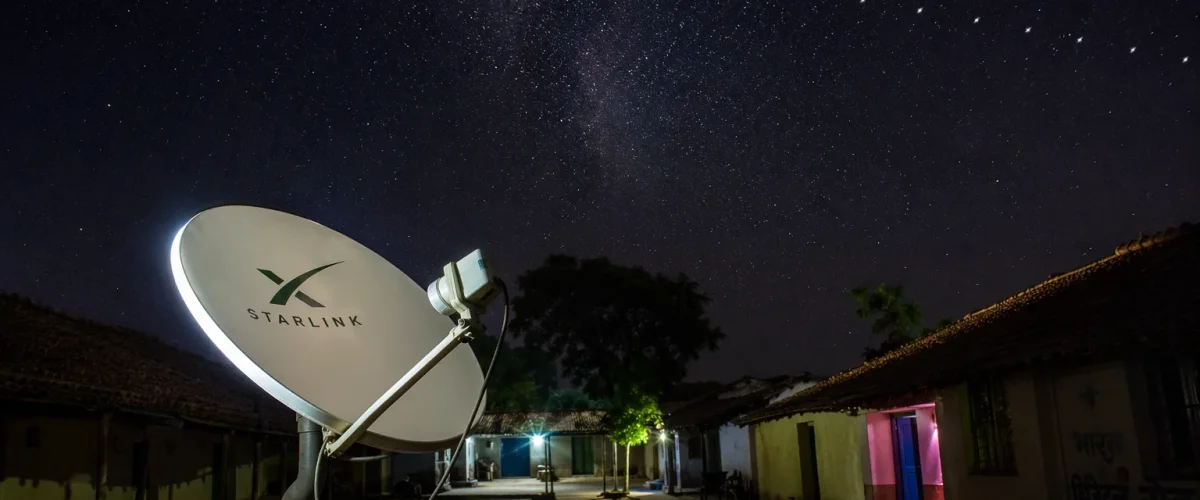
India is on the cusp of a satellite internet revolution. With the government granting satellite communication licences to three major players — Elon Musk’s Starlink, Mukesh Ambani’s Jio Space Fiber, and Sunil Bharti Mittal’s Airtel OneWeb — the race to beam high-speed broadband from space to every corner of the country is officially underway. But when exactly will these services go live, what will they cost, and how will they transform connectivity for India’s 1.4 billion people? Here is everything you need to know about India’s satellite internet race in 2026.
Three Licences, One Mission: Bridging India’s Digital Divide
At the News18 Rising Bharat Summit 2026 in February, Telecom Minister Jyotiraditya Scindia confirmed that India has issued satellite communication licences to Starlink, Jio Satellite Communications, and OneWeb India. The minister also announced that normative spectrum assignments have already been provided to all three companies, and the government is now working to finalise spectrum pricing by synthesising recommendations from the Telecom Regulatory Authority of India (TRAI).
This development is significant because India still has roughly 400 million people without reliable internet access, most of them in rural, hilly, and remote regions where laying fibre cables or building mobile towers is either impractical or economically unviable. Satellite internet, which beams connectivity directly from low-Earth orbit (LEO) constellations, can bypass these infrastructure barriers entirely. The push for satellite broadband directly supports India’s push for digital transformation in Census 2026, which requires widespread internet access for digital self-enumeration.
Starlink India: The Global Giant Faces Local Hurdles
SpaceX’s Starlink is the world’s largest satellite internet provider, operating a constellation of over 6,000 LEO satellites that already serve customers in more than 70 countries. Starlink received its IN-SPACe licence in July 2025, valid until 2030, and holds the mandatory GMPCS licence, VSAT licence, and authorisations for in-flight and maritime connectivity from the Department of Telecommunications (DoT).
However, Starlink’s India launch has faced repeated delays. Security concerns intensified in early 2026 after incidents involving Starlink operations in Iran prompted the government to tighten security scrutiny. A DoT official stated in January 2026 that the government was “taking this matter very seriously and is carefully examining all factors before giving the green signal.”
Despite these hurdles, a major breakthrough came in April 2026 when the Meghalaya government signed an agreement with Starlink India to improve connectivity in remote and inaccessible areas of the northeastern state. Starlink also conducted demonstration runs in Mumbai in late 2025 to prove compliance with India’s security and technical requirements. These developments suggest a commercial launch could be imminent once TRAI finalises spectrum pricing.
On pricing, Starlink briefly displayed test plans on its India portal that showed monthly costs around ₹5,000, but the company quickly clarified these were “dummy test data” caused by a technical glitch. Globally, Starlink charges between $99 and $120 per month (approximately ₹8,000–₹10,000), but analysts expect Indian pricing to be significantly lower given the competitive landscape and the market’s price sensitivity.
Jio Space Fiber: Ambani’s Bet on Affordable Satellite Broadband
Reliance Jio, in partnership with Luxembourg-based satellite operator SES, is developing Jio Space Fiber — India’s first satellite-based giga-fibre service. Jio Satellite Communications received its IN-SPACe authorisation and has completed testing in four pilot regions: Gir (Gujarat), Korba (Chhattisgarh), Nabrangpur (Odisha), and ONGC Jorhat (Assam).
True to its brand identity, Jio is positioning satellite broadband as an affordable, mass-market service rather than a premium luxury. Industry insiders suggest Jio aims to price its satellite internet plans close to its existing JioFiber broadband rates, potentially around ₹1,000–₹1,500 per month. This would be a game-changer in a market where global satellite internet typically costs several times more than terrestrial broadband. Jio’s strategy mirrors its 2016 disruption of mobile data pricing, which brought internet to hundreds of millions of Indians for the first time.
In a surprising twist, Jio also signed an agreement with SpaceX in March 2025 to market Starlink services in India, complementing its own Jio Space Fiber offering. This partnership means Jio could offer both its own SES-powered satellite broadband and Starlink’s LEO service, giving consumers a choice between affordability and cutting-edge technology. SES has announced plans to launch three additional satellites by end of 2026, tripling capacity for its Indian operations and scaling gateway infrastructure to multiple sites.
Airtel OneWeb: Business-First Approach to Satellite Connectivity
Bharti Airtel, through its stake in Eutelsat OneWeb (now part of Eutelsat Group), was actually the first private entity to receive IN-SPACe authorisation for commercial satellite broadband in India back in November 2023. OneWeb India has also secured GMPCS licences from the DoT and has received in-principle approval to establish gateways in Gujarat and Tamil Nadu.
Unlike Jio’s consumer-first strategy, Airtel is taking a business-first approach. The initial focus will be on enterprise connectivity, maritime communications, in-flight Wi-Fi, and connecting schools and healthcare centres in underserved areas. Eutelsat OneWeb’s completed LEO constellation of 648 satellites is already operational globally, positioning it for rapid deployment once spectrum allocation is finalised.
Adding another layer to its satellite strategy, Airtel signed a partnership with SpaceX in March 2025 to also offer Starlink services through its retail network. This means Airtel plans to operate a dual satellite portfolio — OneWeb for enterprise and institutional clients, and Starlink for direct consumer and community services. As a Bharti Airtel official noted, “The Indian market is vast, offering ample space for both Starlink and OneWeb to grow.”
The Spectrum Pricing Battle: Auction vs. Administrative Allocation
The biggest bottleneck holding back all three providers is spectrum pricing. TRAI is yet to issue final recommendations on how satellite spectrum should be priced and allocated. This has sparked a fierce debate between two camps.
Traditional telecom operators like Reliance Jio initially advocated for auction-based allocation, arguing it would ensure a level playing field. On the other side, industry bodies like NASSCOM and the Satellite Industry Association have pushed for administrative allocation — the globally standard approach where satellite spectrum is assigned at a fixed price without competitive bidding. Their argument centres on the fact that satellite spectrum is a shared, non-exclusive resource unlike terrestrial mobile spectrum, and auctioning it could artificially limit operators and drive up consumer prices.
The global precedent strongly favours administrative allocation. Out of 193 ITU member countries, only a handful have attempted satellite spectrum auctions, and most — including the United States, Brazil, and Mexico — eventually reverted to administrative allocation after finding auctions impractical. Minister Scindia’s comments suggest the government is leaning towards synthesising TRAI’s recommendations into a pricing framework that balances revenue generation with affordability. The developments in telecom industry news suggest a decision could come within the next few months.
What This Means for Indian Consumers
Once these services launch, the impact could be transformative. For the estimated 25,000 villages in India that still lack mobile connectivity, satellite internet could be the only viable path to the digital world. Students in remote Himalayan villages, fishermen in coastal communities, and farmers in tribal areas could access telemedicine, online education, and digital government services for the first time.
The competition between three well-funded players will likely drive prices down significantly. With India’s space economy crossing $13 billion and growing rapidly, the satellite internet sector adds another dimension to the country’s expanding space capabilities. Meanwhile, the devices needed to access satellite internet — including upcoming smartphones that will use next-gen connectivity — are also evolving quickly, with Starlink’s Direct-to-Device technology promising satellite connectivity on regular smartphones.
For now, the timeline depends on TRAI’s spectrum pricing decision. Industry sources suggest commercial launches could begin in late 2026 or early 2027, with Jio and Airtel OneWeb potentially moving faster than Starlink given their head start on ground infrastructure. Keep following latest tech and gadgets updates as this story develops rapidly.
The Road Ahead: A Three-Way Race With National Implications
India’s satellite internet race is more than a corporate battle between Elon Musk, Mukesh Ambani, and Sunil Bharti Mittal. It represents a critical infrastructure push that could finally close the country’s digital divide. With licences granted, spectrum allocations underway, and the Meghalaya-Starlink deal signalling that state governments are already preparing for satellite broadband, the question is no longer if but when.
The coming months will be decisive. TRAI’s pricing recommendation, the DoT’s final security clearances, and each company’s ground infrastructure buildout will determine who reaches Indian consumers first. One thing is clear: when satellite internet does arrive, it will reshape how hundreds of millions of Indians connect, learn, work, and access essential services — making it one of the most consequential technology deployments in the country’s history.