Made in India Chips Become Reality: Micron Opens Gujarat Plant as Tata and CG Power Begin Semiconductor Production

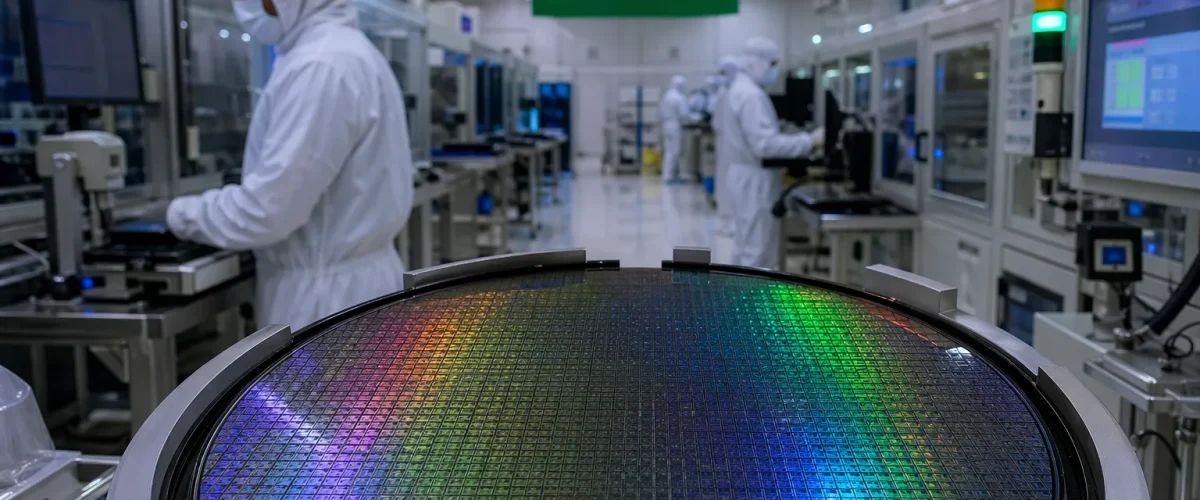
India has officially entered the global semiconductor manufacturing league. On February 28, 2026, US-based chipmaker Micron Technology inaugurated its state-of-the-art semiconductor assembly and test facility in Sanand, Gujarat, marking the country’s first commercial semiconductor chip production site. The milestone comes as three other companies — Tata Electronics, CG Power, and Kaynes Technology — are also ramping up production lines, heralding a new era for India’s technology ambitions and its quest for self-reliance in critical chip supply chains.
The inauguration, attended by Prime Minister Narendra Modi and senior officials, saw Micron present its first shipment of made-in-India memory modules to Dell Technologies for laptops manufactured domestically. Union Minister for Electronics and IT Ashwini Vaishnaw called it “a decisive step towards building a trusted, resilient and self-reliant semiconductor ecosystem,” confirming that four semiconductor plants in India will begin commercial production in 2026.
Inside Micron’s Sanand Facility: Scale, Investment, and Capabilities
Micron’s Sanand facility has been set up with an investment of Rs 22,516 crore (approximately $2.75 billion). Located near Ahmedabad, it is one of the world’s largest single-floor assembly and test cleanrooms, featuring more than 500,000 square feet of cleanroom space in its first phase. The facility converts advanced DRAM and NAND wafers — shipped from Micron’s global manufacturing network — into finished memory and storage products destined for both domestic and international markets.
The plant is already ISO 9001:2015 certified and has begun commercial operations. Micron expects to assemble and test tens of millions of semiconductor chips at Sanand in 2026, scaling production to hundreds of millions of units annually by 2027. The facility manufactures solid-state drives (SSDs), DRAM, and NAND products used extensively in computing, smartphones, servers, data centres, and portable electronic devices — components that are critical for the booming artificial intelligence sector.
Currently, approximately 2,000 people are employed at the plant, with the number expected to grow to 5,000 direct jobs once the facility reaches full operational capacity. The project is also projected to generate nearly 15,000 indirect employment opportunities in the region. Notably, the facility has been lauded for its inclusive hiring practices, employing specially-abled citizens as operators and technicians.
Tata Electronics: Assam’s Semiconductor Hub Takes Shape
While Micron’s Gujarat plant captures the headlines, Tata Electronics is building another major semiconductor pillar in India’s northeast. The company’s Outsourced Semiconductor Assembly and Test (OSAT) facility in Jagiroad, Morigaon district, Assam, is being developed with an investment of Rs 27,120 crore. When fully operational, it is expected to produce an astonishing 48 million semiconductor chips per day using indigenous packaging technologies.
Finance Minister Nirmala Sitharaman reviewed the plant’s progress in late 2025 and announced that “Assam will be part of the global semiconductor ecosystem in 2026.” According to the government’s timeline, Tata’s Assam plant is scheduled to begin pilot production by mid-2026 and transition to commercial manufacturing by year-end. The facility will create approximately 15,000 direct jobs and an additional 11,000 to 13,000 indirect employment opportunities, transforming the economic landscape of India’s northeastern region.
Tata Electronics is also establishing a separate silicon fabrication facility in Gujarat, in partnership with Taiwan’s PSMC, with a significantly larger investment of Rs 91,526 crore. This Gujarat fab will have a production capacity of approximately 50,000 wafer starts per month, positioning India among the select few nations capable of advanced wafer fabrication. For those tracking gadgets and hardware news, these developments promise a future where many of the devices Indians use daily could carry made-in-India chips.
CG Power and Kaynes Technology: From Pilot to Commercial Scale
Two other companies have already crossed critical milestones in India’s semiconductor journey. CG Power and Industrial Solutions Limited, in a joint venture with Japan’s Renesas Electronics and Thailand’s STARS Microelectronic, has established a semiconductor facility in Gujarat with an investment of Rs 7,584 crore. CG-Semi, as the venture is known, rolled out the first “Made in India” chip from its pilot facility in Sanand in August 2025 and is now transitioning to commercial operations in 2026.
Kaynes Technology India Limited has similarly built an OSAT facility in Sanand with an investment of Rs 3,307 crore. The company began pilot operations in April 2025 and entered commercial-scale deliveries to its anchor customer, Alpha Omega Semiconductor, starting October 2025. Full-scale mass production commenced in January 2026, with Alpha Omega’s contracts utilising roughly 60 percent of Kaynes’ first-phase capacity. Additional customers are being onboarded as production scales up, and the company’s workforce is receiving advanced training in Taiwan and other semiconductor hubs.
India Semiconductor Mission: The Policy Backbone
The rapid progress across these four companies is underpinned by the India Semiconductor Mission (ISM), originally approved by the Union Cabinet in December 2021 with an incentive framework of Rs 76,000 crore. The mission offers fiscal support of up to 50 percent for silicon fabs, compound semiconductor facilities, assembly and testing units, and chip design ventures. As of December 2025, the government has approved 10 semiconductor manufacturing projects worth a cumulative Rs 1.60 lakh crore across six states: Gujarat, Assam, Uttar Pradesh, Punjab, Odisha, and Andhra Pradesh.
The Union Budget 2026-27 further strengthened the mission by allocating Rs 1,000 crore for India Semiconductor Mission 2.0, which focuses on producing semiconductor equipment and materials domestically, designing full-stack Indian semiconductor intellectual property, and fortifying both domestic and global supply chains. The Modified Programme for Development of Semiconductor and Display Manufacturing Ecosystem has a total financial outlay of Rs 8,000 crore for 2026-27, aimed at accelerating capital investment and generating high-quality employment.
Industry analysts note that the semiconductor push is closely linked to India’s ambitions in AI and technology innovations. With artificial intelligence driving exponential demand for memory chips, processors, and specialised hardware, a domestic manufacturing base positions India to capture a significant share of the global semiconductor value chain. India’s semiconductor market is projected to reach $100 to $110 billion by 2030, according to government estimates.
Global Interest and Strategic Implications
India’s semiconductor push has attracted strong interest from Taiwan, Japan, and South Korea — the three nations that dominate global chip production. Taiwan’s PSMC is already partnering with Tata on the Gujarat fab, while Japan’s Renesas has tied up with CG Power. Minister Vaishnaw has noted that ongoing discussions with companies from these countries could lead to additional investments in the coming years.
The strategic significance cannot be overstated. The global semiconductor supply chain has faced severe disruptions in recent years, from the COVID-19 pandemic to geopolitical tensions between the United States and China. Nations worldwide are racing to diversify chip production away from a handful of manufacturing hubs, and India’s emergence as a viable semiconductor destination adds a crucial new node to the global supply network.
For Indian consumers, the implications are tangible. As domestic chip manufacturing scales up, devices from smartphones to laptops could benefit from shorter supply chains, potentially lower costs, and greater availability. Those looking forward to the most anticipated smartphones coming to India in May 2026 may soon find that some of the memory modules inside their devices carry a “Made in India” stamp.
What Lies Ahead: 2026 and Beyond
By 2029, India expects to achieve the capability to design and manufacture chips required for nearly 70 to 75 percent of domestic applications. The roadmap is ambitious but increasingly credible, given the pace of construction and commissioning seen in 2025 and early 2026. Micron’s production capacity alone is set at approximately 14 million units per week, while Tata’s Assam facility targets 48 million units per day at full capacity.
The semiconductor story also ties into broader economic transformation. Just as India’s bold AI copyright royalty framework signals the country’s intent to shape global technology governance, the chip manufacturing push demonstrates that India is no longer content to be just a consumer of technology — it aims to be a producer and innovator. Meanwhile, developments in India’s evolving technology industry landscape underscore how manufacturing, services, and innovation are converging to redefine the country’s role in the global tech ecosystem.
With four semiconductor plants entering commercial production in a single year, 2026 is shaping up to be the year India’s chip dream turns into silicon reality. The road ahead is long — building a complete semiconductor ecosystem takes decades — but the foundation stones are now firmly in place.