Kangana Ranaut at 40: How Bollywood’s Most Polarising Star Navigates Cinema, Politics, and Public Scrutiny

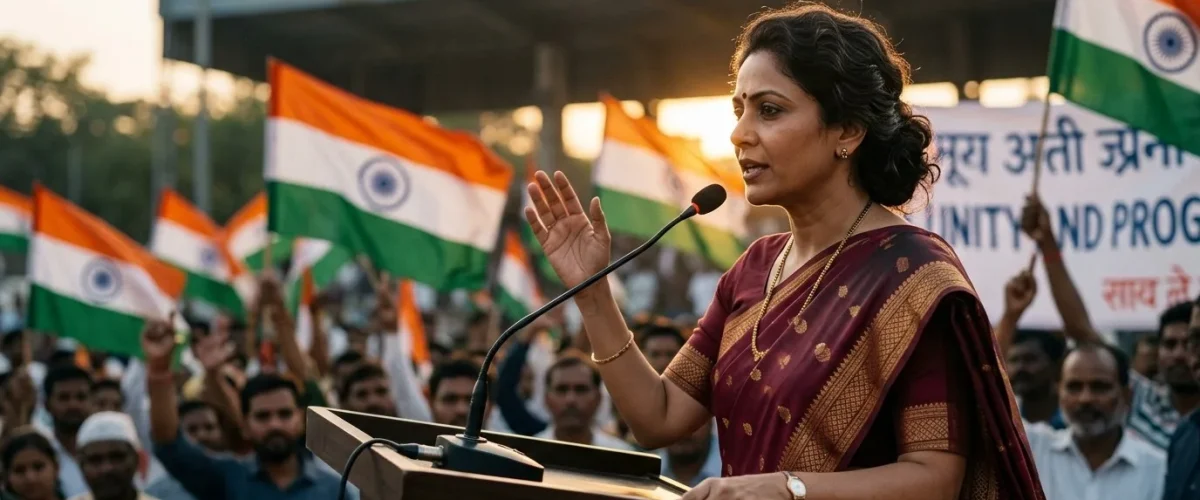
On 23 March 2026, Kangana Ranaut celebrated her 40th birthday — not at a lavish Bollywood party, but in the company of Prime Minister Narendra Modi and her family. The image, which circulated widely on social media, encapsulated the extraordinary trajectory of one of Indian cinema’s most talented, divisive, and resilient figures. At an age when many Bollywood actresses find themselves relegated to supporting roles, Ranaut has reinvented herself as a political force, a cultural provocateur, and an actress who continues to command leading roles on her own terms.
The Political Chapter
Kangana Ranaut’s entry into formal politics represents the most significant career pivot of her life. Having long used social media as a platform for political commentary — often courting controversy with her outspoken views on nationalism, industry nepotism, and cultural issues — her transition from commentary to participation was perhaps inevitable. Her association with the ruling Bharatiya Janata Party and the prominent role she has assumed in party events signal an ambition that extends well beyond the entertainment industry.
Her 40th birthday celebration with the Prime Minister was not merely a social occasion; it was a statement of political alignment and access. In Indian public life, where proximity to power carries both symbolic and practical significance, the photograph communicated that Ranaut’s political identity is not performative but substantive. Whether this political capital translates into a sustained public service career or remains an extension of her celebrity brand is a question that will define the next phase of her life.
A Cinematic Legacy Built on Unconventionality
Whatever one’s assessment of Ranaut’s political positions, her contributions to Indian cinema remain beyond dispute. The four-time National Film Award winner has delivered performances of remarkable range: from the damaged protagonist of Queen to the historical gravitas of Manikarnika, from the emotional complexity of Tanu Weds Manu Returns to the physical demands of Thalaivii. Her filmography reveals an actress who has consistently chosen challenging material, often at the expense of commercial safety.
In 2026, Ranaut continues to balance her political commitments with cinematic work. While she has been less prolific in front of the camera in recent years, her production ventures and directorial ambitions suggest a desire to shape Indian cinema from behind the scenes as well as before them. Her willingness to tackle subjects that other mainstream actresses avoid — whether due to their political sensitivity or their unconventional narrative structures — has earned her a devoted following among audiences who value artistic courage.
The Controversy Machine
Kangana Ranaut’s public life has been defined as much by controversy as by achievement. Her long-running disputes with industry figures, her provocative social media presence, and her willingness to articulate views that many find inflammatory have made her a lightning rod for public discourse. In an era when many celebrities carefully curate inoffensive public personas, Ranaut’s refusal to moderate her opinions has resulted in both passionate support and vehement criticism.
The question of whether Ranaut is a truth-teller challenging an industry’s entrenched power structures or a provocateur weaponising controversy for attention is one that Indian audiences have been debating for years, with no consensus in sight. What is undeniable is that she generates more cultural conversation than almost any other figure in Indian entertainment — a form of relevance that transcends box office figures or social media follower counts.
Women in Bollywood at 40
Ranaut’s milestone birthday also invites reflection on the broader question of how Indian cinema treats women as they age. Historically, the Hindi film industry has been characterised by a stark double standard: male stars continue to headline well into their fifties and sixties, while their female counterparts are expected to transition to “mother” roles or exit the spotlight entirely. This dynamic, while gradually shifting, remains a structural feature of the industry.
At 40, Ranaut represents a generation of actresses — including Deepika Padukone, Priyanka Chopra, Kareena Kapoor, and Alia Bhatt — who are pushing back against these conventions through a combination of career diversification, production involvement, and public advocacy. The fact that Ranaut continues to receive leading role offers and command significant public attention is itself a form of progress, even if the industry’s patriarchal norms remain far from fully dismantled.
The Year Ahead
As 2026 progresses, Kangana Ranaut’s dual identity as political figure and cinema personality creates a unique dynamic. Her political engagements provide a visibility that complements her entertainment career, while her cinematic credentials lend gravitas to her political positioning. Whether she can maintain equilibrium between these two worlds — each with its own demands, rhythms, and accountability structures — will determine how her 40s unfold.
For the Indian entertainment industry, Ranaut’s evolution reflects broader trends: the dissolution of boundaries between entertainment and politics, the growing agency of women in an industry long dominated by male gatekeepers, and the transformation of celebrity from a product of professional achievement to a platform for societal influence. While Bollywood’s blockbuster March 2026 box office performance is shaped by box office records and commercial strategies, stars like Kangana Ranaut remind us that the most enduring impact of celebrity lies in the conversations it provokes.
As she enters her fifth decade, Kangana Ranaut remains exactly what she has always been: impossible to ignore. Whether that attention takes the form of admiration, opposition, or a complex mixture of both, it confirms her significance in the cultural life of a nation grappling with its own contradictions. In Bollywood, as in Indian politics, there is no figure quite like her — and the industry, for better or worse, is more interesting because of her presence. The evolving Indian entertainment landscape of 2026 would be incomplete without her combative, contradictory, and characteristically unpredictable voice.

- India’s Startup Funding Crosses $7.2 Billion in H1 2026 - July 1, 2026
- After Ireland Shock, India’s T20I Side Faces Bigger Test - July 1, 2026
- Ireland Stun World Champions India 2-0 in Belfast, Sooryavanshi Debate Rages On - June 29, 2026