Amazon Prime Day 2026 is live — what is actually worth buying and what to leave

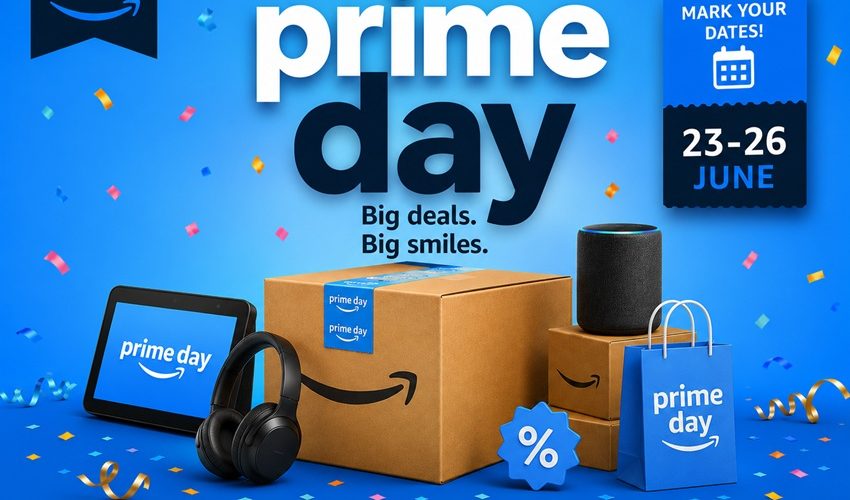
Amazon Prime Day 2026 is now in its second day, running until midnight PDT on Friday 26 June, and the event has already reshaped itself in one significant way that most shoppers haven’t fully registered yet: it’s happening in late June instead of mid-July, and that timing change should directly affect what you decide to buy this week versus what you hold off on.
Prime Day has run in July since Amazon launched it in 2015. This year the company moved it to 23-26 June — overlapping neatly with the FIFA World Cup group stage, which may or may not be a coincidence — making it a four-day event for the second year running. Amazon says Prime members across 24 countries are getting access to deals across more than 35 categories, from electronics and fashion to fresh groceries and back-to-school supplies.
The headline numbers are real: up to 65% off Amazon’s own device lineup, up to 40% off fashion, up to 30% off electronics and beauty. But those top-line percentages can be misleading without context, because not all discounts are created equal. The deals genuinely worth buying are the ones where the Prime Day price represents the lowest price in at least three months, verified through price-tracking tools such as CamelCamelCamel — not deals where Amazon quietly raised the list price in April and is now “discounting” back to where it was in January.
With that filter applied, several categories stand out. Amazon’s own device ecosystem — Kindle, Echo, Ring, Blink, and Fire TV — reliably hits its lowest prices of the year during Prime Day, rivalled only by Black Friday. This year, Kindle devices are up to 65% off, Blink Outdoor 4 security cameras are 70% off, and Fire TV Sticks are 50% off. These are not inflated discounts. Amazon has a direct commercial interest in selling its own hardware at the lowest possible price because each device becomes a gateway to Prime subscriptions, digital content, and Alexa-connected purchases. If you’ve been putting off buying a Kindle or upgrading a Ring doorbell, this week is the most rational time to do it.
Beyond Amazon’s own kit, the technology deal that stands out independently this year is the Apple Watch Series 11 at 30% off. Apple rarely permits deep discounts through third-party retailers, making a 30% Prime Day reduction unusual. Based on historical price data the Series 11 is currently at or near its lowest-ever price. It offers up to 24 hours of battery life — improved from the 18 hours of the Series 10 — and detailed health and sleep tracking. Sony headphones at 50% off and Google Pixel Buds are similarly at historically low price points. On the PC hardware side, retailers including Amazon are offering discounts on GPUs, CPUs, and SSDs, though buyers should verify individual component prices against tracker data before committing.
The category to hold off on is home goods: grills, garden furniture, mattresses, outdoor appliances. These are not traditional Prime Day categories — they’re July Fourth categories. Because Prime Day is happening before July Fourth for the first time rather than after it, shoppers who load their carts with a new barbecue this week are almost certainly paying more than they need to. July Fourth sales, which run in the first week of July and are hosted by most major retailers including Home Depot, Walmart, and Target, consistently offer their deepest discounts on exactly these products. Hold on for ten days.
Speaking of Walmart and Target: both are running competing sales events this week specifically designed to run alongside Prime Day. Walmart’s Deals Event runs 22-28 June, both in-store and online. Target Circle Deal Days are running in parallel. Before checking out on Amazon, a 60-second price comparison on either site is worth doing — particularly for home goods and non-tech categories where the retailers are actively trying to undercut Amazon’s pricing this week. Cashback credit card rates and shipping costs also affect the real-world price comparison.
A few practical notes for the next two days. Lightning Deals are the sharpest offers Amazon runs during Prime Day: time-limited, stock-limited discounts that expire when inventory runs out or the window closes, dropping as frequently as every five to ten minutes throughout the event. They appear on the Prime Day landing page and the Amazon Shopping app. If you have something specific in mind, check the app more than once. New Big Deals drop three times daily at 12am, 8am, and 1pm PDT.
For back-to-school shoppers, school supplies from Sharpie, Paper Mate, Expo, and Avery are up to 45% off, and Amazon is running Kindle Unlimited and Audible free for three months for Prime members who sign up during the event. Books — both print and Kindle — are up to 80% off.
A Prime membership costs $14.99 a month or $139 annually. A free 30-day trial is available for new members. Students and adults aged 18-24 pay $7.49 per month or $69 per year, with a six-month free trial currently available.

- India’s Startup Funding Crosses $7.2 Billion in H1 2026 - July 1, 2026
- After Ireland Shock, India’s T20I Side Faces Bigger Test - July 1, 2026
- Ireland Stun World Champions India 2-0 in Belfast, Sooryavanshi Debate Rages On - June 29, 2026