Budget 2026 Unveils Mountain Trail Network Across Himachal Pradesh, Kashmir, and Eastern Ghats

The Union Budget 2026-27 has delivered a landmark announcement for India’s tourism sector: the development of a network of ecologically sustainable mountain trails across Himachal Pradesh, Jammu and Kashmir, Uttarakhand, and the Araku Valley in Andhra Pradesh’s Eastern Ghats. Finance Minister Nirmala Sitharaman’s proposal, unveiled during her budget speech on 1 February 2026, represents the most ambitious government investment in experiential tourism infrastructure in recent memory and signals a strategic shift in India’s approach to promoting its natural heritage.
A New Vision for Mountain Tourism
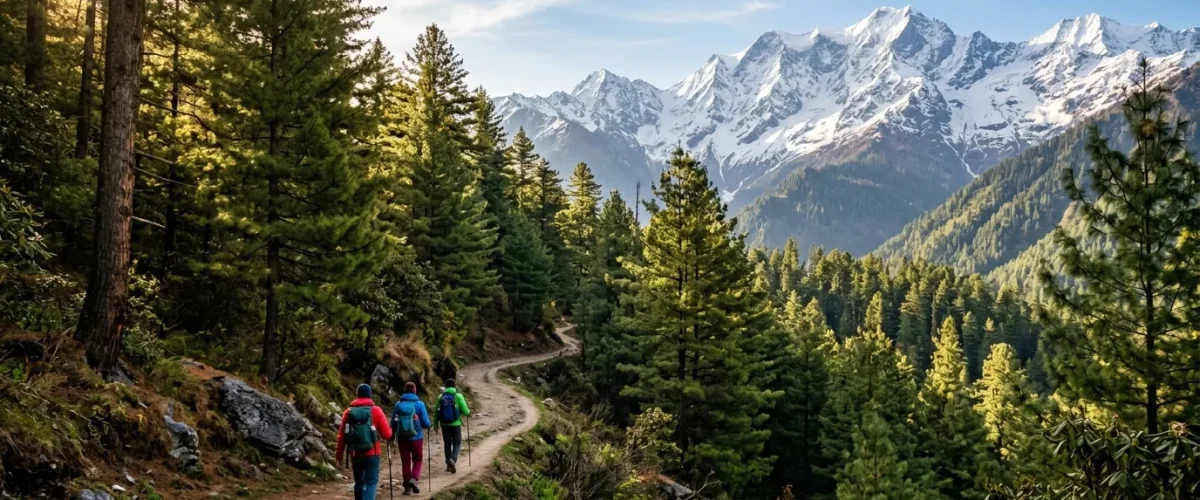
The mountain trail initiative forms the centrepiece of the Budget’s tourism provisions, which collectively aim to transform India into a global tourism hub. The proposal envisions the creation of professionally designed, sustainably constructed trekking trails that connect scenic landscapes, cultural heritage sites, and local communities — offering visitors immersive experiences that go far beyond the conventional sightseeing model.
“These trails will not be mere walking paths,” explained Tourism Minister Gajendra Singh Shekhawat in a post-budget briefing. “They will be curated experiences that combine natural beauty with storytelling — each trail will interpret the geology, ecology, history, and living culture of the landscapes through which it passes. The inspiration comes from global models like the Camino de Santiago in Spain or the Great Himalayan Trail in Nepal, adapted to India’s unique context.”
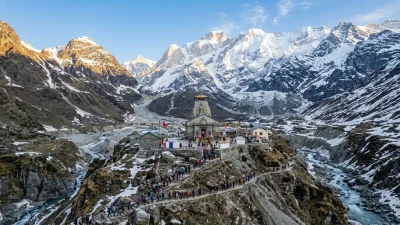
The initiative is structured around four geographic clusters. In Himachal Pradesh, trails will traverse the Kullu Valley, the Spiti region, and the Dhauladhar range, connecting destinations such as Manali, Naggar, Malana, and the remote Pin Valley. In Jammu and Kashmir, the focus will be on the Kashmir Great Lakes circuit, the Tarsar-Marsar route, and trails connecting the Mughal-era gardens. Uttarakhand’s network will build upon existing trekking infrastructure in the Kumaon and Garhwal regions, while the Araku Valley trails represent a pioneering effort to develop mountain tourism in South India’s Eastern Ghats.
The Araku Valley Surprise
The inclusion of Araku Valley in the mountain trail network has generated particular interest and excitement. Located in the Visakhapatnam district of Andhra Pradesh, Araku Valley is a picturesque region of coffee plantations, tribal villages, and forested hills that has long been considered one of India’s best-kept tourism secrets. The valley’s elevation of approximately 1,300 metres provides relief from the coastal heat, and its Borra Caves — among the largest in India — add a unique geological dimension to the tourism offering.
The budget allocation for Araku trails is seen as recognition of the need to distribute tourism development more equitably across the country, rather than concentrating investment in the already well-developed Himalayan states. It also aligns with the government’s broader emphasis on tribal development, as Araku Valley is home to several indigenous communities whose cultural traditions, agricultural practices, and handicrafts could form the basis of community-based tourism initiatives.
Ecological Sustainability: Design Principles
The emphasis on ecological sustainability in the trail design reflects lessons learned from the environmental challenges that have accompanied unregulated tourism growth at destinations across India. The trail development guidelines, being formulated by the Ministry of Tourism in consultation with the Ministry of Environment, Forest and Climate Change, specify requirements for minimal terrain disturbance, use of locally sourced and biodegradable construction materials, carrying capacity management, and waste removal protocols.
Each trail will be required to undergo a comprehensive environmental impact assessment, and ongoing monitoring systems will track ecological indicators including soil erosion, vegetation health, wildlife disturbance, and water quality in surrounding watersheds. These safeguards are consistent with India’s broader environmental governance framework, which has been progressively strengthened in response to the tensions between development and conservation.
Economic Impact and Community Benefits
The economic implications of the mountain trail network are substantial. International experience suggests that well-developed trail systems can generate significant economic value for surrounding communities through accommodation, food services, guide employment, transportation, and the sale of local products. The Appalachian Trail in the United States, for example, is estimated to contribute over $3 billion annually to local economies along its route.
India’s trail initiative explicitly incorporates community benefit mechanisms. Trail-adjacent villages will be supported in developing homestay accommodation, local cuisine experiences, and craft workshops that provide travellers with authentic cultural engagement while channelling tourism revenue directly to rural households. The Ministry of Tourism plans to train 10,000 certified trail guides across the four clusters — a figure that represents both a significant employment programme and a crucial investment in visitor safety.
The guide training programme will cover wilderness first aid, navigation, environmental interpretation, and communication skills in multiple languages, creating a professional cadre of mountain tourism professionals that India currently lacks. The initiative builds on the broader Budget proposal to develop 50 additional tourism destinations across the country as part of the “Heal in India” and “Visit India” campaigns.
Infrastructure Connectivity
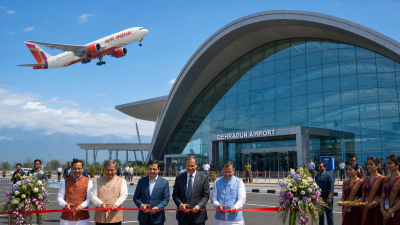
The success of the mountain trail network will depend critically on transportation connectivity — a domain where India has been making significant investments. New highway projects, expanded airport capacity at regional airports such as Kullu-Manali (Bhuntar), Shimla, and Srinagar, and the extension of railway lines to remote destinations are all expected to improve access to trail starting points.
The Vande Bharat Express network, which continues to expand across India, has been proposed for extension to key tourism corridors, including potential routes connecting Delhi to Himachal Pradesh and connecting major cities to the Araku Valley region. These transportation improvements represent the kind of integrated planning that India’s tourism sector has long needed but rarely received.
International Benchmarking
India’s mountain trail initiative draws on international best practices while acknowledging the country’s distinctive challenges and opportunities. The Ministry of Tourism has engaged consultants who have worked on trail development projects in New Zealand (the Great Walks system), Peru (the Inca Trail management model), and Bhutan (the Trans Bhutan Trail), incorporating design and management principles that have proven effective in diverse geographic and cultural contexts.
However, the Indian context presents unique considerations. The sheer scale of potential visitor numbers, the diversity of terrain and climate conditions, the presence of sensitive wildlife habitats, and the need to accommodate visitors with varying levels of fitness and experience all require tailored solutions that go beyond simply transplanting foreign models.
A Defining Moment for Indian Tourism
The mountain trail network announced in Budget 2026-27 has the potential to redefine India’s tourism identity on the global stage. By investing in experiential, sustainable, and community-centred tourism infrastructure, the government is signalling that India’s tourism future lies not in mass tourism models that commoditise natural and cultural assets, but in premium experiences that celebrate and preserve them.
The trail initiative represents the convergence of multiple government priorities — tourism development, rural employment, tribal welfare, environmental conservation, and international branding — into a single, coherent programme. Its success will depend on execution, sustained funding, and the genuine empowerment of local communities to shape and benefit from the tourism that flows through their landscapes.
India’s investment in sustainable tourism infrastructure reflects the same long-term strategic thinking visible in the country’s ambitious space programme and quantum technology roadmap — a nation increasingly confident in its ability to plan and execute at scale for the future.