GPU Wars, Gaming Laptops, and the Hardware Hunger: What’s Driving India’s PC Gaming Hardware Market in 2026

India’s PC gaming hardware market is experiencing a surge in demand that reflects the broader maturation of the country’s gaming ecosystem. From GPUs and processors to gaming laptops and peripherals, Indian gamers are investing in hardware with an enthusiasm that is reshaping the consumer electronics market. In 2026, the confluence of new product launches, competitive pricing strategies, and a growing culture of gaming enthusiasm is creating a hardware market that global manufacturers are taking increasingly seriously.
The GPU Market: New Generations, New Possibilities
Graphics processing units remain the centrepiece of any gaming PC, and the Indian GPU market in 2026 is vibrant. NVIDIA’s RTX 40-series and its anticipated successor, alongside AMD’s competitive Radeon offerings, provide Indian gamers with a range of options spanning budget to enthusiast-grade performance. The competition between NVIDIA and AMD has been beneficial for Indian consumers, driving improvements in both performance and value across price segments.
GPU pricing in India, historically inflated by import duties and supply chain mark-ups, has improved from the crisis levels of 2021-2022 but remains higher than in North American and European markets. The grey market, where components are imported through unofficial channels to avoid customs duties, continues to operate alongside official distribution channels. The formalisation of the GPU market in India — with official distributor warranties and retail presence — is an ongoing process that will benefit consumers as it progresses.
Gaming Laptops: India’s Hardware Sweet Spot
Gaming laptops have emerged as the most popular form factor for PC gaming in India. The reasons are pragmatic: Indian living spaces are often compact, dedicated gaming rooms are a luxury few can afford, and the portability of a laptop suits the mobile lifestyles of students and young professionals who form the core of the PC gaming demographic.
Manufacturers have responded to this demand with an extensive range of gaming laptops at price points from Rs 50,000 to over Rs 3,00,000. The mid-range segment — Rs 70,000 to Rs 1,20,000 — has been the most competitive, with brands like ASUS ROG, Lenovo Legion, MSI, Acer Predator, and HP Omen vying for market share with aggressive specifications and pricing. The availability of capable gaming laptops at these price points has been a significant driver of PC gaming adoption in India.
Peripherals: The Accessories Boom
The market for gaming peripherals — keyboards, mice, headsets, and monitors — has grown in tandem with the hardware market. Indian gamers, influenced by content creators and esports professionals, are investing in mechanical keyboards, high-DPI gaming mice, and low-latency gaming monitors that enhance the gaming experience. Both international brands and Indian manufacturers are competing in this space, with the latter offering competitive products at lower price points.
The gaming monitor market has been particularly dynamic. High refresh rate displays (144Hz, 165Hz, and 240Hz) have transitioned from luxury items to mainstream aspirations for serious gamers. The availability of quality gaming monitors from brands like Samsung, LG, BenQ, and Acer at relatively accessible price points has contributed to the overall improvement in gaming setups across Indian households.
The Custom Build Community
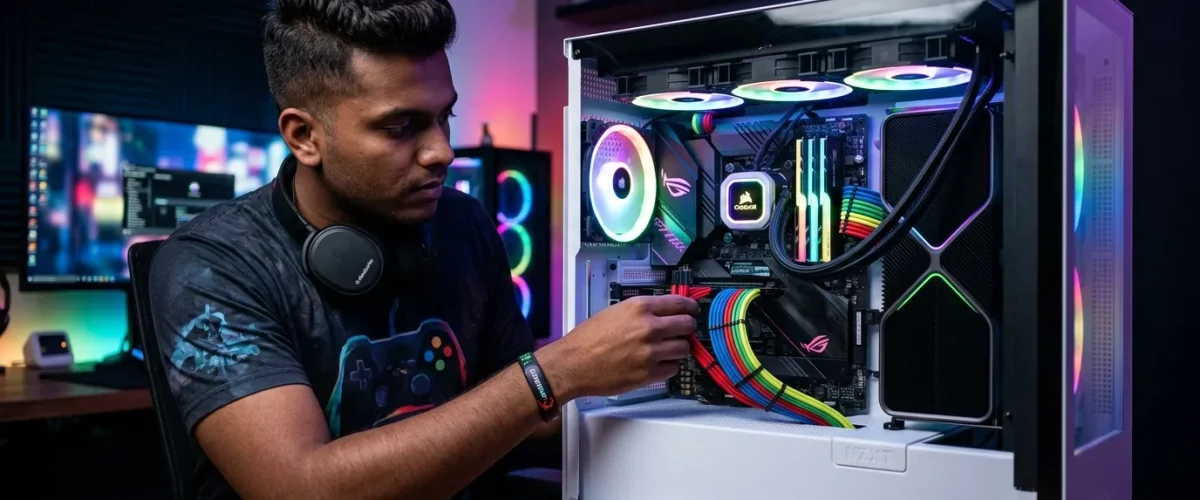
Custom PC building has become a cultural phenomenon within Indian gaming circles. Online communities, YouTube channels, and social media groups dedicated to PC building provide guidance, inspiration, and troubleshooting support for enthusiasts at every experience level. The satisfaction of assembling a custom PC — selecting components, managing cable routing, optimising RGB lighting — has become part of the gaming experience itself.
Indian tech YouTubers have played a pivotal role in democratising PC building knowledge. Channels that review components, publish build guides at various budget levels, and benchmark gaming performance have attracted millions of subscribers. These creators serve as trusted advisors for Indian gamers navigating the complex and sometimes opaque hardware market, helping consumers make informed purchasing decisions.
E-Commerce and Retail Channels
E-commerce platforms — Amazon India, Flipkart, and specialised retailers like MD Computers, Vedant Computers, and PC Studio — are the primary purchasing channels for gaming hardware in India. The e-commerce model provides price transparency, customer reviews, and convenient delivery that traditional brick-and-mortar retail often cannot match.
Seasonal sales events — Amazon Great Indian Festival, Flipkart Big Billion Days, and manufacturer-specific promotions — have become key purchasing occasions for Indian gamers. The discounts available during these events can be substantial, and many gamers strategically time their hardware purchases to coincide with these sales windows.
Challenges: Pricing, Duties, and Warranty
The Indian PC gaming hardware market’s growth is constrained by factors that manufacturers and policymakers could address. Import duties on electronic components add 10-28 per cent to the cost of gaming hardware, putting Indian consumers at a disadvantage compared to their global counterparts. The grey market, while offering lower prices, introduces risks related to warranty and product authenticity.
Warranty service for gaming components can also be challenging in India, with limited service centre coverage and extended turnaround times. These practical considerations influence purchasing decisions and can deter potential consumers who are accustomed to the reliable after-sales service associated with smartphones and other consumer electronics.
The Market Ahead
India’s PC gaming hardware market in 2026 is characterised by growing demand, increasing competition among manufacturers, and a maturing retail ecosystem. The community of passionate PC gamers that drives this market is vocal, knowledgeable, and growing. While challenges around pricing and distribution persist, the trajectory is unmistakably upward. For hardware manufacturers, India’s PC gaming market offers volume growth in a segment that global markets may have already saturated. For Indian gamers, the improving availability and accessibility of gaming hardware means that the barrier to a quality PC gaming experience has never been lower. The build, it seems, is just getting started.

- India’s Startup Funding Crosses $7.2 Billion in H1 2026 - July 1, 2026
- After Ireland Shock, India’s T20I Side Faces Bigger Test - July 1, 2026
- Ireland Stun World Champions India 2-0 in Belfast, Sooryavanshi Debate Rages On - June 29, 2026