Vande Bharat Express Network Expands with New Routes Connecting India’s Tourism and Business Corridors

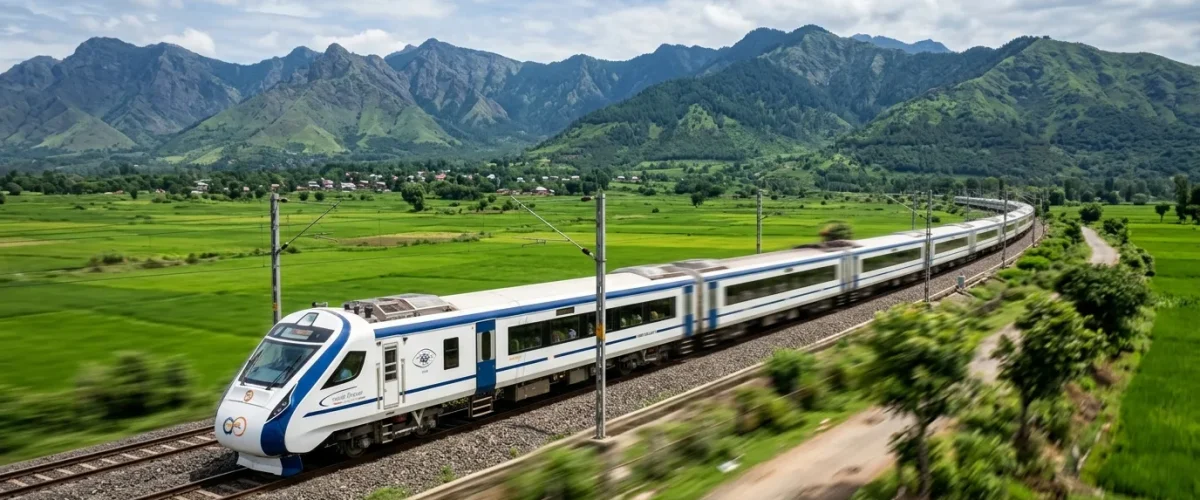
India’s rail travel experience is being transformed at an unprecedented pace as the Vande Bharat Express network continues its ambitious expansion across the country’s vast railway system. With new routes connecting major tourism destinations, business centres, and Tier-2 cities, the semi-high-speed train service is reshaping how Indians travel between cities — offering a combination of speed, comfort, and affordability that is rapidly establishing it as the preferred mode of intercity transport for a growing class of travellers.
The Vande Bharat Revolution
The Vande Bharat Express, India’s first indigenous semi-high-speed train, has evolved from a showcase project connecting a handful of city pairs into a nationwide network that, as of early 2026, encompasses over 130 operational routes across every railway zone in the country. The trains, manufactured at the Integral Coach Factory (ICF) in Chennai and the Rail Coach Factory in Kapurthala, operate at speeds of up to 160 kilometres per hour and offer amenities including air conditioning, reclining seats, onboard Wi-Fi, and GPS-based passenger information systems.
The network’s expansion has been one of the Indian Railways’ highest-profile initiatives, with the government targeting 400 operational Vande Bharat trains by the end of 2026. The pace of production has accelerated significantly, with ICF now capable of producing multiple trainsets per month — a manufacturing achievement that reflects both the urgency of the government’s timeline and the growing efficiency of India’s rail manufacturing ecosystem.
“Vande Bharat is not just a train — it is a statement about Indian manufacturing capability and the quality of public services that Indian citizens deserve,” observed Railway Minister Ashwini Vaishnaw. “Every new route we launch demonstrates that India can design, build, and operate world-class rail services using indigenous technology.”
New Tourism Corridors
Several of the routes launched or announced in 2026 are specifically designed to serve India’s growing domestic tourism market. The Vande Bharat service connecting Delhi to Varanasi via Lucknow and Prayagraj has dramatically reduced travel times on one of India’s most popular pilgrimage and cultural tourism corridors. Similarly, new services linking Mumbai to Goa, Chennai to Madurai, and Bengaluru to Hubli are creating fast, comfortable rail connections between metropolitan gateways and tourism-rich destinations.
The impact on tourism flows is already visible. Travel operators report that the availability of Vande Bharat services has increased the viability of short-duration trips to destinations that were previously considered too far for weekend getaways by rail. The three-and-a-half-hour journey from Delhi to Agra on Vande Bharat, for example, has made day trips to the Taj Mahal considerably more attractive, while the service between Mumbai and Shirdi has boosted pilgrimage tourism to one of Maharashtra’s most visited shrines.
The tourism connectivity enabled by Vande Bharat complements the broader investments being made in India’s tourism infrastructure, including the wellness and adventure tourism boom in Uttarakhand and the heritage tourism renaissance in Tamil Nadu, where improved rail connectivity is expected to significantly increase visitor numbers.
Business Connectivity: The Corporate Traveller
Beyond tourism, the Vande Bharat network is increasingly serving the needs of business travellers. Routes connecting major commercial centres — Delhi-Chandigarh, Mumbai-Ahmedabad, Chennai-Bengaluru, Kolkata-Bhubaneswar — have become popular with corporate travellers who value the ability to work productively during the journey, avoid the uncertainties of air travel (including airport delays and last-mile connectivity challenges), and arrive at city-centre stations rather than peripheral airports.
The trains’ onboard Wi-Fi, power outlets at every seat, and relatively spacious seating compare favourably with domestic flights for journeys of 4-6 hours, particularly when total door-to-door travel time — including airport commutes, security screening, and boarding procedures — is factored in. Several corporations have reportedly revised their travel policies to encourage Vande Bharat usage for intercity journeys within the network’s range.
Tier-2 City Connectivity
One of the most significant dimensions of the Vande Bharat expansion is its extension to Tier-2 and Tier-3 cities that have historically been underserved by premium rail services. Routes connecting cities such as Jaipur, Indore, Bhopal, Patna, Visakhapatnam, Kozhikode, and Thiruvananthapuram to major metropolitan centres are providing these cities with a quality of rail connectivity that was previously available only to the largest metros.
This connectivity has economic implications beyond tourism and business travel. By reducing effective distances between cities, Vande Bharat is facilitating the decentralisation of economic activity, making it more feasible for businesses to operate across multiple cities and for professionals to live in smaller cities while maintaining relationships with clients and colleagues in metropolitan areas. The network is, in effect, expanding the economic geography of urban India.
The Sleeper Vande Bharat: A Game-Changer
Among the most anticipated developments in the Vande Bharat programme is the introduction of the sleeper variant, designed for overnight journeys covering distances of 800-1,200 kilometres. The sleeper Vande Bharat, currently in the testing phase, will offer modern sleeping berths with individual reading lights, charging ports, privacy curtains, and climate control — a significant upgrade from the ageing fleet of Rajdhani Express trains that currently serve overnight intercity routes.
The sleeper variant has the potential to compete directly with domestic airlines for journeys where overnight travel is practical — effectively converting sleeping hours into productive travel time and eliminating the need for hotel stays at either end. Routes such as Delhi-Mumbai, Delhi-Kolkata, and Mumbai-Chennai are expected to be among the first to receive sleeper Vande Bharat services.
Manufacturing and Technology
The Vande Bharat programme has catalysed significant advances in India’s railway manufacturing ecosystem. The trains feature a distributed power system (unlike conventional locomotive-hauled trains), regenerative braking that recovers energy during deceleration, automatic doors, bio-vacuum toilets, and fire detection and suppression systems that meet international safety standards.
The manufacturing process has achieved progressively higher levels of indigenisation, with current-generation Vande Bharat trains incorporating over 80 per cent domestic content. This represents a significant achievement for India’s Make in India programme and has created a supply chain of component manufacturers across the country.
The technological sophistication of the Vande Bharat programme reflects the same engineering excellence visible in India’s other technology-intensive sectors, including the semiconductor fabrication ecosystem that is taking shape with similar emphasis on indigenous capability development.
Looking Ahead
The Vande Bharat Express has already established itself as the most successful new rail service in Indian Railways’ history. As the network continues to expand — with the 400-train target now firmly in sight — the cumulative impact on Indian travel patterns, economic geography, and public expectations of rail travel quality will only deepen. The train has become, in many ways, a symbol of the new India that the government aspires to build — modern, self-reliant, and accessible to all.