India’s M&A Surge Tops $26 Billion: Why 2026 Could Be the Biggest Year for Corporate Dealmaking

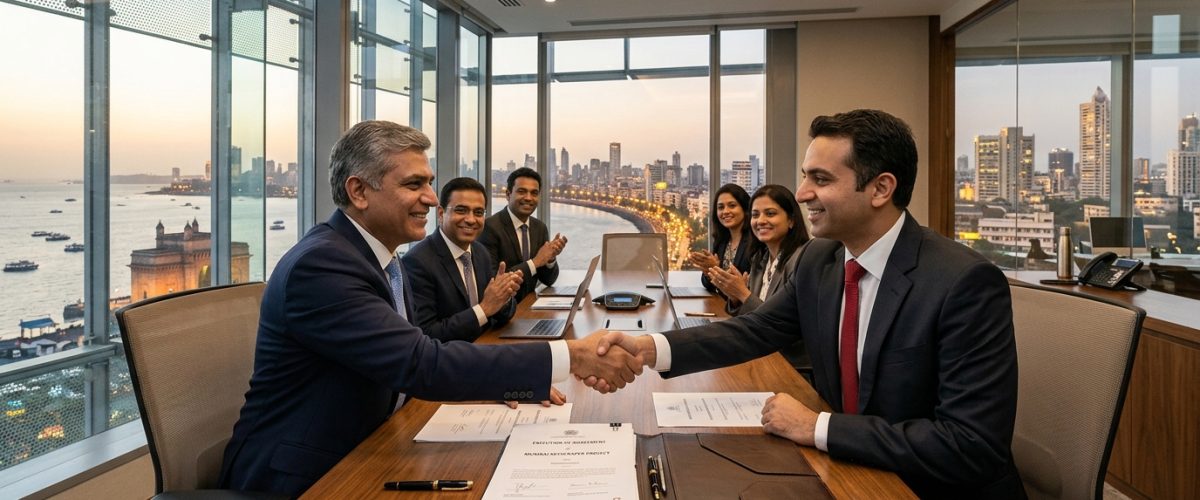
India’s mergers and acquisitions landscape is poised for a record-breaking year in 2026, building on the extraordinary momentum that saw dealmaking activity reach approximately $26 billion through November 2025. Driven by consolidation across technology, energy, infrastructure, and financial services, Indian corporates are increasingly leveraging strategic acquisitions to achieve scale, enter new markets, and build capabilities for a rapidly evolving economic environment. Industry analysts and investment bankers widely expect 2026 to surpass the previous year’s tally, potentially crossing the $30 billion mark.
The Forces Driving India’s Dealmaking Renaissance
Several structural and cyclical factors are converging to create what investment bankers describe as a “golden era” for Indian M&A. The country’s GDP growth rate of 7.4 per cent—among the highest of any major economy—has created a buoyant domestic market that makes Indian assets attractive to both domestic acquirers seeking scale and foreign companies looking for growth exposure.
Corporate balance sheets are in their healthiest state in over a decade. Indian companies have undergone significant deleveraging since 2020, with aggregate corporate debt-to-equity ratios declining to levels last seen in the early 2010s. This financial strength, combined with robust cash flows from strong operating performance, has given companies the firepower to pursue ambitious acquisition strategies.
The regulatory environment has also become more conducive to dealmaking. Reforms in the Insolvency and Bankruptcy Code (IBC) have streamlined the resolution of distressed assets, while amendments to competition law have provided greater clarity on merger approval timelines. The government’s liberalisation of FDI norms across multiple sectors has opened new avenues for cross-border transactions.
Sector Spotlight: Where the Action Is Concentrated
Energy and infrastructure have emerged as the most active M&A sectors, driven by India’s ambitious clean energy transition and massive infrastructure build-out. Renewable energy assets—solar farms, wind projects, and green hydrogen facilities—have attracted significant acquisition interest from both Indian conglomerates and global energy majors. The Adani Group, Tata Power, and JSW Energy have all been active acquirers, competing with international players for premium clean energy portfolios.
Technology and digital services represent another major dealmaking arena. The explosive growth of India’s digital economy has created valuable assets in fintech, SaaS, e-commerce logistics, and enterprise software. Large IT services companies such as Infosys, TCS, and Wipro have accelerated their acquisition strategies, targeting specialised firms in artificial intelligence, cloud services, and cybersecurity to enhance their service offerings and maintain competitive positions in global markets. This tech consolidation trend is closely connected to the developments discussed in our coverage of India’s AI ambitions and the structural gaps in its technology ecosystem.
Financial services consolidation is also gathering pace. The banking sector, now healthier than it has been in years, is seeing a new wave of mergers among smaller banks, non-banking financial companies (NBFCs), and insurance entities. The government’s expressed intention to privatise at least one public sector bank has added another dimension to dealmaking expectations in the financial sector.
Marquee Deals That Defined the Momentum
Several landmark transactions have set the tone for India’s M&A market. The acquisition of a major renewable energy portfolio by a leading conglomerate for over $3 billion highlighted the strategic premium attached to clean energy assets. In technology, a series of mid-market acquisitions in the $200-500 million range by IT services majors demonstrated the industry’s appetite for capability-driven dealmaking.
Cross-border transactions have been equally noteworthy. Indian pharmaceutical companies have made significant acquisitions in the United States and Europe to expand their biosimilar and specialty drug portfolios. Similarly, Indian auto component manufacturers have acquired European and Japanese firms to secure technology and market access in the electric vehicle supply chain.
Outbound M&A by Indian companies exceeded $12 billion in 2025, reflecting growing confidence among Indian corporates in their ability to manage and integrate global operations. This “India going global” narrative represents a maturation of the country’s corporate sector, moving beyond cost arbitrage to genuine value creation through international expansion.
Private Equity and Venture Capital: The Catalytic Role
Private equity firms have been instrumental in driving M&A activity, both as buyers and sellers. Global PE firms such as KKR, Blackstone, Carlyle, and Bain Capital have increased their India allocations, drawn by the country’s growth profile and improving exit environment. PE-backed buyouts, particularly in healthcare, consumer goods, and financial services, have accounted for a significant share of total deal volume.
Equally important has been the role of PE exits in facilitating M&A activity. As early-stage PE investments from the 2018-2021 vintage mature, portfolio companies are increasingly being sold to strategic acquirers or larger PE funds, creating a vibrant secondary market. This exit activity provides validation of Indian business models and valuations, encouraging further capital deployment into the ecosystem.
Challenges and Risks in the Dealmaking Environment
Despite the optimism, several challenges could moderate M&A activity. Valuation expectations remain elevated, particularly for high-growth technology and consumer businesses, creating a bid-ask spread that can delay or derail transactions. Integration risks are ever-present, with Indian corporate history littered with examples of acquisitions that failed to deliver promised synergies.
Regulatory uncertainty, while diminished, has not been entirely eliminated. The Competition Commission of India’s increased scrutiny of transactions that could create dominant market positions has added complexity to deal structuring. Similarly, sector-specific regulatory changes—particularly in telecom, banking, and defence—can create uncertainty for potential acquirers.
Geopolitical factors also play a role. While the US-India trade rapprochement has been broadly positive for cross-border dealmaking, tensions with China have effectively foreclosed a significant source of potential investment, particularly in technology and manufacturing sectors.
Outlook for 2026: The Pipeline Suggests Record Activity
Investment bankers report robust M&A pipelines across sectors, suggesting that 2026 will likely set new records for Indian dealmaking. Several factors support this outlook: continued economic growth driving strategic expansion, healthy corporate balance sheets providing acquisition capacity, a supportive regulatory environment, and active PE involvement providing both capital and dealmaking expertise.
The democratisation of M&A is also noteworthy. While large-cap transactions attract headlines, there has been a significant increase in mid-market deals valued between ₹200 crore and ₹2,000 crore. These transactions, often involving family-owned businesses transitioning to professional management or small companies merging for scale, represent the maturation of India’s corporate landscape and are reshaping industries from healthcare to consumer goods to manufacturing, in parallel with the entertainment sector’s transformation discussed in our analysis of Bollywood’s evolving content and business strategies in March 2026.
As India positions itself as the world’s fastest-growing major economy, the M&A market serves as both a reflection of and a catalyst for this growth—enabling companies to build the scale, capabilities, and market access needed to compete on the global stage.

- Kiran Mani Joins OpenAI to Lead Asia-Pacific Growth After JioStar Exit - March 25, 2026
- Euler Motors Raises Rs 437 Crore as India’s Commercial EV Startup Ecosystem Accelerates in 2026 - March 25, 2026
- Startup India at 10: A Decade of Disruption and the Founders Who Shaped the Ecosystem - March 24, 2026