Tata, Reliance, and Infosys Power Sectoral Rally as India Inc Prepares for Q4 Earnings Season

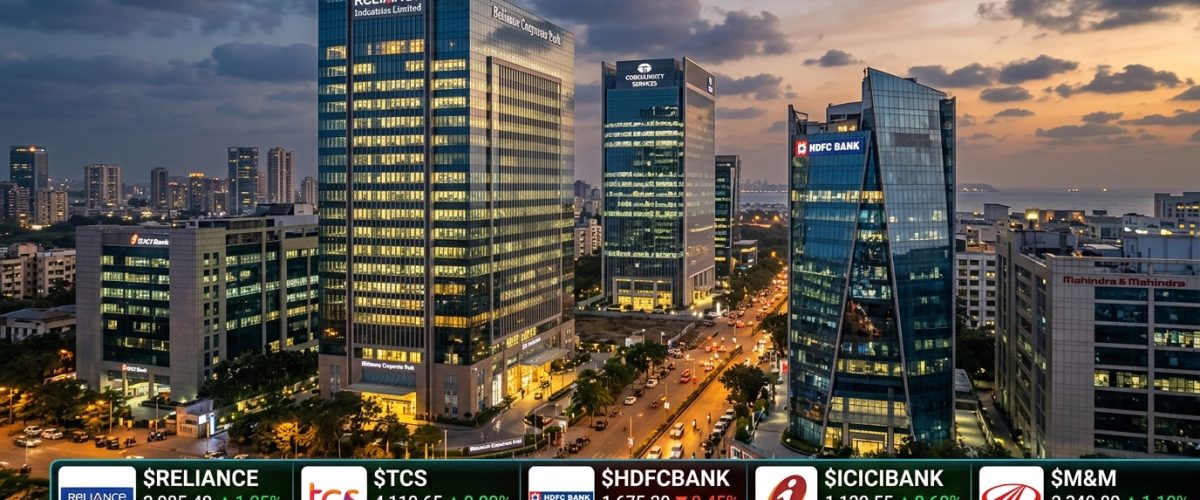
As India’s Q4 FY2025-26 earnings season approaches, the country’s blue-chip companies are demonstrating why India Inc remains a compelling investment proposition despite global uncertainties. The week ending March 20, 2026 saw decisive buying in Tata Group companies, Reliance Industries, and IT bellwethers Infosys and Tech Mahindra, as institutional investors positioned themselves ahead of what analysts expect to be a strong earnings quarter. The BSE Sensex’s advance to 74,532.96, driven by these sectoral champions, underscores the market’s confidence in corporate India’s ability to deliver sustained profit growth.
Tata Group: The Conglomerate That Keeps Reinventing Itself
Tata Group companies have been standout performers in early 2026, with the combined market capitalisation of listed Tata entities crossing ₹35 lakh crore. Tata Steel led the Sensex gainers during the week, rising over 4 per cent on the back of improved global metal prices and robust domestic steel demand driven by government infrastructure spending.
The group’s diversification strategy continues to pay dividends. Tata Consultancy Services (TCS) has maintained its position as India’s most valuable company, with steady deal wins in digital transformation and cloud services. Tata Motors is benefiting from strong demand for JLR vehicles globally and the ramp-up of its electric vehicle portfolio in India. Tata Consumer Products has expanded its branded food portfolio, capitalising on India’s premiumisation trend in FMCG.
Perhaps most significantly, the Tata Group’s entry into semiconductor manufacturing through its partnership with Taiwan’s PSMC represents a multi-decade strategic bet on India’s technology manufacturing ambitions. The Gujarat fabrication facility, expected to commence production in late 2026, has already attracted significant investor attention, positioning Tata as a central player in India’s electronics hardware push. This strategic direction mirrors the broader technology ecosystem challenges explored in our analysis of India’s AI Summit 2026 and its structural technology gaps.
Reliance Industries: Diversification as a Volatility Shield
Reliance Industries Limited (RIL) continues to demonstrate the strategic advantage of its diversified business model. In a week dominated by crude oil volatility and geopolitical anxiety, RIL’s stock rose steadily as investors recognised that the company’s exposure to rising oil prices through its refining operations provides a natural hedge against the negative impact on its consumer-facing businesses.
The company’s digital services arm, Jio Platforms, has maintained its trajectory of subscriber and revenue growth, with Jio’s 5G network now covering over 90 per cent of India’s urban population. Average Revenue Per User (ARPU) has improved following the tariff hikes implemented in late 2025, supporting profitability in the telecom segment.
Reliance Retail, India’s largest retail operation, continues to expand aggressively across formats—from premium luxury partnerships to value-focused JioMart outlets. The integration of online and offline channels, backed by Jio’s technology platform, has created a retail ecosystem that competitors find difficult to replicate. Analysts project Reliance Retail’s revenue to cross ₹3.5 lakh crore in FY26, making it one of the largest retailers in Asia.
IT Sector: Deal Momentum and Rupee Stability Boost Sentiment
The information technology sector has regained investor favour in March 2026, with Infosys and Tech Mahindra among the week’s leading gainers. Several factors are driving renewed optimism in India’s flagship export industry.
Deal activity has picked up meaningfully, with large transformation deals in areas such as cloud migration, AI implementation, and cybersecurity driving revenue visibility. Infosys reported its strongest quarterly deal bookings in six quarters during Q3 FY26, while Tech Mahindra’s turnaround under its relatively new management team has shown tangible progress in margin improvement and client mining.
The Indian rupee’s relative stability against the US dollar—trading in a narrow band of ₹85-86.5 through March—has provided earnings predictability for IT companies that derive 60-75 per cent of their revenues in dollar terms. Meanwhile, the headcount rationalisation undertaken by most IT firms over the past two years has improved productivity metrics and operating margins.
Wipro and HCL Technologies have also shown improved performance, with both companies focusing on specific vertical strengths—Wipro in consulting-led engagements and HCL in infrastructure management and engineering services. The sector’s valuation re-rating from its 2024 lows suggests that the market is pricing in a sustained recovery in technology spending by global enterprises.
PSU Banks: The Quiet Outperformers
Public sector bank stocks have been among the most consistent outperformers in 2026, with the Nifty PSU Bank index gaining over 15 per cent year-to-date. The improvement in asset quality—with gross NPA ratios at decade-low levels—combined with robust credit growth of 14.5 per cent and improved return on equity metrics has transformed investor perception of these institutions.
State Bank of India, Bank of Baroda, and Canara Bank have attracted significant institutional interest, with several analysts upgrading their target prices. The government’s continued capital infusion programme and the structural shift toward digital banking have improved operational efficiency across the PSU banking space. The upcoming privatisation of at least one PSU bank remains a key catalyst that could trigger further re-rating of the sector.
Emerging Sectors: New Economy Companies Make Their Mark
Beyond the traditional bellwethers, several new economy companies are asserting their presence in India’s corporate landscape. Zomato, now firmly profitable, has seen its market capitalisation approach ₹2 lakh crore on the strength of its food delivery, quick commerce (Blinkit), and going-out businesses. The company’s operational leverage and improving unit economics have validated the long-term potential of India’s consumer internet sector.
In the pharmaceutical space, Sun Pharma continues to strengthen its position as India’s largest pharma company, with its specialty portfolio in the US market driving margin expansion. The broader Indian pharma sector is benefiting from increased domestic healthcare spending, biosimilar opportunities, and the China+1 sourcing strategy adopted by global pharmaceutical companies.
Q4 Earnings Preview: What Analysts Expect
Consensus estimates for Q4 FY26 suggest healthy earnings growth across most sectors. Nifty 50 aggregate earnings are expected to grow 12-14 per cent year-on-year, driven by banking sector profitability, IT services recovery, and continued strength in capital goods and infrastructure companies.
However, margin pressures from elevated commodity costs—particularly crude oil and industrial metals—could weigh on earnings in sectors such as FMCG, automobiles, and chemicals. Companies with strong pricing power and diversified revenue streams are expected to navigate these pressures more effectively than those in commoditised businesses.
The earnings season will also provide crucial forward guidance on investment intentions, hiring plans, and demand outlooks for FY27. With the economy expected to grow 6.9-7.0 per cent in the first half of FY27, corporate India’s commentary on business conditions and growth prospects will be closely scrutinised by investors seeking to validate the premium valuation at which Indian markets currently trade. As the commercial dynamics of India’s economy increasingly intersect with its cultural industries—from corporate sports investments like those driving IPL 2026 franchise strategies to media and entertainment—Q4 earnings will paint a comprehensive picture of India Inc’s health.

- Kiran Mani Joins OpenAI to Lead Asia-Pacific Growth After JioStar Exit - March 25, 2026
- Euler Motors Raises Rs 437 Crore as India’s Commercial EV Startup Ecosystem Accelerates in 2026 - March 25, 2026
- Startup India at 10: A Decade of Disruption and the Founders Who Shaped the Ecosystem - March 24, 2026