India’s Inflation Drops Below 2 Per Cent: What Ultra-Low Prices Mean for Growth, Policy, and Household Budgets

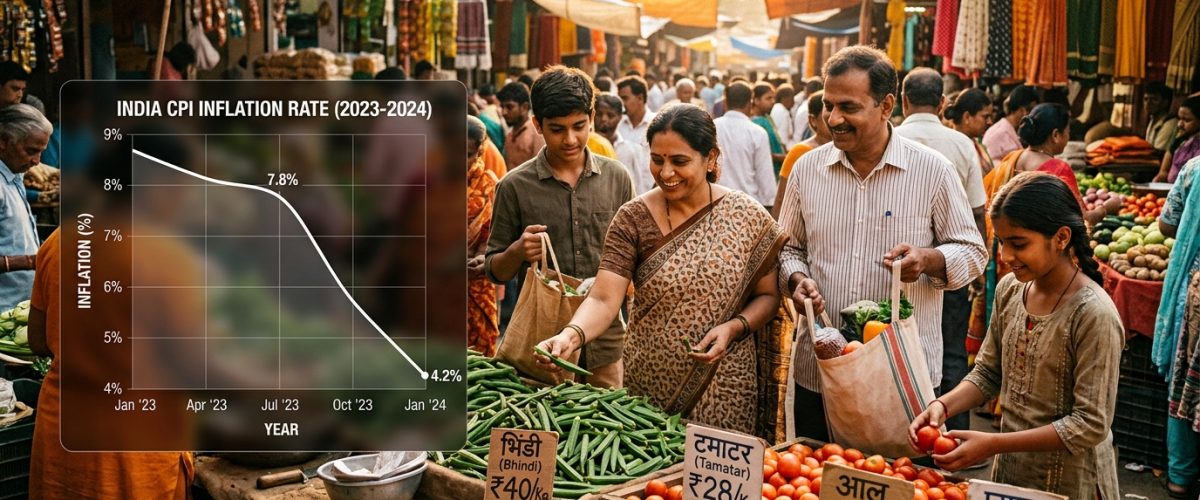
India is experiencing something unprecedented in its modern economic history: consumer price inflation has fallen below 2 per cent, a level that few economists would have predicted even two years ago. The headline CPI reading of 1.33 per cent for December 2025, with the RBI projecting an average of 2.1 per cent for the full fiscal year 2025-26, represents a structural shift in India’s inflation dynamics that carries profound implications for monetary policy, household purchasing power, investment decisions, and the broader trajectory of economic growth.
How India Achieved What Once Seemed Impossible
For much of its post-independence history, India has grappled with persistent inflation, often running in the high single digits or even double digits. The inflation targeting framework adopted by the RBI in 2016, which set a target of 4 per cent with a tolerance band of 2-6 per cent, was considered ambitious at the time. That India now finds itself below the lower bound of this band speaks to a confluence of structural and cyclical factors that have collectively transformed the inflation landscape.
Agricultural reforms and improved supply chain management have been fundamental to this shift. The government’s investment in cold storage infrastructure, the expansion of electronic National Agriculture Market (eNAM) platforms, and strategic interventions in food commodity markets through buffer stock management and calibrated import-export policies have significantly reduced the food price volatility that traditionally drove Indian inflation cycles.
Technology adoption has also played a role. Digital payment systems, led by UPI, have improved price transparency and market efficiency. E-commerce and quick commerce platforms have increased competition among retailers, compressing margins and keeping consumer prices in check. The formalisation of previously informal economic activities has reduced supply chain intermediaries and their associated cost mark-ups.
The Global Context: India as an Outlier
India’s low inflation environment stands in stark contrast to the experience of many other major economies. While advanced economies have largely brought inflation back towards target levels after the post-pandemic surge, most are still dealing with inflation rates above 2.5 per cent. Among major emerging markets, India’s inflation performance is exceptional—Brazil, Turkey, and Nigeria continue to battle inflation rates in the high single digits or higher.
This divergence has important implications for India’s competitive positioning. Low inflation preserves real wage growth even when nominal wage increases are moderate, supporting consumption-led economic expansion. It keeps input costs stable for manufacturers, enhancing India’s export competitiveness and attracting investment into production facilities under the Make in India initiative.
What Low Inflation Means for Households
For India’s 1.4 billion citizens, the practical impact of sub-2 per cent inflation is tangible. Real incomes are growing faster than they have in years, as nominal wage increases—averaging 8-10 per cent annually in organised sectors—translate into substantial purchasing power gains. The rural economy, where food constitutes a larger share of household budgets, has been a particular beneficiary.
The moderation in food prices has effectively functioned as an invisible income transfer to lower-income households. Staple food items—rice, wheat, pulses, and cooking oils—have seen price increases of less than 1 per cent over the past year, while vegetable prices have actually declined due to bumper production. This has freed up household budgets for discretionary spending on education, healthcare, durables, and leisure—contributing to the consumption recovery that is supporting GDP growth.
Housing costs, which constitute a significant portion of urban household expenditure, have also moderated in many metros, though select micro-markets continue to see price appreciation driven by infrastructure development and demographic shifts. The combination of stable housing costs and low general inflation has improved housing affordability ratios, supporting demand in the residential real estate sector.
The Monetary Policy Dilemma: To Cut or Not to Cut
While low inflation provides the RBI with significant room for monetary easing, the central bank faces a nuanced policy calculus. The repo rate at 5.25 per cent implies a real interest rate (repo rate minus inflation) of approximately 3.9 per cent—one of the highest real rates among major economies. This suggests substantial scope for rate cuts without compromising the inflation targeting framework.
However, several countervailing considerations temper the case for aggressive easing. Geopolitical tensions have pushed crude oil prices to elevated levels, creating an upside risk to inflation in coming quarters. The fiscal stimulus embedded in Union Budget 2026, while growth-supportive, also adds to aggregate demand and could create price pressures if supply-side constraints materialise.
There is also a philosophical debate within the MPC about whether ultra-low inflation is entirely desirable. Some members have expressed concern that inflation significantly below target could indicate insufficient demand in certain segments of the economy, particularly in rural areas and among lower-income groups. The persistence of disguised unemployment and underemployment in India’s vast informal sector complicates the interpretation of aggregate inflation data.
Investment Implications: Fixed Income, Equities, and Beyond
The low inflation regime has significant implications for investment allocation. Fixed-income investors are benefiting from high real yields, with government securities and high-quality corporate bonds offering returns that far exceed inflation. This has made Indian debt markets attractive to both domestic and foreign investors, supporting government borrowing programmes and keeping fiscal costs manageable.
For equity investors, low inflation is broadly supportive, as it preserves corporate profit margins, keeps borrowing costs moderate, and supports consumer spending. However, the distribution of benefits is uneven—companies with pricing power in premium segments may see margin expansion, while those in commoditised categories may face pressure as their ability to raise prices diminishes. As India’s financial markets mature alongside developments like those seen in the expanding commercial ecosystem of IPL franchise strategies, the investment landscape continues to evolve in sophisticated ways.
Gold, traditionally a hedge against inflation in Indian households, has seen somewhat reduced demand for investment purposes, though cultural and wedding-related buying continues to support overall consumption. Real estate, meanwhile, presents a mixed picture—low inflation keeps mortgage rates manageable, but the absence of price inflation in property values may reduce speculative demand.
Risks on the Horizon: Oil, Weather, and Global Shocks
The most significant risk to India’s low inflation trajectory comes from crude oil prices. Every $10 per barrel increase in global crude prices adds an estimated 30-40 basis points to India’s headline inflation over a 6-9 month horizon. With Brent crude trading above $85 per barrel and geopolitical tensions in West Asia showing no signs of abating, this risk cannot be dismissed.
Weather-related risks also loom. While the 2025 monsoon was favourable, the Indian Meteorological Department has flagged potential La Niña conditions that could affect rainfall patterns in 2026. Any significant shortfall in agricultural production could quickly reverse the benign food price trajectory and push headline inflation back toward the 4 per cent target or beyond.
The Bigger Picture: Inflation and India’s Development Trajectory
India’s achievement of sub-2 per cent inflation should be understood not as an endpoint but as a favourable starting condition for the next phase of economic development. The credibility earned by the RBI through its inflation targeting framework, the structural improvements in food supply chains, and the efficiency gains from digitalisation, as reflected in broader discussions about India’s technology infrastructure and policy frameworks, provide a foundation upon which sustained, inclusive growth can be built.
The challenge now is to leverage this low-inflation window to accelerate investment, improve productivity, and expand economic opportunities across all segments of society, ensuring that the macroeconomic stability of 2026 translates into tangible improvements in the quality of life for millions of Indians who are yet to fully benefit from the country’s growth story.

- Startup India at 10: A Decade of Disruption and the Founders Who Shaped the Ecosystem - March 24, 2026
- From Side Hustles to Success: Five Indian Founders Who Turned Adversity Into Billion-Dollar Ventures - March 24, 2026
- Healthtech Funding Shifts Toward Integrated Care Models as Investors Eye Sustainable Growth in India - March 24, 2026