RBI Holds Repo Rate at 5.25 Per Cent: India’s Growth Outlook Strengthens With 7.4 Per Cent GDP Forecast

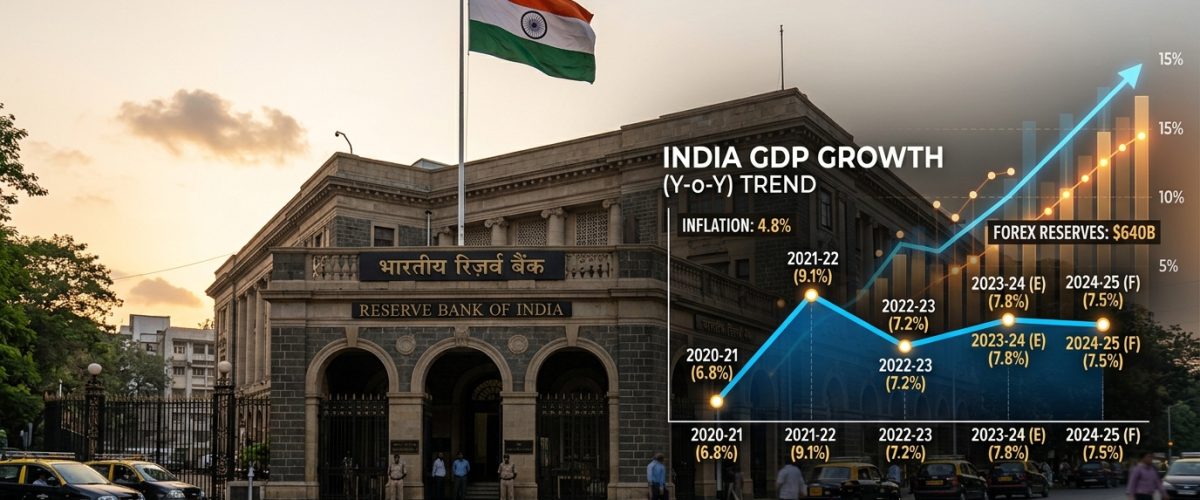
The Reserve Bank of India’s decision to maintain its benchmark repo rate at 5.25 per cent during its February 2026 monetary policy review has set the tone for what promises to be a pivotal year for the Indian economy. With inflation hovering at a remarkably benign 1.33 per cent—well below the central bank’s 2-6 per cent tolerance band—and GDP growth projections revised upward to 7.4 per cent for FY2025-26, India finds itself in an enviable macroeconomic position that few major economies can match.
The Policy Pause: Strategic Patience or Missed Opportunity?
The RBI’s Monetary Policy Committee (MPC) voted unanimously to hold the repo rate steady in February, following a 25 basis point reduction in December 2025 that brought the rate down from 5.50 per cent. Governor Sanjay Malhotra, who took charge in December 2025, characterised the decision as a “calibrated pause” designed to assess the full transmission of the previous cut through the banking system before considering further action.
The central bank’s rationale centres on balancing multiple objectives. While inflation remains historically low, providing ample room for accommodation, several emerging risks—including elevated global crude oil prices driven by geopolitical tensions, potential food price pressures from erratic weather patterns, and the fiscal stimulus embedded in Union Budget 2026—warrant a cautious approach.
“The RBI is playing a sophisticated game,” observed Madan Sabnavis, Chief Economist at Bank of Baroda. “With inflation this low, there is no urgency to cut aggressively. By maintaining optionality, the central bank can respond decisively if growth shows signs of weakening, while avoiding the risk of stoking asset bubbles through premature easing.”
GDP Growth: The 7.4 Per Cent Narrative and Its Drivers
The upward revision of India’s GDP growth forecast from 7.3 to 7.4 per cent for FY2025-26 reflects improving confidence in multiple growth engines. The economy recorded an impressive 8.2 per cent expansion in the September 2025 quarter, driven by robust government capital expenditure, resilient private consumption, and a services sector that continues to be the economy’s primary growth driver.
Government spending has been a critical catalyst. Union Budget 2026, presented in February, increased capital expenditure allocation by 17 per cent to ₹12.5 lakh crore, with a significant focus on infrastructure—roads, railways, urban development, and green energy projects. This spending multiplier effect is visible in cement and steel demand, commercial vehicle sales, and employment generation in construction and allied sectors.
Private consumption, which accounts for roughly 57 per cent of India’s GDP, has shown steady recovery. The festive and wedding season spending in late 2025 exceeded expectations, while rural demand—boosted by a favourable monsoon, higher minimum support prices, and direct benefit transfer schemes—has contributed to a more broad-based consumption recovery. Urban consumption, though more moderate, has been supported by stable employment conditions in the IT, financial services, and manufacturing sectors.
Inflation at Historic Lows: A Blessing With Caveats
India’s headline CPI inflation rate of 1.33 per cent in December 2025 represents one of the lowest readings in the country’s post-liberalisation history. The RBI’s projection of 2.1 per cent average inflation for FY2025-26 suggests that price stability will remain a hallmark of the current economic cycle.
Several factors have contributed to this benign inflation environment. Agricultural production has been strong, keeping food prices in check. The government’s proactive management of food supply chains—including strategic releases from buffer stocks and calibrated trade policies—has prevented the kind of supply-side spikes that periodically disrupt India’s inflation trajectory. Core inflation, which excludes volatile food and energy prices, has moderated to around 3.5 per cent, reflecting stable demand conditions and improved supply-side efficiencies.
However, economists caution against complacency. Crude oil prices, which have fluctuated between $82 and $92 per barrel in early 2026 amid Middle East tensions, represent the most significant upside risk to inflation. Every $10 per barrel increase in crude prices adds approximately 30-40 basis points to India’s headline inflation through direct fuel costs and cascading effects on transportation and manufacturing input costs.
The US-India Trade Dynamic: An Unexpected Growth Catalyst
A notable factor in the improved growth outlook has been the series of trade agreements between India and the United States. The bilateral trade framework agreed in late 2025 has reduced tariff barriers on select Indian exports, opened new market access for Indian pharmaceutical and IT services companies, and established a technology cooperation agreement that has boosted investor confidence. This aligns with the broader theme of India’s growing global technology engagement, as highlighted in our coverage of the AI Summit 2026 and India’s technology ambitions.
The trade deals have had a measurable impact on India’s export performance. Merchandise exports grew 9 per cent year-on-year in the first nine months of FY26, while services exports—led by IT, business process outsourcing, and global capability centres—expanded by 14 per cent. The improved trade environment has also attracted foreign direct investment, with FDI inflows of $52 billion in the April-December 2025 period representing a 12 per cent increase over the corresponding period in the previous year.
Banking Sector Health: Credit Growth and Asset Quality Improvements
The banking sector’s robust health is a critical enabler of India’s growth momentum. Bank credit growth accelerated to 14.5 per cent year-on-year in February 2026, driven by demand across retail loans, MSME lending, and infrastructure financing. The gross non-performing asset (NPA) ratio of scheduled commercial banks has declined to approximately 2.6 per cent—the lowest level in over a decade—reflecting successful resolution of legacy bad loans and improved underwriting standards.
The banking system’s capital adequacy, improved profitability, and willingness to lend are creating a virtuous cycle of credit-driven growth that supports both consumption and investment demand. The RBI’s maintenance of the Cash Reserve Ratio at 3 per cent ensures adequate liquidity in the banking system, while the Standing Deposit Facility rate of 5 per cent and Marginal Standing Facility rate of 5.50 per cent provide a corridor for overnight lending rates.
Forward Guidance: What Markets Expect From the April Review
With the next MPC meeting scheduled for April 8, 2026, financial markets are pricing in a high probability of a 25 basis point rate cut, which would bring the repo rate to 5 per cent. The expectation is predicated on inflation remaining well within target, GDP growth holding steady, and the global environment not deteriorating significantly.
The RBI’s own growth projections for H1 FY27—6.9 per cent in Q1 and 7.0 per cent in Q2—suggest the central bank anticipates some moderation from the exceptional pace of FY26, providing additional room for monetary accommodation. As discussed in our analysis of India’s March 2026 entertainment industry trends, the country’s vibrant consumer economy continues to generate momentum across sectors that support this optimistic growth outlook.
India’s macroeconomic position in March 2026 is, by most measures, the strongest it has been in years. The challenge for policymakers will be to sustain this momentum while building resilience against external shocks, ensuring that the growth story reaches all segments of society, and maintaining the fiscal discipline that underpins investor confidence in the India narrative.

- Startup India at 10: A Decade of Disruption and the Founders Who Shaped the Ecosystem - March 24, 2026
- From Side Hustles to Success: Five Indian Founders Who Turned Adversity Into Billion-Dollar Ventures - March 24, 2026
- Healthtech Funding Shifts Toward Integrated Care Models as Investors Eye Sustainable Growth in India - March 24, 2026