Rising Oil Prices and Weak Rupee Pose Double Threat to India’s Economy as Iran Crisis Persists

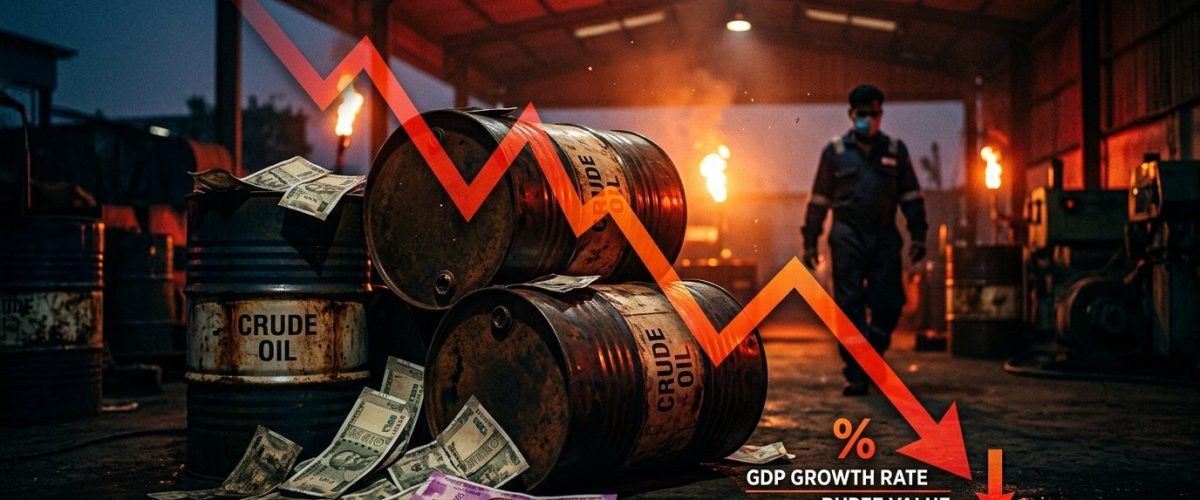
India’s economy faces a growing threat from the twin pressures of surging crude oil prices and a weakening rupee, both driven by the escalating Iran conflict that began on 28 February 2026. Brent crude oil has risen 73.4 per cent since the start of the year, climbing from $60.75 per barrel on 1 January to $105.32 by 27 March. Over the same period, the Indian rupee has slid 5.1 per cent against the US dollar, falling from 89.96 to 94.59, creating what analysts are calling a “double whammy” for the country’s import bill.
How the Iran War Reshaped India’s Energy Supply
The disruption centres on the Strait of Hormuz, a critical global energy chokepoint through which roughly one-fifth of the world’s oil supply passes daily. Since the conflict began, shipping risks and supply fears have driven crude prices sharply higher. India, which imports over 80 per cent of its crude oil requirements, is particularly vulnerable to these disruptions.
Data from recent trade reports show that India’s Russian crude imports jumped 90 per cent in March 2026 as the country scrambled to diversify its oil basket away from Hormuz-dependent sources. However, this shift only partially offsets the cost increase. Every $10 per barrel rise in crude oil adds roughly $15 billion to India’s annual import bill and widens the current account deficit by 0.4 per cent of GDP.
Inflation Risks Are Building Despite Recent Soft Prints
The combination of costly oil and a sliding currency is beginning to feed into consumer prices. The Ministry of Statistics reported headline Consumer Price Index (CPI) inflation at 3.21 per cent in February 2026, with food inflation at 3.47 per cent. While these figures remain below the Reserve Bank of India’s 4 per cent target, they represent a sharp reversal from the sub-2 per cent inflation seen through late 2025.
The RBI’s own projections, updated at the February policy meeting, forecast CPI inflation rising to 3.2 per cent in Q4 FY26, 4.0 per cent in Q1 FY27, and 4.2 per cent in Q2 FY27. These estimates were made before the full extent of the oil price surge became clear. Analysts now expect the April MPC meeting (6 to 10 April) to feature a significant upward revision to inflation forecasts. The RBI’s GDP growth outlook may also come under scrutiny if the crisis persists.
Fiscal Impact: Budget Assumptions Under Strain
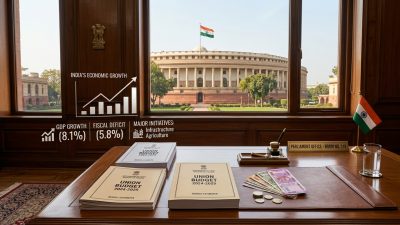
The Union Budget for 2025-26 was framed with moderate oil price assumptions. The Indian basket crude price stood at roughly $63.50 per barrel when the budget was presented, far below current levels. The budget projected a fiscal deficit of 4.4 per cent of GDP, relying on revenue growth and spending discipline. A sustained oil price above $100 per barrel threatens to undermine these assumptions through higher subsidy payouts, reduced tax revenues from slowing growth, and wider trade deficits.
The record capital expenditure outlined in the budget may also face pressure if the government needs to redirect spending toward energy subsidies. India’s dual-track approach — balancing personal financial wellbeing with large-scale infrastructure investment — becomes harder to sustain when external shocks push up input costs across the economy.
What Comes Next for the Indian Economy
Markets offered a brief reprieve on 1 April when the Sensex rallied 1,186 points on de-escalation hopes, but the underlying economic pressures remain. Business confidence and hiring intentions in India stay strong according to PMI surveys, even as global manufacturing momentum slows. However, the longer the Iran crisis drags on, the greater the strain on India’s macroeconomic stability.
The Indian stock market and bond market will be closely watching the RBI’s April policy statement for signals on how the central bank plans to balance inflation management with growth support. With the repo rate at 5.25 per cent after cumulative cuts of 125 basis points since February 2025, the RBI has limited room to ease further if inflation accelerates. For India’s broader economic trajectory, the resolution of the West Asia conflict may matter more than any domestic policy decision in the near term.

- Rising Oil Prices and Weak Rupee Pose Double Threat to India’s Economy as Iran Crisis Persists - April 3, 2026
- Sensex Rallies 1,200 Points as West Asia De-escalation Hopes Lift Indian Markets Ahead of RBI April Policy - April 3, 2026
- RBI Digital Rupee Crosses 10 Million Wallets as India’s Fintech Ecosystem Reshapes Global Payments in 2026 - March 30, 2026