Union Budget 2026-27: Fiscal Discipline Meets Growth Ambitions in India’s Economic Blueprint

A Budget Built on Reform, Restraint, and Strategic Investment
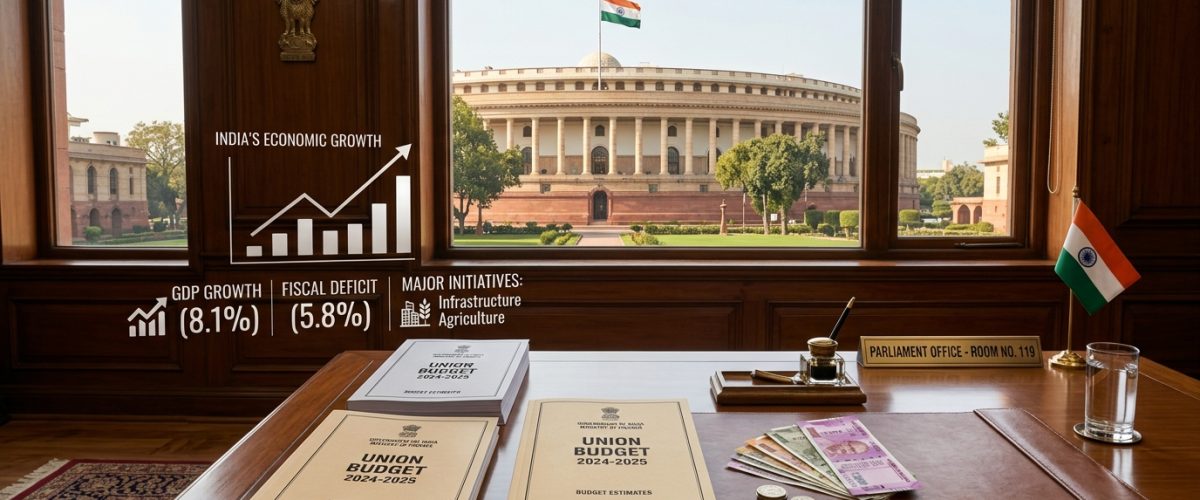
The Union Budget 2026-27, presented by Finance Minister Nirmala Sitharaman in February 2026, has been widely characterised as a masterclass in balancing fiscal prudence with developmental ambition. At its core, the budget targets a fiscal deficit of 4.4 per cent of GDP—a meaningful consolidation from the 4.8 per cent achieved in FY26—while simultaneously boosting capital expenditure to a record ₹11.2 lakh crore. This dual commitment to reducing the deficit while ramping up productive spending has been well received by markets, rating agencies, and economists alike.
The budget’s overarching theme of “Action Over Ambivalence, Reform Over Rhetoric, People Over Populism” reflects the government’s intent to pursue structural reforms that create long-term economic value rather than short-term political gains. For an economy targeting Viksit Bharat (Developed India) status by 2047, this budget sets the stage for the next phase of infrastructure-led, consumption-supported growth.
Capital Expenditure: The Infrastructure Push Accelerates
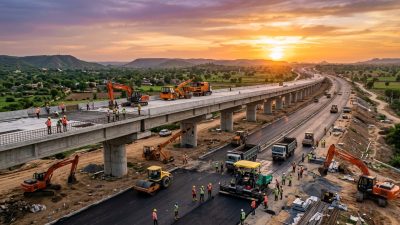
The ₹11.2 lakh crore capital expenditure allocation represents a 15 per cent increase over the revised estimates for FY26 and underscores the government’s belief that public investment is the most effective catalyst for private sector participation. The allocation spans highways, railways, ports, airports, urban infrastructure, and the emerging green energy ecosystem.
The railway budget, embedded within the overall capital expenditure, stands at ₹2.7 lakh crore—a record allocation that will fund the expansion of the Vande Bharat network, dedicated freight corridors, and the modernisation of 500 railway stations under the Amrit Bharat Station scheme. Highway construction targets have been set at 12,500 kilometres for FY27, building on the government’s track record of delivering approximately 35 kilometres of highways per day.
The smart cities and urban infrastructure allocation of ₹1.5 lakh crore addresses the growing urbanisation challenge. With India’s urban population projected to reach 600 million by 2031, investments in water supply, sewage treatment, public transportation, and affordable housing are critical for sustainable urban growth. The extension of the PM Awas Yojana with 25 lakh additional urban housing units targets the persistent housing shortage in metropolitan areas.
Tax Reforms: Relief for the Middle Class and Simplification
The budget’s tax proposals have been perhaps its most discussed feature. The enhancement of the new tax regime’s zero-tax threshold to ₹12 lakh, with revised slabs offering lower rates up to ₹24 lakh, provides meaningful relief to salaried middle-class taxpayers. The government estimates that approximately 3 crore taxpayers will benefit from these changes, with average annual savings of ₹25,000-75,000 depending on income levels.
The standard deduction has been increased to ₹85,000, while the employer’s NPS contribution limit under the new regime has been raised to 14 per cent of basic salary, enhancing retirement savings incentives. These measures are expected to boost disposable income and, by extension, urban consumption—a key driver of GDP growth. The personal finance implications of these changes are significant for individual taxpayers planning their investment strategies for the new financial year.
On the corporate tax front, the budget has maintained stability, avoiding any rate changes that might disrupt business planning. However, the rationalisation of customs duties across 150 tariff lines—reducing duties on critical raw materials and intermediates while maintaining protection for sensitive sectors—aims to improve manufacturing competitiveness under the Make in India framework.
Agriculture and Rural Economy: Targeted Support
The agricultural sector, which employs nearly 45 per cent of India’s workforce, receives focused attention in Budget 2026-27. The PM-KISAN Samman Nidhi has been enhanced from ₹6,000 to ₹8,000 per year per farmer family, providing direct income support to approximately 11 crore farming households. The crop insurance scheme, PM Fasal Bima Yojana, has been expanded to cover additional crops and regions, with the government bearing a larger share of the premium burden.
The irrigation and water management allocation of ₹95,000 crore recognises that water availability—not land—is the binding constraint on agricultural productivity. The completion of 50 major irrigation projects, combined with the expansion of micro-irrigation systems, targets a 20 per cent improvement in water use efficiency by 2028. These investments are critical for reducing Indian agriculture’s vulnerability to monsoon variability, which remains a significant macroeconomic risk factor.
Digital India, AI, and the Knowledge Economy
The budget allocates ₹15,000 crore to the Digital India programme, with a specific focus on artificial intelligence research and deployment. This includes the establishment of three new AI centres of excellence in partnership with IITs, a national AI computing infrastructure with 10,000 GPU capacity, and a regulatory sandbox for AI applications in healthcare, agriculture, and financial services. These investments build on the themes explored in India’s AI Summit 2026 and its structural challenges, positioning India as a serious contender in the global AI landscape.
The education sector receives its highest-ever allocation of ₹1.35 lakh crore, with emphasis on skill development programmes aligned with Industry 4.0 requirements. The PM Vidyalaxmi scheme, providing interest-free education loans for students from families earning up to ₹8 lakh annually, addresses the access barrier that prevents talented students from pursuing higher education. Meanwhile, India’s entertainment and cultural industries, including Bollywood’s bold March 2026 releases, continue to benefit from the growing creative economy that the budget’s digital infrastructure investments support.
Fiscal Consolidation: The Path to Investment Grade
The commitment to reducing the fiscal deficit to 4.4 per cent of GDP—with a glide path to 4.0 per cent by FY28—brings India closer to the threshold that international rating agencies consider for potential upgrades. India’s sovereign credit rating, currently BBB- with a stable outlook from major agencies, has been constrained by the elevated fiscal deficit. A sustained consolidation trajectory, combined with the improving quality of expenditure (higher capital spending relative to revenue spending), could catalyse an upgrade that would reduce borrowing costs for both the government and the private sector.
Revenue projections underlying the fiscal math appear realistic. Gross tax revenue is estimated at ₹40.5 lakh crore, implying a growth rate of 11 per cent—consistent with nominal GDP growth assumptions and the recent trajectory of tax buoyancy. The disinvestment target of ₹50,000 crore is modest and achievable, suggesting the government has learned from past instances of over-ambitious privatisation targets that undermined fiscal credibility.
As India embarks on FY27 with this economic blueprint, the budget’s success will ultimately be measured not by its announcements but by its execution. The institutional machinery required to translate ₹11.2 lakh crore of capital expenditure into productive assets—roads, railways, ports, and digital infrastructure—will determine whether India’s growth trajectory sustains its upward momentum or hits implementation bottlenecks that have historically plagued ambitious spending plans.

- Kiran Mani Joins OpenAI to Lead Asia-Pacific Growth After JioStar Exit - March 25, 2026
- Euler Motors Raises Rs 437 Crore as India’s Commercial EV Startup Ecosystem Accelerates in 2026 - March 25, 2026
- Startup India at 10: A Decade of Disruption and the Founders Who Shaped the Ecosystem - March 24, 2026