Indian Markets End Volatile Week Lower as Oil Surges Past $100 and FPIs Continue April Sell-Off

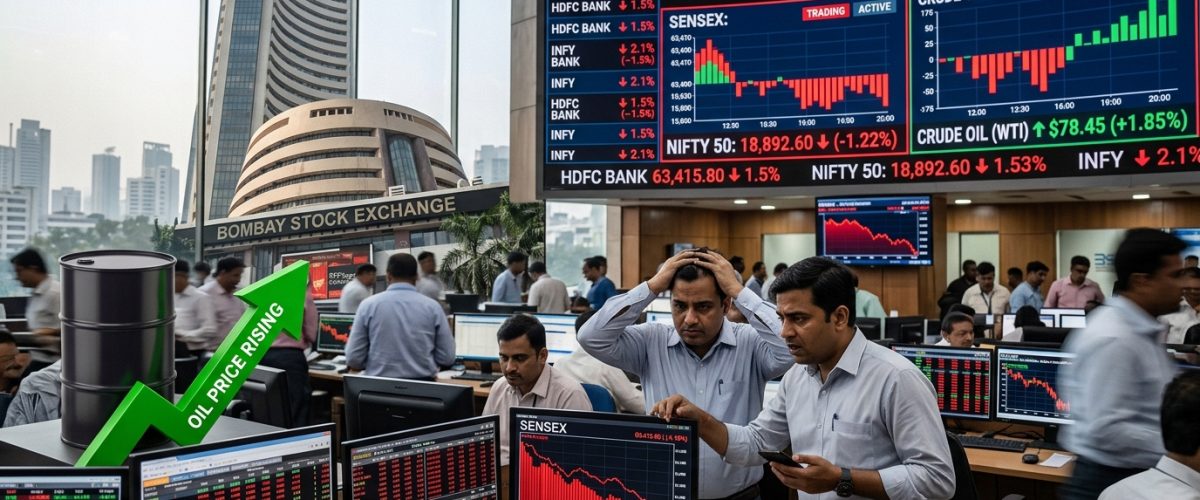
Indian equity markets ended a turbulent week on a negative note on Friday, 11 April 2026, as Brent crude oil surged past $100 per barrel and foreign portfolio investors continued their heavy selling. The Nifty 50 index fell 222 points, or 0.93 per cent, to close at 23,775.10, while the BSE Sensex dropped approximately 700 points. Markets will remain closed on Monday, 14 April, on account of Ambedkar Jayanti, giving investors time to assess a rapidly shifting global landscape before trading resumes on Tuesday.
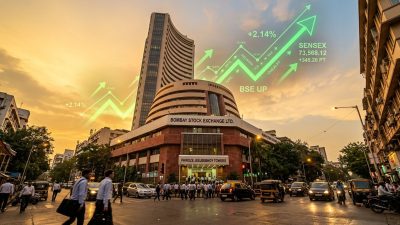
The week was marked by extreme swings. On Tuesday, 8 April, the Sensex had surged nearly 2,946 points to 77,562 in one of the largest single-day rallies of the year, driven by brief hopes of a de-escalation in the West Asia crisis. However, those gains eroded through the rest of the week as oil prices climbed higher and the geopolitical situation deteriorated once again.
Oil Prices Breach $100 as Hormuz Tensions Escalate
The primary driver of market anxiety remains the crisis around the Strait of Hormuz. The United States’ naval operations in the region have disrupted one of the world’s most critical shipping lanes, through which approximately 20 per cent of global oil supply passes daily. Reports indicate that at least 15 Indian-flagged vessels have been stranded or delayed in the area, adding to supply chain concerns.
Brent crude oil breached the psychologically significant $100 per barrel mark during the week, a level not seen since mid-2022. For India, which imports over 85 per cent of its crude oil requirements, every $10 rise in oil prices adds roughly $15 billion to the annual import bill and places pressure on the fiscal deficit, the current account balance and the rupee.
The Reserve Bank of India held the repo rate unchanged at 5.25 per cent at its April policy meeting, citing the need to balance growth support with inflation management in an uncertain environment. RBI Governor Sanjay Malhotra acknowledged the external risks but maintained that India’s macro fundamentals remained resilient, with GDP growth projected at 6.9 per cent for FY27.
Foreign Portfolio Investors Extend Their Selling Streak
Foreign portfolio investors have been net sellers of Indian equities for much of April 2026, accelerating a trend that began in late March. Data from depositories shows that FPIs sold equities worth over Rs 1,700 crore on Friday alone, with cumulative April outflows approaching $5 billion. The persistent selling reflects a combination of factors, including rising US Treasury yields, a strengthening dollar and the oil-driven risk-off sentiment across emerging markets.
Domestic institutional investors, however, have partially offset the FPI exodus. DIIs purchased equities worth approximately Rs 956 crore on Friday, continuing a pattern of steady accumulation that has provided a floor to the market during periods of heavy foreign selling. Mutual fund inflows through systematic investment plans remain robust, suggesting that retail investor sentiment has not been shaken despite the headline-level volatility.
The divergence between FPI and DII activity has been a defining feature of Indian markets in 2026. While foreign investors react to global macro shifts, domestic institutions and retail investors have maintained a longer-term perspective. This structural support has prevented the kind of sharp, sustained declines that might otherwise accompany FPI outflows of this magnitude.
Sectoral Performance: IT and Pharma Hold, Banks Struggle
Friday’s decline was broad-based, but certain sectors bore more of the brunt than others. Banking stocks were among the hardest hit, with concerns that rising oil prices could stoke inflation and delay the rate-cutting cycle that markets had been pricing in. The Nifty Bank index fell more sharply than the broader market, dragged down by HDFC Bank, ICICI Bank and State Bank of India.
Information technology stocks showed relative resilience, supported by a weaker rupee that benefits export-oriented IT companies. Pharmaceutical stocks also held up better than the broader market, as investors viewed the sector as a defensive play during periods of uncertainty. Reliance Industries, India’s largest listed company by market capitalisation, traded lower amid concerns about its refining margins in a volatile oil price environment.
The personal finance implications of the current volatility are significant for India’s growing base of retail investors, many of whom entered the market during the post-pandemic rally. Financial advisers have been urging investors to maintain their asset allocation and avoid panic selling, noting that India’s long-term growth trajectory remains intact despite short-term disruptions.
Market Holiday on Monday Provides a Pause
The closure of Indian markets on Monday, 14 April, for Ambedkar Jayanti provides a natural pause in what has been an exceptionally volatile period. Traders will watch global developments closely over the long weekend, particularly any progress on diplomatic efforts to ease the Hormuz crisis and movements in crude oil futures trading on international exchanges.
When markets reopen on Tuesday, 15 April, several catalysts could set the tone. Quarterly earnings season is about to begin in earnest, with major IT companies expected to report results in the coming days. The outcome of these results, combined with management commentary on the global demand environment, will provide fresh data points for investors to assess.
India’s data centre market outlook remains positive. The business sector is projected to see the data centre market more than double from approximately $10 billion in 2025 to $22 billion by 2030, according to a report released on 12 April, underscoring the structural growth opportunities that continue to attract long-term capital to India despite the current turbulence. The artificial intelligence infrastructure build-out, combined with the country’s digital transformation push, is creating investment avenues that extend well beyond the current news cycle.
What Investors Should Watch This Week
The coming week will be shaped by several key developments. First, the trajectory of oil prices remains the single most important variable for Indian markets. Any sign of a diplomatic resolution to the Hormuz crisis could trigger a sharp relief rally, while further escalation would likely deepen the sell-off. Second, FPI flow data will be closely monitored. A reversal or even a slowdown in the pace of selling would be a positive signal. Third, the beginning of the Q4 FY26 earnings season will shift attention from macro concerns to micro fundamentals.
Market participants have also flagged the upcoming April inflation data and the next set of trade figures as important indicators. If inflation remains within the RBI’s comfort zone despite higher oil prices, it would provide room for a future rate cut that could support equity valuations. The interplay between global risk factors and India’s domestic growth story will continue to define market direction through the remainder of April.

- Indian Startup Funding Falls 18 Per Cent to $11.7 Billion in FY26 But Early-Stage Investment Surges 33 Per Cent - April 13, 2026
- Indian Markets End Volatile Week Lower as Oil Surges Past $100 and FPIs Continue April Sell-Off - April 13, 2026
- India Housing Sales Slip 4 Per Cent in Q1 2026 as Global Uncertainty Weighs on Mumbai and Delhi-NCR - April 12, 2026