Sensex Surges Past 74,500 as Global Cues Improve and FII Flows Resume in March 2026

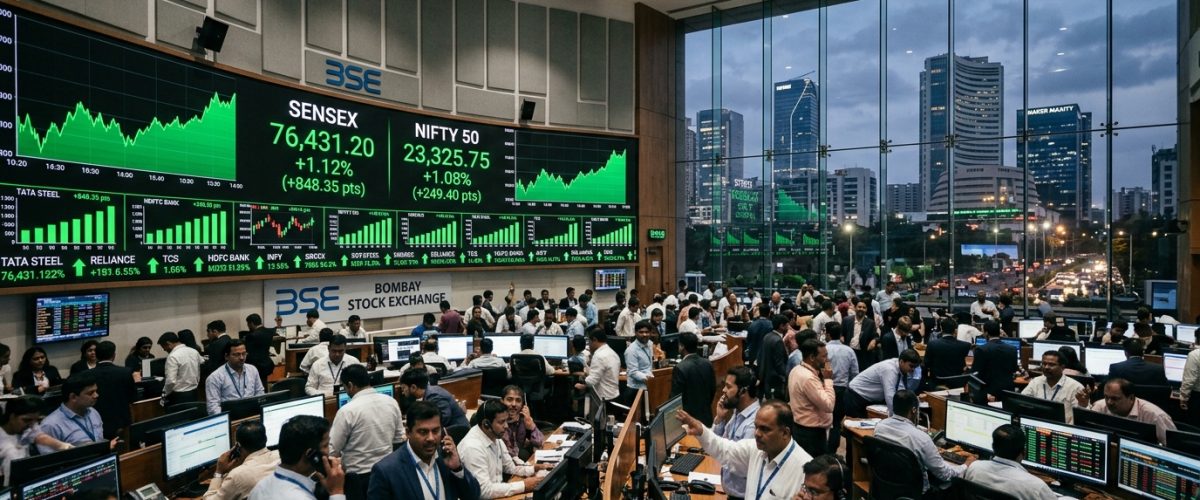
Indian Markets Stage Strong Recovery in March 2026
The Bombay Stock Exchange’s benchmark Sensex index surged past the 74,500 mark on March 20, 2026, capping off a week of robust gains that have restored investor confidence after months of volatility. The NSE Nifty50, meanwhile, closed above 23,100, marking its highest level in over six weeks. The rally has been fuelled by a confluence of factors: improving global sentiment, a resumption of foreign institutional investor (FII) inflows, and strong domestic macroeconomic indicators.
Market participants and analysts say the current rally is distinct from the speculative surges of recent years. This time, the uptrend is underpinned by tangible improvements in corporate earnings, easing inflation, and a more accommodative monetary stance by the Reserve Bank of India. The broad-based nature of the rally—spanning banking, information technology, pharmaceuticals, and consumer goods—has added to its credibility.
FII Flows Reverse After Months of Selling
One of the most significant developments driving the March 2026 rally is the reversal of foreign institutional investor (FII) behaviour. After pulling out nearly ₹1.2 lakh crore from Indian equities between October 2025 and January 2026, FIIs have turned net buyers in March, pumping in over ₹18,000 crore in the first three weeks of the month. Analysts attribute this shift to a weakening US dollar, stabilising global bond yields, and India’s relatively stronger economic fundamentals compared to other emerging markets.
Domestic institutional investors (DIIs), who had been the bulwark against FII selling throughout the correction, continue to maintain steady buying patterns. Mutual fund SIP inflows have remained above ₹25,000 crore monthly, providing a consistent demand base for Indian equities. The combined effect of FII and DII buying has created a powerful rally that has lifted mid-cap and small-cap indices alongside the frontline benchmarks.
Sectoral Highlights: Banking and IT Lead the Charge
The banking sector has emerged as the primary driver of the rally, with the Nifty Bank index gaining nearly 8 per cent in March. HDFC Bank, ICICI Bank, and State Bank of India have posted strong advances, buoyed by improving asset quality metrics and expectations of a credit growth recovery in FY27. The recent RBI decision to hold the repo rate at 5.25 per cent, while raising the GDP growth forecast to 7.4 per cent for FY26, has reinforced the positive outlook for the financial sector.
Information technology stocks have also seen renewed interest, with TCS, Infosys, and HCLTech gaining between 5 and 9 per cent in the month. The weakening rupee—which has depreciated approximately 2 per cent against the US dollar in Q1 2026—has improved earnings visibility for IT exporters. Additionally, increased spending on artificial intelligence and digital transformation projects globally has provided a structural tailwind for Indian IT services firms, as highlighted in discussions around India’s AI Summit 2026 and its structural challenges.
Geopolitical Risks: US-Iran Tensions and Oil Price Volatility
Despite the bullish momentum, markets remain acutely aware of geopolitical risks. Rising tensions between the United States and Iran have pushed Brent crude oil prices above $82 per barrel, a level that raises concerns for oil-importing nations like India. Every $10 increase in crude oil prices is estimated to widen India’s current account deficit by approximately 0.4 per cent of GDP, potentially putting pressure on the rupee and import-dependent sectors.
Analysts at Goldman Sachs and Morgan Stanley have flagged the US-Iran situation as the single biggest risk to the ongoing rally. Should tensions escalate further, the resultant spike in oil prices could erode the margin improvement that Indian companies have achieved in recent quarters. However, India’s strategic petroleum reserves, which now cover approximately 12 days of consumption, and the government’s diversification of oil import sources provide some buffer against supply disruptions.
Retail Investor Participation Reaches New Highs
The democratisation of equity markets in India continues unabated. Data from the Central Depository Services Limited (CDSL) shows that the total number of demat accounts in India crossed 18 crore in February 2026, with nearly 35 lakh new accounts opened in the month alone. This sustained retail participation has fundamentally altered the character of Indian markets, making them more resilient to FII-driven volatility.
The proliferation of discount brokerages, fintech-driven investment platforms, and growing financial literacy campaigns have contributed to this trend. Young investors, particularly those in the 25-35 age group, are increasingly allocating a portion of their income to equities through systematic investment plans. This structural shift in savings behaviour—from traditional instruments like fixed deposits and gold to financial assets—is expected to provide a multi-year tailwind for Indian equity markets.
Outlook: Cautious Optimism Ahead of Q4 Results Season
As March draws to a close, all eyes turn to the upcoming Q4 FY26 earnings season, which will be a critical test of the rally’s sustainability. Consensus estimates suggest that Nifty 50 companies are expected to deliver earnings per share growth of approximately 12-14 per cent for the full year FY26, a marked improvement over the single-digit growth seen in FY25. Sectors like banking, automobiles, and capital goods are expected to lead the earnings recovery.
Meanwhile, the Union Budget 2026-27’s emphasis on fiscal discipline—targeting a fiscal deficit of 4.4 per cent of GDP—has been well received by markets. The government’s continued focus on infrastructure spending, with a capital expenditure outlay exceeding ₹11 lakh crore, provides visibility on order flows for construction and engineering companies. As India prepares for another season of IPL 2026 season preview and franchise strategies, the mood across markets mirrors the excitement—cautious optimism tempered by an awareness of the challenges ahead.
Technical analysts note that the Nifty faces immediate resistance at 23,400, with strong support at 22,600. A sustained break above 23,400 could open the path to 24,000, while a failure to hold 22,600 may trigger a correction to 22,000. Investors are advised to maintain diversified portfolios and avoid excessive concentration in momentum-driven sectors.

- Kiran Mani Joins OpenAI to Lead Asia-Pacific Growth After JioStar Exit - March 25, 2026
- Euler Motors Raises Rs 437 Crore as India’s Commercial EV Startup Ecosystem Accelerates in 2026 - March 25, 2026
- Startup India at 10: A Decade of Disruption and the Founders Who Shaped the Ecosystem - March 24, 2026