India’s Office Market Set to Cross 1 Billion Square Feet in 2026 as Tech Parks Drive Unprecedented Supply Surge

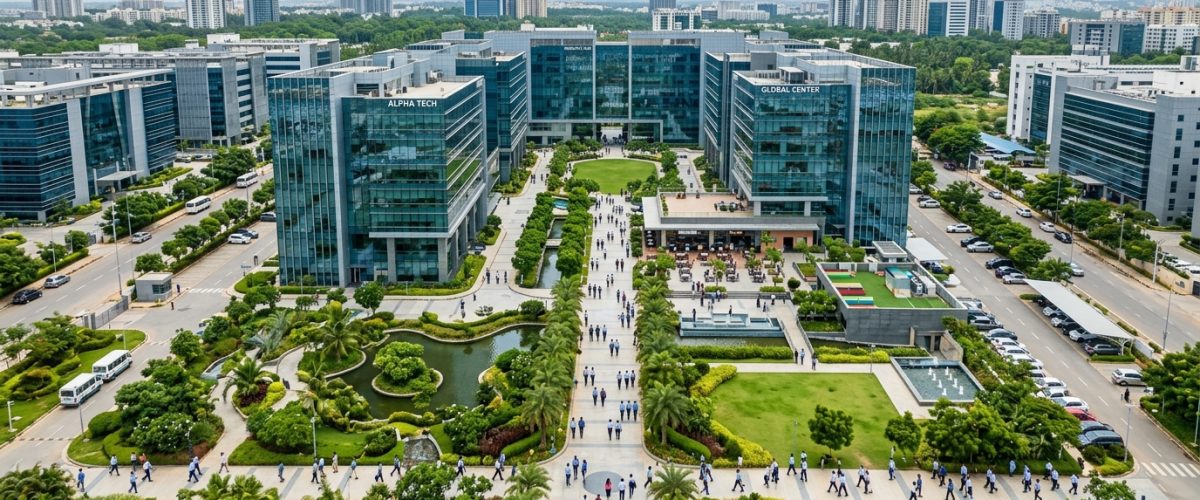
India’s commercial real estate sector is approaching a historic milestone: the country’s total office stock is projected to cross the 1 billion square feet mark in 2026, according to a comprehensive report by CBRE, the global real estate advisory firm. This landmark achievement, driven predominantly by integrated technology parks that account for 65-68 per cent of upcoming supply, underscores India’s position as one of the world’s most dynamic office markets and a preferred destination for global corporations establishing or expanding their operations.
Record-Breaking Momentum: The Numbers Behind the Growth
The Indian office market delivered an exceptional performance in 2025, with both leasing activity and new supply reaching all-time highs. Annual gross absorption surged to 83.1 million square feet, marking the third consecutive year of peak demand. New supply rose to a record 58.9 million square feet, representing a 10 per cent year-on-year increase and reflecting developers’ confidence in sustained demand.
Bengaluru, Mumbai, Delhi-NCR, and Hyderabad collectively accounted for nearly three-quarters of total leasing activity, reinforcing their dominance as India’s primary office markets. Bengaluru alone absorbed over 20 million square feet, driven by its deep technology talent pool, established IT ecosystem, and competitive rental rates compared to global tech hubs. Hyderabad emerged as the fastest-growing market in percentage terms, benefiting from proactive state government policies and the development of new office corridors around the Financial District and Genome Valley.
The Tech Park Phenomenon: Campus-Style Development Takes Centre Stage
The most significant trend shaping India’s office supply pipeline is the dominance of integrated technology parks. CBRE’s data indicates that 65-68 per cent of the projected office supply for 2026-27 will be concentrated in these campus-style developments, reflecting a structural shift toward investment-grade, amenity-rich environments that meet the evolving expectations of global occupiers.
India’s tech parks have evolved from simple office clusters into self-contained ecosystems offering food courts, fitness centres, retail outlets, childcare facilities, and green spaces. Developers such as Embassy Group, RMZ Corp, Prestige Estates, DLF, and Brookfield India have invested heavily in creating environments that support employee wellbeing, collaboration, and productivity—factors that have become critical in the post-pandemic battle for talent.
The rise of Real Estate Investment Trusts (REITs) has further accelerated this shift toward quality. Embassy Office Parks REIT, Mindspace Business Parks REIT, and Brookfield India REIT collectively manage over 100 million square feet of Grade A office space, setting benchmarks for building quality, sustainability certifications, and operational excellence that are raising standards across the market.
Demand Drivers: GCCs and the Corporate India Story
Global Capability Centres (GCCs)—the in-house technology and business process operations of multinational corporations—have emerged as the single largest driver of office demand in India. With over 1,700 GCCs now operating in the country, employing approximately 1.9 million professionals, the sector’s appetite for office space has been transformative. Companies such as JPMorgan, Google, Microsoft, Amazon, Deloitte, and Accenture have all expanded their Indian operations significantly, with several establishing their largest global centres outside headquarters in Indian cities.
The GCC phenomenon is closely linked to India’s technology ecosystem development. As explored in our analysis of India’s AI Summit 2026 and its structural ambitions, the country’s growing technology workforce and digital infrastructure are attracting high-value operations that require substantial, modern office environments. GCC demand has pushed rental rates in prime locations to new highs, with Bengaluru’s Outer Ring Road commanding rents of ₹90-110 per square foot per month for premium Grade A space.
Domestic companies are also contributing meaningfully to demand. India’s banking, financial services, and insurance (BFSI) sector, buoyed by strong credit growth and digital transformation, has been an active occupier. Startups that have scaled to unicorn status—particularly in fintech, e-commerce, and SaaS—are transitioning from co-working spaces to dedicated offices as their headcounts grow.
Sustainability and Green Buildings: The Non-Negotiable Standard
Around 76 per cent of new office completions in 2025 were green-certified buildings, reflecting a decisive shift toward sustainability in India’s commercial real estate sector. IGBC Green and LEED certification have become baseline expectations for institutional-grade offices, driven by occupier mandates for ESG compliance and developers’ recognition that green buildings command 15-20 per cent rental premiums.
Net-zero carbon buildings are emerging as the next frontier. Several marquee developments in Bengaluru and Mumbai have targeted net-zero operational carbon certification, incorporating features such as on-site solar power generation, advanced water recycling systems, energy-efficient HVAC systems, and smart building management platforms that use AI to optimise energy consumption in real-time.
Emerging Markets: The Rise of Tier 2 Office Destinations
While the top four cities dominate India’s office market, a notable trend in 2025-26 has been the emergence of Tier 2 cities as credible office destinations. Pune, Chennai, Kolkata, Ahmedabad, and Kochi have all witnessed increased office development activity, driven by lower operating costs, improving infrastructure, and the availability of specialised talent pools.
Pune, in particular, has consolidated its position as India’s fifth-largest office market, with annual absorption exceeding 10 million square feet. The city’s strength in automotive engineering, IT services, and defence technology has attracted a diverse tenant base. Chennai’s office market has benefited from growth in manufacturing-linked services and the expansion of GCCs in automotive and financial services sectors.
Challenges: Vacancy, Absorption, and the Remote Work Factor
Despite the bullish supply pipeline, the office market faces challenges. Vacancy rates in some micro-markets have risen above 15 per cent, particularly in locations where new supply has outpaced demand. The persistence of hybrid work models means that space per employee has declined from pre-pandemic averages, with many companies adopting hot-desking and flexible workspace strategies that reduce their overall footprint requirements.
However, the net impact of hybrid work on office demand has been less negative than initially feared. While individual space requirements may have shrunk, the expansion in total employee headcounts—particularly in GCCs and technology companies—has more than compensated. The focus has shifted from space quantity to space quality, with companies willing to pay premium rents for well-located, amenity-rich environments that attract employees back to the office.
Outlook: What 1 Billion Square Feet Means for India
The crossing of the 1 billion square feet threshold is more than a statistical milestone—it represents India’s maturation as a global office market of scale and sophistication. The office stock supports an estimated 15-18 million formal sector jobs, generates substantial tax revenues for state and central governments, and anchors urban ecosystems that drive economic activity across retail, hospitality, and residential segments.
Looking ahead, net absorption is projected to remain robust at approximately 55 million square feet in 2026, while rental growth is expected to maintain its upward trajectory in tight-vacancy markets. The continued expansion of GCCs, domestic corporate growth, and the government’s focus on infrastructure development, which is transforming India’s broader economic trajectory as reflected in the RBI’s optimistic growth forecasts, provide a solid foundation for sustained demand in India’s office market through the decade.
For investors, the combination of yield stability, rental growth potential, and the institutional quality of India’s top office assets makes the sector one of the most attractive real estate investment opportunities globally, evidenced by the continued strong performance of listed office REITs and sustained interest from global institutional investors.

- Kiran Mani Joins OpenAI to Lead Asia-Pacific Growth After JioStar Exit - March 25, 2026
- Euler Motors Raises Rs 437 Crore as India’s Commercial EV Startup Ecosystem Accelerates in 2026 - March 25, 2026
- Startup India at 10: A Decade of Disruption and the Founders Who Shaped the Ecosystem - March 24, 2026