Buddha Purnima 2026: India Celebrates Gautama Buddha’s 2588th Birth Anniversary on May 1 With Prayers and Reflection

Buddha Purnima 2026 Falls on Friday, May 1: Date, Tithi and Timings
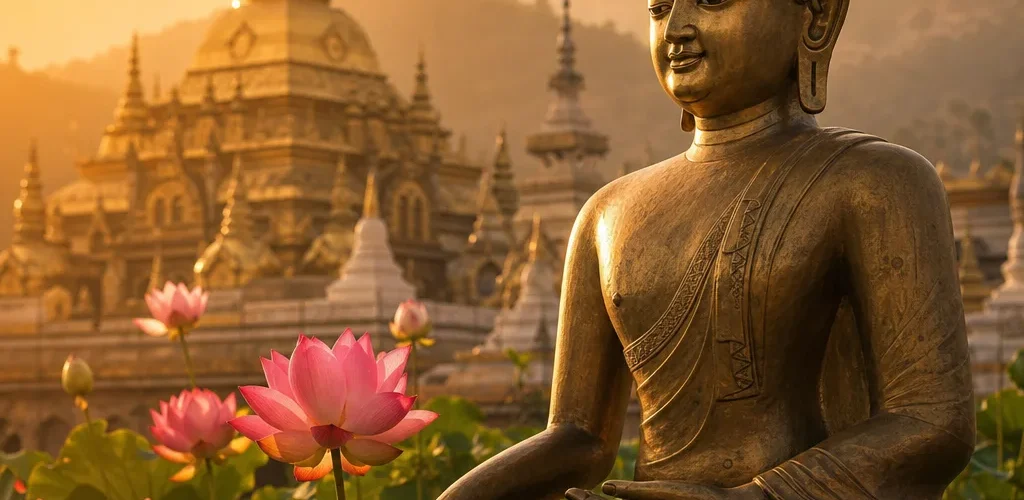
Buddha Purnima 2026, one of the most sacred occasions in the Buddhist calendar and a national holiday in India, is being observed on Friday, May 1, 2026. The day marks the 2588th birth anniversary of Gautama Buddha, the founder of Buddhism whose teachings on compassion, non-violence, wisdom, and the path to enlightenment continue to inspire hundreds of millions of people around the world.
According to the Hindu Panchang, the Purnima Tithi begins at 9:12 PM on April 30, 2026 and ends at 10:52 PM on May 1, 2026. The auspicious period for prayers, meditation, and temple visits falls within this window. Buddha Purnima is also known as Vesak, Vaishakha, or Buddha Jayanti and is observed on the full moon day of the Vaisakha month in the Hindu calendar.
The festival has been trending at number one on social media in India throughout the day, with Prime Minister Narendra Modi, state chief ministers, and spiritual leaders sharing greetings and messages of peace. The day also coincides with PM Modi’s recent Buddha Purnima greetings shared during Mann Ki Baat, further amplifying the occasion’s significance in the national conversation.
The Triple Significance of Buddha Purnima
Buddha Purnima holds a unique distinction in the spiritual world. It is the only festival that commemorates three landmark events in the life of the same historical figure — all of which, according to Buddhist tradition, occurred on the same lunar day across different years.
Birth of Siddhartha Gautama
On this day in 563 BCE (according to the most widely accepted chronology), Siddhartha Gautama was born in the royal garden of Lumbini, in present-day Nepal. He was the son of King Suddhodana and Queen Maya Devi of the Shakya clan. Prophecies at his birth foretold that he would either become a great king or a great spiritual teacher. Despite being raised in luxury within the palace walls, young Siddhartha grew increasingly disturbed by the reality of human suffering, which would eventually lead him to renounce his princely life.
Enlightenment Under the Bodhi Tree
After years of ascetic practice and deep meditation, Siddhartha achieved supreme enlightenment (Bodhi) while sitting under a Peepal tree in Bodh Gaya, Bihar. He was 35 years old when he attained Nirvana and became the Buddha — “the awakened one.” The Mahabodhi Temple in Bodh Gaya, built at the exact spot of his enlightenment, is today a UNESCO World Heritage Site and the most sacred pilgrimage destination for Buddhists worldwide. On Buddha Purnima, this temple witnesses extraordinary gatherings of devotees from across the globe.
Mahaparinirvana — The Final Passing
At the age of 80, Gautama Buddha attained Mahaparinirvana (the final passing) in Kushinagar, Uttar Pradesh. Buddhist tradition holds that this event, too, took place on a Purnima day in the month of Vaisakha, completing the cycle of three profound events linked to this sacred date.
How India Celebrates Buddha Purnima in 2026
Across India, Buddha Purnima is marked by a variety of devotional, cultural, and community activities. The celebrations reflect both the spiritual depth of Buddhist tradition and the broader Indian commitment to religious pluralism and heritage preservation.
Bodh Gaya: The Heart of Celebrations
The most significant celebrations take place at the Mahabodhi Temple in Bodh Gaya, Bihar. Thousands of monks, nuns, and lay devotees from India, Sri Lanka, Thailand, Myanmar, Japan, Korea, and other Buddhist nations gather at the temple for chanting, meditation, and prayer ceremonies that last throughout the day and night. The sacred Bodhi Tree, a direct descendant of the original tree under which the Buddha attained enlightenment, is adorned with prayer flags, lamps, and flower offerings.
Sarnath and Kushinagar
Sarnath, near Varanasi, where the Buddha delivered his first sermon (the Dhammacakkappavattana Sutta), hosts major prayer assemblies and cultural events. The Dhamek Stupa and the Mulagandha Kuti Vihara are centres of activity, with Buddhist organisations from across Asia organising special lectures and meditation retreats.
Kushinagar, where the Buddha attained Mahaparinirvana, also sees large gatherings. The Mahaparinirvana Temple with its iconic reclining Buddha statue becomes a focal point for devotees paying their respects.
Delhi, Mumbai, and Other Cities
In the national capital, Buddha Purnima is celebrated at temples, viharas, and community centres with prayers, lectures on the Buddha’s teachings, and distribution of food and essentials to the needy. Dr B R Ambedkar’s legacy in reviving Buddhism in India adds a powerful social dimension to the celebrations, with Ambedkarite Buddhist communities organising special programmes that connect the Buddha’s teachings to contemporary social justice.
Similar celebrations take place in Mumbai, Pune, Nagpur, Hyderabad, Bengaluru, and Chennai, where Buddhist communities and interfaith organisations host public events. The recent celebration of Akshaya Tritiya and the upcoming Thrissur Pooram festival reflect India’s rich calendar of religious and cultural observances throughout the year.
Buddha’s Teachings: Why They Matter in 2026
In a world grappling with armed conflicts, environmental crises, social inequality, and digital-age anxieties, the core teachings of Gautama Buddha feel more relevant than ever.
The Four Noble Truths — that suffering exists, that it has a cause, that it can be ended, and that there is a path to its end — provide a framework for understanding and addressing personal and collective challenges. The Eightfold Path, which prescribes right understanding, intention, speech, action, livelihood, effort, mindfulness, and concentration, offers a practical guide for ethical and purposeful living.
The Buddha’s emphasis on non-violence (Ahimsa) and compassion (Karuna) resonates powerfully in the context of the ongoing Iran-US military conflict, communal tensions in various parts of the world, and the humanitarian crises affecting millions. His teaching that hatred is never ended by hatred, but only by love, remains one of the most quoted and enduring moral principles in human history.
India’s Role in Preserving Buddhist Heritage
India, as the birthplace of Buddhism, has taken significant steps to preserve and promote Buddhist heritage sites. The government’s Buddhist Circuit tourism initiative connects Bodh Gaya, Sarnath, Kushinagar, Rajgir, Nalanda, and other key sites through improved infrastructure and connectivity. This has contributed to a surge in Buddhist tourism from East and Southeast Asia, strengthening India’s cultural diplomacy and soft power.
Prime Minister Modi has frequently invoked India’s Buddhist heritage in diplomatic engagements with countries including Japan, Sri Lanka, Thailand, and Mongolia, positioning India as the custodian of the Buddha’s legacy for the global community.
Buddha Purnima 2026: A Day for Inner Peace
Whether observed through prayer, meditation, community service, or quiet reflection, Buddha Purnima offers an opportunity to pause and reconnect with the values of compassion, wisdom, and peace. In 2026, as India navigates a period of rapid economic growth, geopolitical complexity, and social transformation, the Buddha’s timeless message serves as an anchor of calm and clarity.
Discover more about India’s festivals on Religion & Festivals and Culture & Lifestyle at DailyTips.in.