Kangana Ranaut Speaks on Peddi Objectification Row: ‘The Lens of Movies Has Been Very Harsh to Women’ — Bollywood Debate Intensifies

Actor-turned-politician Kangana Ranaut has waded into the ongoing controversy surrounding the film Peddi and the broader debate about the objectification of women in Indian cinema. In an exclusive interview, the BJP Member of Parliament acknowledged that “the lens of movies has been very harsh to women” while simultaneously cautioning against online outrage culture and arguing that objectification is not limited to the film industry.
The Peddi Controversy
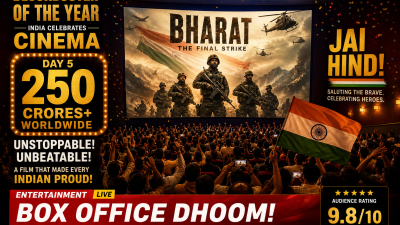
The debate erupted after the release of Peddi, which crossed the Rs 200 crore mark at the global box office within five days of release. While the film’s commercial success has been undeniable, it has also sparked a fierce conversation about the portrayal of female characters in mainstream Indian cinema.
Critics and social media users flagged several sequences in the film that they described as gratuitously sexualised, arguing that the female lead was reduced to a visual spectacle rather than being given meaningful character depth. The controversy gained momentum rapidly on social media, with hashtags both defending and criticising the film trending nationally.
The debate took on additional dimensions when it intersected with broader conversations about consent, creative freedom, and the responsibility of filmmakers in shaping societal attitudes toward women. Several prominent actors, directors, and cultural commentators weighed in, creating one of the most significant public discussions about gender in Indian cinema in recent years.
Kangana’s Nuanced Take
Kangana Ranaut’s intervention in the debate has been characteristically provocative and multi-layered. Speaking to India Today, she addressed the question of why mainstream cinema continues to rely on hypersexualised female characters at a time when actors are increasingly demanding stronger, more layered roles.
“Women are objectified even if you go to a local train. So, to say that in movies they are objectified is such a wrong thing to say. If you go to a local train, the pushing, punching, even a local bus for that matter. It happens on the road also. So, anyway, it has nothing to do with movies,” Kangana said.
However, she immediately qualified this statement by acknowledging cinema’s specific culpability. “But yes, the lens of movies has been very harsh to women. Whether it is item songs like ‘Sexy Sexy Mujhe Log Bole,’ whether ‘Sarkailo Khatiya,’ all those things,” she added, referencing popular Bollywood songs from previous decades that have been widely criticised for their objectifying content.
In perhaps her most thought-provoking observation, Kangana noted that the line between seduction, vulgarity, and injustice to women “gets blurred, knowingly or sometimes unknowingly.” She argued that actors themselves need to speak up about how they are portrayed, rather than relying solely on external criticism or social media campaigns.
The Broader Industry Response
Kangana’s comments have added fuel to an already blazing debate within the Indian entertainment industry. The response has been divided, reflecting the complex and often contradictory attitudes toward gender and representation in Bollywood and the broader Indian film ecosystem.
Some industry voices have supported the criticism of Peddi, arguing that the film reflects a persistent male gaze that treats female characters as accessories to male-driven narratives. Director Zoya Akhtar, speaking at a recent industry event, noted that “the conversation about representation is long overdue, and it’s not enough to create one strong female character while filling the rest of the film with stereotypes.”
Others have defended the film and its makers, arguing that creative expression should not be subject to censorship by social media tribunals. Producer and trade analyst Komal Nahta pointed out that audiences are voting with their wallets, and Peddi‘s massive box office success suggests that the content resonates with a large segment of the moviegoing public.
The Economics of Objectification
The Peddi controversy has also highlighted the complex economics of objectification in Indian cinema. Item songs — standalone musical sequences featuring seductive dance performances, often by A-list actresses — remain a significant commercial draw and are widely used in marketing campaigns. These songs generate massive YouTube viewership, drive music streaming numbers, and create cultural moments that translate directly into box office revenue.
The tension between commercial imperatives and progressive values creates a genuine dilemma for the industry. Films that eschew objectifying content often struggle at the box office, while those that lean into it face social media backlash but commercial success. This paradox makes it difficult to drive meaningful change through market forces alone.
“The industry responds to incentives, and right now the incentives are mixed. Audiences criticise objectification on Twitter but reward it at the box office. Until that equation changes, the industry will continue to hedge its bets,” said Anupama Chopra, film critic and founder of Film Companion.
Kangana’s Own Complex Legacy
Kangana Ranaut’s engagement with the objectification debate is particularly interesting given her own complex legacy on the issue. As an actor, she has been one of Bollywood’s most vocal advocates for strong female characters, choosing roles in films like Queen, Tanu Weds Manu, and Manikarnika that featured women with agency and depth.
However, her transition to politics and her often controversial public statements on various social issues have complicated her standing as a feminist voice. Her critics argue that her positions on gender issues are selective and politically motivated, while her supporters maintain that she remains one of the few public figures willing to speak uncomfortable truths about the industry.
Vaibhav Suryavanshi Connection
In a lighter moment during the same interview, Kangana also spoke about young cricketer Vaibhav Suryavanshi, the teenage batting sensation who has been making waves in the IPL. “World Cup lekar aao yaar” (Bring the World Cup home), she quipped, demonstrating her ability to pivot between serious commentary and populist engagement.
Former Indian captain Sourav Ganguly also commented on Suryavanshi, advising the young prodigy to “play carefully” and avoid the pressures of early fame — advice that, in many ways, parallels the broader conversation about how young talent is handled and protected in both cinema and cricket.
Where Does the Debate Go From Here?
The Peddi objectification controversy, amplified by Kangana Ranaut’s intervention, is unlikely to result in immediate structural change. However, the fact that the conversation is happening at all — publicly, across platforms, and involving voices from across the political and cultural spectrum — represents progress of a kind.
The Indian film industry, like entertainment industries worldwide, is in the midst of a slow but significant reckoning with questions of gender representation, consent, and creative responsibility. Whether this reckoning produces meaningful change or remains confined to periodic social media storms will depend on the sustained engagement of audiences, creators, and critics alike.
Also Read
- Bollywood Box Office 2026: Why Hindi Cinema Is Betting Big on Franchise Films and Biopics
- Bollywood’s Ambitious Slate: Major Upcoming Films Set to Reshape Hindi Cinema in 2026
- Kangana Ranaut at 40: How Bollywood’s Most Polarising Star Navigates Cinema, Politics, and Public Scrutiny
- IPL 2026 League Stage Concludes — Playoffs Set
For now, Kangana Ranaut has, characteristically, ensured that her voice is at the centre of the conversation. Whether you agree with her or not, her willingness to engage with complexity — acknowledging both the industry’s failures and the limitations of outrage culture — adds a dimension to the debate that purely polarised positions cannot.

- India’s Startup Funding Crosses $7.2 Billion in H1 2026 - July 1, 2026
- After Ireland Shock, India’s T20I Side Faces Bigger Test - July 1, 2026
- Ireland Stun World Champions India 2-0 in Belfast, Sooryavanshi Debate Rages On - June 29, 2026