India’s Bioeconomy Surges to $165.7 Billion as Government Targets $300 Billion by 2030

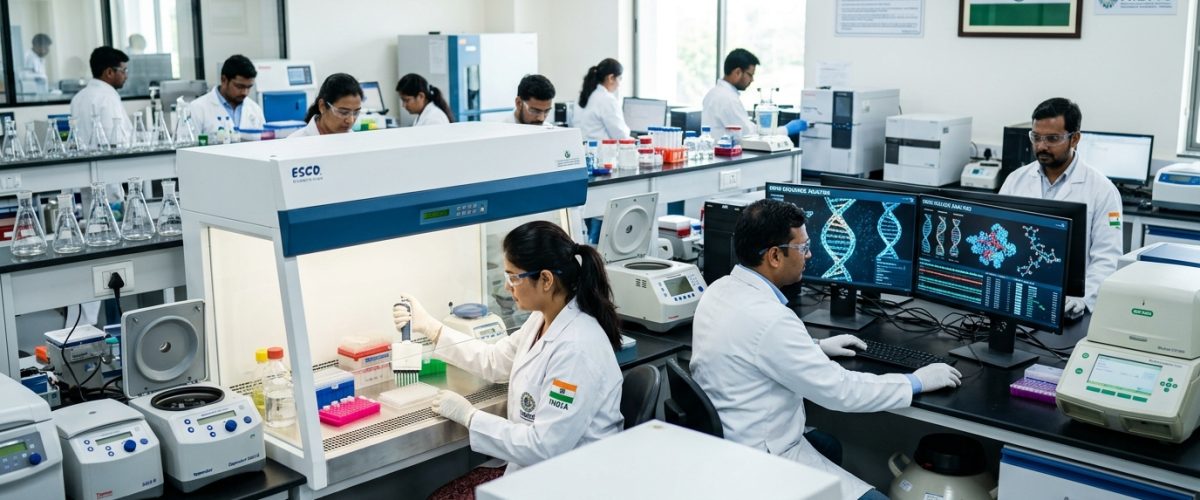
India’s bioeconomy has expanded from $10 billion in 2014 to $165.7 billion in 2024 — a 16-fold increase in a single decade — according to the India Bioeconomy Report 2025 (IBER 2025) released by the Department of Biotechnology. The sector now contributes 4.25 per cent of the country’s GDP and has posted a compound annual growth rate of 17.9 per cent over the past four years.
From 50 Startups to Over 10,000
India’s biotech startup ecosystem has grown from just 50 companies a decade ago to over 10,075 today. Union Minister Dr Jitendra Singh credited public-private partnerships and a policy-driven approach for the transformation, calling it “the dawn of a bio-revolution that will be as transformative for India as the IT revolution was for the West.”
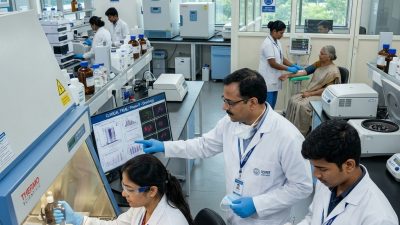
BIRAC (Biotechnology Industry Research Assistance Council) has been instrumental in the growth, supporting 101 projects across 150-plus organisations and 30 MSMEs through the National Biopharma Mission. The government has also set up 12 DBT-supported biotechnology parks and 95 BIRAC-supported bio-incubators across the country.
Key Policy Drivers: BIO-RIDE and BIO-E3
Two major policy frameworks are shaping the sector’s future. The BIO-RIDE scheme (Biotechnology Research Innovation and Entrepreneurship Development), with an allocation of Rs 9,197 crore for 2021-26, merges earlier DBT schemes and adds a new Biomanufacturing and Biofoundry component. The BIO-E3 Policy — Biotechnology for Economy, Employment, and Environment — aims to accelerate research through Bio-AI Hubs, biofoundries, and bio-enabler hubs.
Assam has become the first state to adopt the BIO-E3 framework, marking a step toward pan-India implementation. The government’s vision includes creating thematic hubs focused on bio-based chemicals, smart proteins, and carbon capture. India’s broader science ecosystem is also expanding, with ISRO-DBT collaboration paving the way for space biology research.
Breakthrough Achievements
The sector has produced several firsts. India developed its first indigenous antibiotic, Nafithromycin, effective in treating respiratory diseases. A successful gene therapy trial for haemophilia has been completed. The whole genome sequencing project, covering 10,074 individuals across 99 communities, is expected to revolutionise precision medicine.
India’s Gross Expenditure on Research and Development (GERD) has more than doubled, rising from Rs 60,196 crore in 2013-14 to Rs 1,27,381 crore in 2024. The Department of Biotechnology’s collaboration with ISRO is advancing space medicine research ahead of the Gaganyaan crewed mission.
Road to $300 Billion
The government’s target of $300 billion by 2030 rests on three pillars: biopharmaceuticals, bio-agriculture, and bio-manufacturing. India is now the third-largest biotech market in Asia-Pacific and ranks among the top 12 globally. The BioSaarthi mentorship initiative, launched alongside the IBER 2025 report, aims to nurture biotech startups through a six-month cohort engaging international mentors from the Indian diaspora.
The integration of AI in Indian healthcare and the growth of India’s IT sector are creating synergies that could further accelerate the bioeconomy. With a population of 1.4 billion, nearly half under 25, India has the workforce depth to sustain the sector’s growth trajectory.

- India’s Bioeconomy Surges to $165.7 Billion as Government Targets $300 Billion by 2030 - April 11, 2026
- Kerala Smashes Tourism Record With 2.58 Crore Visitors in 2025 as Idukki and Ernakulam Lead Domestic Surge - April 10, 2026
- Indian Athletics Series 2026 Reaches Udaipur and Sangrur as AFI Rolls Out Record 40-Event Calendar - April 10, 2026