Southwest Monsoon to Hit Kerala Around June 4 as IMD Confirms Onset — What It Means for India’s Agricultural Season

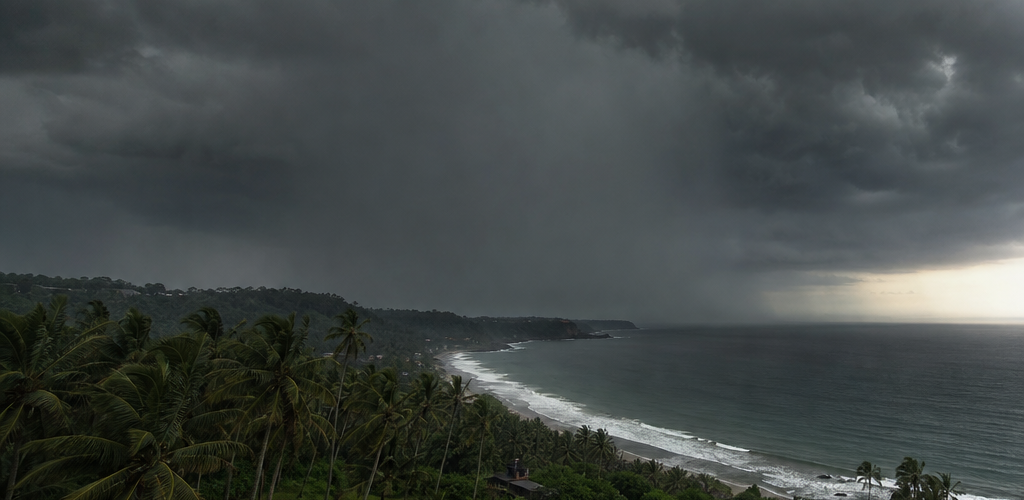
The India Meteorological Department confirmed on June 2 that the southwest monsoon is likely to set in over Kerala around June 4, 2026, bringing the formal start of India’s four-month rainy season that directly influences the livelihoods of hundreds of millions of farmers and determines the trajectory of the country’s agricultural output. The onset date is close to the normal date of June 1, representing a slight delay but well within the acceptable window that meteorologists consider normal.
IMD’s Official Forecast and Current Conditions
In its official press release dated June 2, the IMD stated that conditions are favourable for the further advance of the southwest monsoon into several regions simultaneously. The monsoon has already advanced into parts of the southwest and southeast Arabian Sea, the Lakshadweep area, and large portions of the Bay of Bengal. The meteorological conditions supporting the onset include the development of a low-pressure system over the southeast Arabian Sea, the strengthening of westerly winds at lower atmospheric levels, and adequate moisture incursion from the Indian Ocean.
The IMD has forecast widespread light to moderate rainfall with isolated heavy rainfall accompanied by thunderstorms and gusty winds over Kerala for June 2 and 3, with conditions expected to intensify as the monsoon formally sets in on June 4. Lakshadweep is also expected to receive heavy rainfall during this period. The department has noted, however, that cumulatively below-normal rainfall is likely over Kerala during the first week of the monsoon, suggesting the onset may be gradual rather than explosive.
What Monsoon Onset Means — The Science Behind It
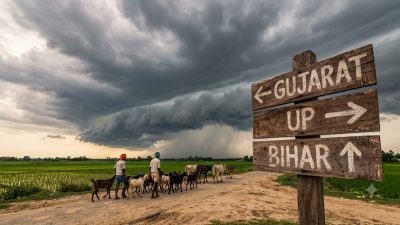
The southwest monsoon is one of the most significant large-scale weather phenomena on Earth. Driven by the differential heating of the Indian subcontinent and the Indian Ocean, the monsoon draws moisture-laden winds from the ocean toward the landmass, delivering approximately 70 percent of India’s annual rainfall between June and September. The onset over Kerala marks the beginning of this process, after which the monsoon progressively advances northward and westward across the country, typically reaching Delhi by late June and covering the entire country by mid-July.
Meteorologists determine monsoon onset based on a set of specific criteria including sustained rainfall over a defined network of weather stations in Kerala, the depth and persistence of westerly winds, and satellite-derived measurements of outgoing longwave radiation that indicate deep convective cloud formation. The onset is not simply “the first day of rain” — it represents a fundamental shift in atmospheric circulation patterns that sustains rainfall over the subsequent months.
Implications for Agriculture and the Kharif Season
India’s kharif (summer) cropping season is directly tied to monsoon rainfall, with crops such as rice, cotton, sugarcane, pulses, and oilseeds depending on adequate and well-distributed precipitation. The monsoon accounts for approximately 50 percent of India’s total agricultural output, and its performance has far-reaching implications for food prices, rural incomes, and overall economic growth.
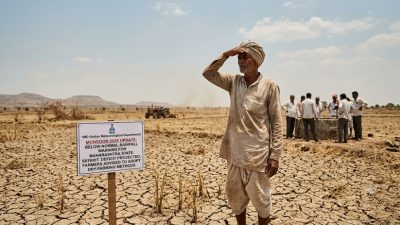
The timely onset of the monsoon is particularly welcome news for farmers who have been preparing their fields for sowing. A delayed onset can push back the sowing window, reducing crop yields and potentially leading to water shortages for irrigation later in the season. Conversely, a timely arrival allows farmers to begin planting operations on schedule, maximising the growing period available for kharif crops.
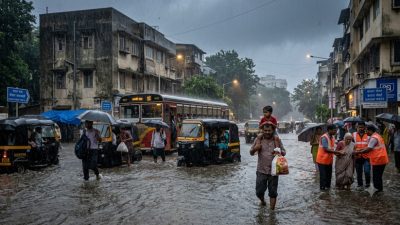
This year, the IMD’s earlier long-range forecast had predicted above-normal monsoon rainfall for 2026, which if realised would be positive for agricultural production. However, forecasters have cautioned that the overall quantum of rainfall matters less than its distribution — both temporal and spatial. Prolonged dry spells interspersed with heavy rainfall events can be just as damaging as an overall deficit, leading to both drought stress and flooding.
Impact on Reservoirs, Water Resources, and Power Generation
Beyond agriculture, the monsoon is critical for replenishing India’s reservoirs, rivers, and groundwater aquifers. As of early June, several major reservoirs across southern and western India were reported to be well below their normal storage levels, making the incoming monsoon essential for securing drinking water and irrigation supplies for the coming year. Hydropower generation, which accounts for roughly 12 percent of India’s electricity supply, is also heavily dependent on monsoon inflows into dam catchment areas.
The monsoon’s arrival also brings relief from the intense heat that grips much of India during the pre-monsoon period. Several states including Rajasthan, Delhi, and Uttar Pradesh have been experiencing severe heatwave conditions with temperatures exceeding 45 degrees Celsius, and the progressive advance of the monsoon is expected to gradually moderate temperatures across the northern plains by late June.
Climate Change and Monsoon Variability
Climate scientists have noted that India’s monsoon patterns are showing increasing variability, with more frequent extreme rainfall events, longer dry spells within the monsoon season, and greater uncertainty in onset and withdrawal dates. Studies published in recent years have linked these changes to rising sea surface temperatures in the Indian Ocean, Arctic ice melt affecting atmospheric circulation, and changes in aerosol loading over the Indo-Gangetic plain.
The growing evidence of climate change impacts on the monsoon has prompted calls for improved weather forecasting infrastructure, expansion of irrigation coverage to reduce agriculture’s dependence on rainfall, and development of climate-resilient crop varieties that can withstand both drought and waterlogging. The IMD has been upgrading its forecasting capabilities with new Doppler weather radars, high-resolution numerical weather prediction models, and AI-powered nowcasting tools, but challenges remain in providing accurate district-level forecasts that farmers can act upon.
For the coming days, the IMD has advised fishermen along the Kerala and Karnataka coasts to avoid venturing into the sea due to strong winds and rough sea conditions associated with the monsoon onset. Disaster management authorities in Kerala and Karnataka have been placed on alert for potential flooding and landslides in hilly regions, particularly in the Western Ghats where intense rainfall can trigger dangerous debris flows.

- India’s Startup Funding Crosses $7.2 Billion in H1 2026 - July 1, 2026
- After Ireland Shock, India’s T20I Side Faces Bigger Test - July 1, 2026
- Ireland Stun World Champions India 2-0 in Belfast, Sooryavanshi Debate Rages On - June 29, 2026