India Climbs to 92nd in FIFA Rankings as ISL Investment Boom and Sunil Chhetri’s Successor Debate Heat Up in 2026

India Reaches Its Highest FIFA Ranking in Over a Decade
Indian football received a significant boost on 27 March 2026 when FIFA’s latest world rankings placed the national team at 92nd position, the country’s highest ranking since 2013 and a climb of 13 places from the start of the year. The improvement reflects a series of strong results in the 2026 AFC Asian Cup qualifying campaign, including away victories over Bahrain and Lebanon and a creditable draw against Japan in Yokohama.
Head coach Igor Štimac, who extended his contract through 2028 following the ranking improvement, credited structural changes within Indian football for the progress. “The ISL has transformed the ecosystem. Young Indian players are now technically and tactically better than any generation before them. We have depth, we have ambition and we have a plan,” Štimac said at an AIFF press briefing.
ISL Investment Crosses Rs 2,000 Crore
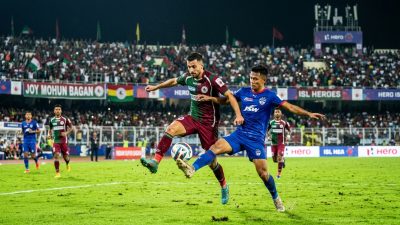
The Indian Super League, now in its 12th season, has become the financial engine driving Indian football’s resurgence. Total franchise investment across the league’s 12 teams crossed Rs 2,000 crore in 2026, up from Rs 1,400 crore in 2024. The increase is driven by new ownership groups bringing private equity-style capital and operational expertise to the league.
Mumbai City FC’s parent company, City Football Group (which also owns Manchester City), expanded its India investment by Rs 180 crore, building a state-of-the-art academy in Navi Mumbai that scouts and develops players from across Maharashtra. Mohun Bagan Super Giant, under the RPG-Sanjiv Goenka Group, has invested Rs 250 crore in their first-team squad, academy and stadium infrastructure, making them the ISL’s highest-spending franchise.
The commercial appeal of Indian football is growing in tandem. ISL broadcast rights, held by JioStar, generated Rs 300 crore in advertising revenue for the 2025-26 season, a 40 per cent increase over the previous year. While still dwarfed by cricket’s commercial might, as covered in cricket and IPL coverage, football is establishing itself as India’s second most commercially viable sport.
The Chhetri Succession Question
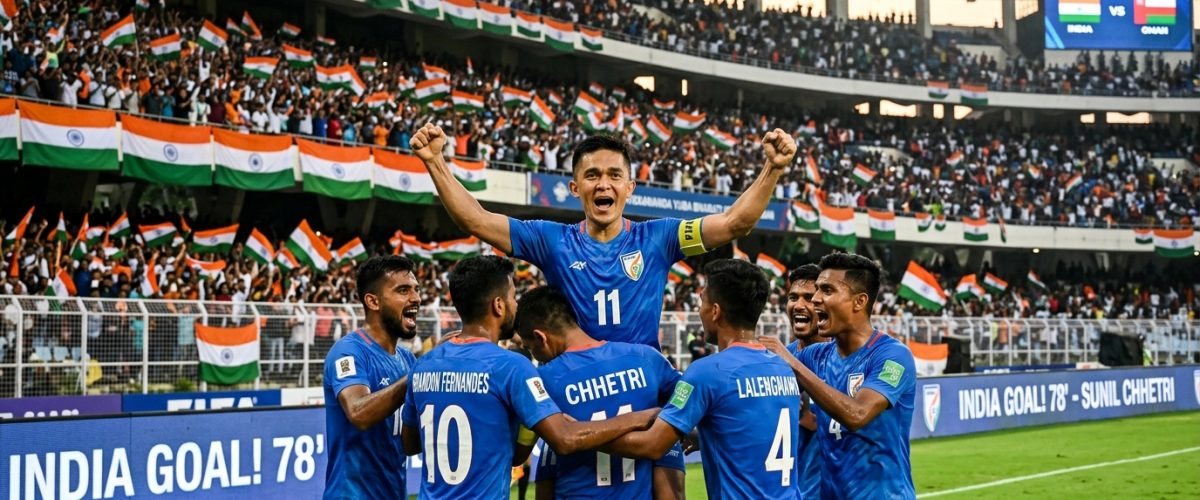
The retirement of Sunil Chhetri from international football in 2024, after scoring 94 goals in 151 appearances, left a leadership vacuum that the national team is still navigating. The search for his successor as talisman has become one of Indian football’s most discussed debates.
Three players have emerged as front-runners. Liston Colaco, the 25-year-old Mohun Bagan winger, has been the most prolific Indian scorer in ISL history with 62 goals across six seasons. His pace, directness and ability to play across the front line make him the most complete forward in the pool. However, his international goal record — 11 in 32 caps — suggests the step up to the global stage remains a work in progress.
Rahim Ali, 24, of Chennaiyin FC offers a different profile: a clever number nine who excels in link-up play and creates space for teammates. His seven international goals have included important strikes against higher-ranked opposition. Lallianzuala Chhangte, the ISL’s fastest player, provides explosive pace and crossing ability from the left wing, though his finishing inconsistency has been a recurring criticism.
Štimac has resisted declaring a single successor, preferring a collective approach. “Sunil was unique. We won’t replace him with one player. We’ll replace his goals with a system that creates chances for everyone,” he said.
Youth Development: The ISL Academy System Bears Fruit
The most promising indicator for Indian football’s future lies in its youth development pipeline. ISL’s mandatory academy requirement, which compels each franchise to operate a residential academy with at least 60 players under 18, has produced a generation of technically proficient young players.
The India U-20 team’s qualification for the AFC U-20 Asian Cup finals in Saudi Arabia, achieved in January 2026, was the most tangible evidence of this pipeline’s effectiveness. Five of the squad’s 23 players were products of ISL academies, with FC Goa’s youth system alone contributing three players.
The AIFF’s talent identification programme, conducted in partnership with FIFA’s Talent Development Scheme, now covers 15,000 schools across 22 states. Scouting combines data analytics — tracking sprint speeds, passing accuracy and decision-making metrics in school tournaments — with traditional eye tests from former internationals serving as regional scouts.
The professionalisation of youth pathways echoes developments in other Indian sports. The Pro Kabaddi League followed a similar trajectory, and its investment in grassroots development has paid dividends in international competition.
Infrastructure: Stadiums, Pitches and the FIFA World Cup Dream
India’s football infrastructure has undergone significant upgrades in recent years. The 2022 FIFA U-17 Women’s World Cup, hosted across Bhubaneswar, Goa and Navi Mumbai, left a legacy of three FIFA-certified stadiums with modern floodlighting, hybrid grass pitches and VAR-ready broadcast facilities.
The AIFF has submitted an expression of interest to host the 2031 FIFA Club World Cup, which under FIFA’s expanded format would require eight venues. If successful, the tournament would necessitate further stadium development — potentially including a new 60,000-seat arena in Bengaluru that has been in the planning stages since 2023.
At the grassroots level, the Khelo India programme funded the installation of 340 synthetic football pitches in schools and community centres across India between 2024 and 2026. While synthetic pitches remain controversial among purists, they provide all-weather playing surfaces in a country where the monsoon season renders natural grass pitches unusable for four months of the year.
Women’s Football: The Untold Growth Story
India’s women’s football programme is experiencing its own quiet revolution. The Indian Women’s League (IWL), relaunched in 2025 with ISL franchise backing, now features eight teams with fully professional contracts for all players — a first in Indian women’s sport outside cricket. Average salaries have risen to Rs 8-12 lakh annually, compared to Rs 2-3 lakh under the previous structure.
The women’s national team, ranked 62nd in the world, has qualified for the 2026 AFC Women’s Asian Cup in Australia, where it will face Japan, South Korea and Vietnam in the group stage. Striker Bala Devi, at 36, continues to lead the line, but 19-year-old Manisha Kalyan, who plays for Apollon Limassol in Cyprus’s top division, represents the future. Her move to European club football — a path increasingly taken by Indian talent abroad — has inspired a generation of young girls to view football as a viable career.
The Road to the 2027 AFC Asian Cup
India’s primary competitive target remains qualification for the 2027 AFC Asian Cup in Saudi Arabia. Currently second in their qualifying group behind Japan, India needs just one win from their remaining two fixtures — against Bangladesh (home) and Lebanon (away) — to secure qualification for the continental championship for the second consecutive time.
A strong Asian Cup performance could have cascading effects: improving FIFA ranking further, attracting international friendly opponents of higher calibre and strengthening India’s case for increased FIFA development funding. For a country of 1.4 billion that has long underperformed in the world’s most popular sport, the growing sporting ambition across disciplines suggests the tide may finally be turning.
As Štimac reminds anyone who will listen: “India at 92nd is just the beginning. I want us in the top 50 before 2030. The talent is here. The investment is here. We just need time and patience.”

- India Climbs to 92nd in FIFA Rankings as ISL Investment Boom and Sunil Chhetri’s Successor Debate Heat Up in 2026 - March 30, 2026
- Neeraj Goyat Signs Historic UFC Contract as Indian Boxing Eyes Olympic Glory at Los Angeles 2028 - March 30, 2026
- Indian Wrestling Rebuilds Under New WFI Leadership as Young Grapplers Eye 2026 Asian Games and 2028 Olympics Glory - March 29, 2026