India’s Edtech Sector Enters Consolidation Phase as Vedantu and PhysicsWallah Expand Offline Centres

India’s edtech sector, which experienced a tumultuous period of rapid growth followed by equally dramatic corrections between 2020 and 2024, is entering a new phase defined by consolidation, hybrid learning models, and a return to fundamentals. Two companies exemplify this transformation: Vedantu, the live online tutoring platform, and PhysicsWallah, the affordable test preparation disruptor. Both have announced significant expansions of their offline learning centres in early 2026, a move that signals a broader industry recognition that India’s education market cannot be served by digital alone.
Vedantu’s Offline Expansion
Vedantu, founded by Vamsi Krishna and Pulkit Jain in 2014, made its name as a live online tutoring platform that differentiated itself from pre-recorded content providers through real-time teacher-student interaction. The company raised over $280 million in venture capital during the edtech boom but, like many peers, faced a sharp subscriber decline when schools reopened after the pandemic. Revenue fell nearly 40 per cent from FY2022 to FY2024, forcing significant layoffs and cost restructuring.
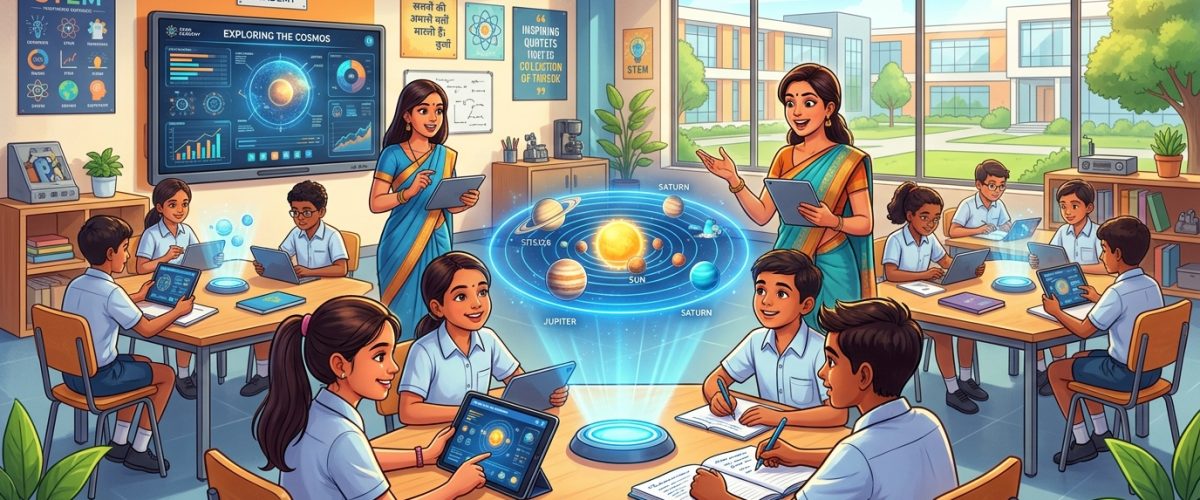
The 2026 strategy represents a reinvention. Vedantu has opened 25 physical learning centres, branded “Vedantu Hubs,” across 18 cities, with plans to reach 100 centres by March 2027. These centres operate on a micro-school model: classes of 15-20 students, experienced teachers, and technology-enhanced classrooms equipped with digital whiteboards and AI-powered assessment tools. The pricing is calibrated for the Tier 2 market—₹8,000-₹12,000 per month, significantly below the ₹25,000-₹40,000 that premium coaching chains like Allen and Aakash charge.
Also read: IPL 2026 Season Preview: Key Transfers, Injuries, and Franchise Strategies
Also read: AI Summit 2026: India Showcases Ambitions but Structural Gaps Exposed
CEO Vamsi Krishna framed the shift at a recent edtech conference in Bangalore: “We spent 2020-2022 believing that online would replace offline. It won’t. India’s education ecosystem is hybrid, and the companies that thrive will be the ones that master both modalities. Our offline hubs are not a retreat from technology—they are an extension of it.”
PhysicsWallah’s Vidyapeeth Empire
PhysicsWallah’s offline expansion has been even more aggressive. The company, which achieved unicorn status in early 2026 at a $2.8 billion valuation, now operates 65 Vidyapeeth centres across 40 cities. Each centre offers year-long preparation programmes for JEE, NEET, and state engineering/medical entrance exams, combining in-person instruction with PhysicsWallah’s extensive online content library.
The Vidyapeeth model is deliberately designed for the mass market. Annual course fees range from ₹25,000 to ₹45,000—roughly one-third of what competing offline coaching institutes charge. Founder Alakh Pandey, whose YouTube channel has over 20 million subscribers, remains the company’s most powerful marketing asset, and his personal brand drives significant organic student enrollment without the massive advertising expenditure that hampers other edtech companies’ profitability.
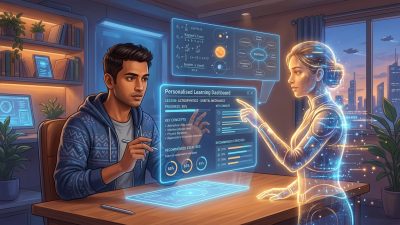
PhysicsWallah’s offline centres have also become testing grounds for AI-enhanced learning tools. Each student receives a personalised learning dashboard that tracks their progress, identifies weak areas, and recommends targeted practice modules. Weekly AI-generated diagnostic tests adapt in real-time to the student’s performance level, ensuring that the content difficulty is calibrated to each individual. This blend of personal instruction and AI personalisation is what PhysicsWallah describes as “PW Hybrid Learning.”
The Industry Context: Why Offline, Why Now?
The edtech sector’s pivot to offline is driven by a harsh market lesson: India’s education consumers prefer hybrid over pure-digital. Post-pandemic data consistently shows that completion rates for offline and hybrid courses are 60-70 per cent, compared to just 15-25 per cent for purely online courses. For high-stakes exam preparation—where the difference between qualifying and failing can determine a student’s entire career trajectory—parents and students overwhelmingly prefer the accountability and structure of physical classrooms.
The financial case for offline expansion is also compelling. Customer acquisition costs for online edtech in India range from ₹4,000 to ₹12,000 per student, driven by fierce competition for Google and Meta ad inventory. Offline centres, by contrast, benefit from local word-of-mouth referrals, reducing acquisition costs to ₹800-₹1,500 per student. Moreover, offline students tend to have higher retention rates and higher lifetime values, as the physical relationship with teachers and peers creates switching costs that purely online platforms lack.
Consolidation: The Survivors and the Fallen
The offline pivot is occurring against a backdrop of significant industry consolidation. Byju’s, once India’s most valuable startup at $22 billion, has been in a protracted restructuring process, with assets being sold and legal battles ongoing with creditors. Unacademy, another former high-flyer, has stabilised but at a fraction of its peak revenue, having shut down several sub-brands and reduced its workforce by over 50 per cent since 2022.
The survivors—PhysicsWallah, Vedantu, Allen Digital (the online arm of Allen Career Institute), and emerging players like Testbook and Classplus—share common traits: they have strong unit economics, disciplined cost structures, and a willingness to meet students where they are, both physically and digitally. The era of “online-only edtech at any cost” is over. The era of hybrid, outcome-focused education technology has begun.
For India’s 350 million students, this consolidation is ultimately positive. The companies that remain standing are those that genuinely improve learning outcomes, not those that merely excel at digital marketing. In that sense, the edtech correction of 2023-2025 may have been painful, but it is producing an industry that is better aligned with the needs of Indian learners.

- Startup India at 10: A Decade of Disruption and the Founders Who Shaped the Ecosystem - March 24, 2026
- From Side Hustles to Success: Five Indian Founders Who Turned Adversity Into Billion-Dollar Ventures - March 24, 2026
- Healthtech Funding Shifts Toward Integrated Care Models as Investors Eye Sustainable Growth in India - March 24, 2026