National Startup Day 2026: The Founders and Ventures Shaping India’s Entrepreneurial Growth Story

Celebrating India’s Entrepreneurial Spirit on National Startup Day 2026
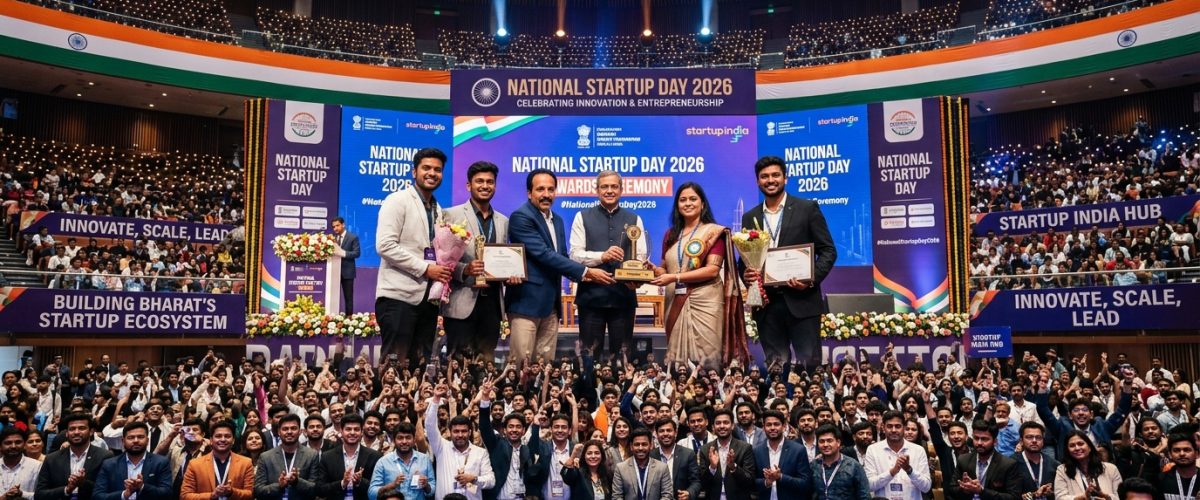
On January 16, 2026, India celebrated National Startup Day—an occasion established to recognise the transformative role that startups play in the nation’s economic fabric. The celebrations, held across government institutions, co-working spaces, university campuses, and corporate offices, provided an opportunity to reflect on how far India’s startup ecosystem has come and to honour the founders who are translating vision into ventures that create jobs, drive innovation, and solve problems that affect millions of lives. As ANI News reported, the spotlight turned to “the founders shaping the country’s startup-led growth story,” highlighting entrepreneurs who are “translating insight into execution, building companies that address real needs.”
India’s startup ecosystem, now the third-largest globally behind the United States and China, encompasses over 1.25 lakh recognised startups across more than 760 districts. The ecosystem supports over 15 lakh direct jobs and significantly more indirect employment through supply chains, vendor networks, and service providers. With over 110 unicorns (startups valued at $1 billion or more), India has demonstrated that it can produce technology companies of global scale and relevance. But the true measure of the ecosystem’s success lies not in unicorn counts but in the breadth and depth of entrepreneurial activity across the country—from deep-tech ventures in Bengaluru to agricultural startups in Madhya Pradesh, from fintech innovators in Mumbai to edtech companies in Jaipur.
The Policy Foundation: Startup India’s Evolving Impact
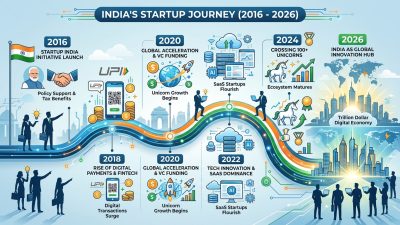
The Startup India initiative, launched in January 2016 by Prime Minister Narendra Modi, has been instrumental in creating the institutional and regulatory framework that supports entrepreneurship. The programme’s impact spans multiple dimensions: tax incentives for eligible startups (three-year tax holiday under Section 80-IAC), simplified compliance requirements, access to government procurement through the Government e-Marketplace (GeM), and the establishment of Fund of Funds (managed by SIDBI) that has catalysed over ₹80,000 crore in venture capital investment.
The regulatory simplifications have been particularly impactful. The abolition of angel tax for recognised startups, the introduction of convertible note frameworks, and the simplification of overseas investment regulations have reduced the friction that historically discouraged both founders and investors. The DPIIT’s (Department for Promotion of Industry and Internal Trade) streamlined recognition process means that startups can now obtain official status—with its associated benefits—within days rather than months.
The programme has also been remarkably successful in geographic diversification. While Bengaluru, Mumbai, and Delhi-NCR remain the largest startup hubs, cities like Hyderabad, Pune, Chennai, Ahmedabad, Jaipur, and Kochi have developed vibrant startup ecosystems with local incubators, angel networks, and talent pools. State-level startup policies—with standout examples from Kerala (KSUM), Karnataka (Elevate), Telangana (T-Hub), and Rajasthan (iStart)—have created additional layers of support that complement the central government’s initiatives.
Founder Profiles: Diverse Journeys, Common Vision
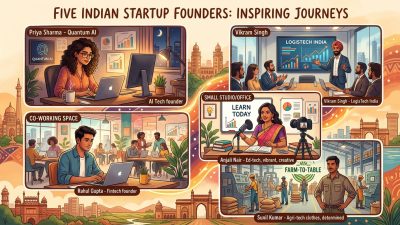
National Startup Day 2026 celebrated founders whose journeys illustrate the diversity and dynamism of Indian entrepreneurship. Among those recognised were:
Deepak Kumar, founder of a logistics technology company in Patna that has digitised last-mile delivery operations for over 10,000 small retailers across Bihar and Jharkhand. Kumar, a first-generation entrepreneur who previously worked as a delivery executive, identified the inefficiencies in rural distribution firsthand and built a platform that reduces delivery costs by 30 per cent while providing digital inventory management tools to kiranas (neighbourhood stores) that were previously entirely paper-based.
Ananya Birla, who founded Svatantra Microfin at age 17 before pivoting to mental health and fintech ventures, represented the evolving entrepreneur archetype—a founder who combines social purpose with commercial viability. Birla’s companies address financial inclusion and mental health access for India’s underbanked population, demonstrating that purpose and profit are not mutually exclusive. These founder stories connect to the broader investment trends we’ve covered in our analysis of India’s startup funding rebound in Q1 2026.
The deep-tech founder cohort was also prominently featured, with recognition for founders building companies in quantum computing, space technology, semiconductor design, and biotechnology. These ventures—which require longer development timelines and more patient capital than consumer internet startups—represent India’s ambition to move up the technology value chain from services and software to hardware and fundamental science. The growing ecosystem of deep-tech incubators, including those at IITs, IISc, and specialised programmes like ATMAN, is crucial for supporting these ventures through their extended pre-revenue phases.
Startup India: The Numbers Tell the Story
The quantitative impact of India’s startup ecosystem provides compelling evidence of its economic significance. Key metrics as of National Startup Day 2026 include:
Total recognised startups have crossed 1.25 lakh, with over 20,000 new recognitions in calendar year 2025 alone. The geographic distribution spans 760+ districts, with over 55 per cent of recognised startups headquartered outside the top three cities. Women founders lead approximately 47 per cent of recognised startups—a figure that reflects the DPIIT’s inclusive recognition criteria but also the genuine growth in women’s entrepreneurship across India.
The sectoral distribution has diversified significantly from the early days when the ecosystem was dominated by e-commerce and fintech. In 2026, the top sectors by startup count include enterprise SaaS, healthtech, edtech, agritech, cleantech, and logistics technology. This sectoral breadth reflects the maturation of the ecosystem from digital-first consumer businesses to technology applications across traditional industries—a transition that creates deeper economic impact and more sustainable business models.
The Global Context: India’s Startup Competitiveness
India’s startup ecosystem has increasingly become a subject of global interest and investment. In the Global Startup Ecosystem Report 2025, Bengaluru ranked among the top 20 global startup ecosystems, while Mumbai and Delhi-NCR entered the top 30. India’s attractiveness as a startup destination stems from a unique combination of factors: a massive domestic market (1.4 billion consumers with rapidly rising digital adoption), a world-class talent pool (particularly in engineering and technology), competitive operating costs, and a supportive policy framework.
The global investment community’s renewed confidence in Indian startups—evidenced by the return of major international VC firms and the successful IPOs of Indian-origin companies on international exchanges—validates the long-term thesis that India’s startup ecosystem will produce companies of enduring global significance. As analysed in our coverage of the D2C brand revolution navigating quick commerce in 2026, Indian consumer startups are building brands that can compete with global incumbents in their home market and eventually beyond.
Looking Ahead: The Ecosystem’s Next Phase
As National Startup Day 2026 concluded, the conversation naturally turned to what lies ahead. The consensus among ecosystem participants—founders, investors, policymakers, and academics—is that India’s startup ecosystem is entering a more mature phase characterised by deeper technology moats, more sustainable business models, and a broader geographic and sectoral footprint. The excesses of the 2021 boom and the pain of the subsequent correction have produced a wiser, more disciplined ecosystem that is better positioned for long-term value creation.
The government’s continued investment in digital infrastructure—UPI, ABDM, ONDC, DigiLocker—creates shared platforms upon which entrepreneurs can build innovative applications without having to construct foundational technology from scratch. The evolving regulatory framework, while still imperfect, has become more startup-friendly than at any point in India’s history. And the cultural acceptance of entrepreneurship—where starting a company is no longer seen as a risky deviation from the corporate career path but as a legitimate and even aspirational professional choice—provides the human capital foundation that sustains innovation.
The broader economic environment, including strong GDP growth as highlighted by the RBI’s 7.4 per cent FY26 forecast, India’s active markets, and cultural vibrancy extending from business to entertainment and sports, creates an ecosystem where entrepreneurial ambition finds both opportunity and support. For India’s founders, National Startup Day 2026 was not just a celebration of past achievements but a launchpad for the next chapter of one of the world’s most dynamic entrepreneurial stories.

- India’s Edtech Reboot: How BYJU’S Collapse Reshaped the Sector and Who Is Rising in 2026 - March 26, 2026
- India Real Estate 2026: Housing Sales Hit Record High as Luxury Segment Outpaces Affordable Market - March 26, 2026
- India GDP Growth Forecast 2026: RBI Holds Optimistic Outlook Despite Global Trade Headwinds - March 26, 2026