National Startup Day 2026: The Visionary Founders Driving India’s Next Phase of Innovation and Global Ambition

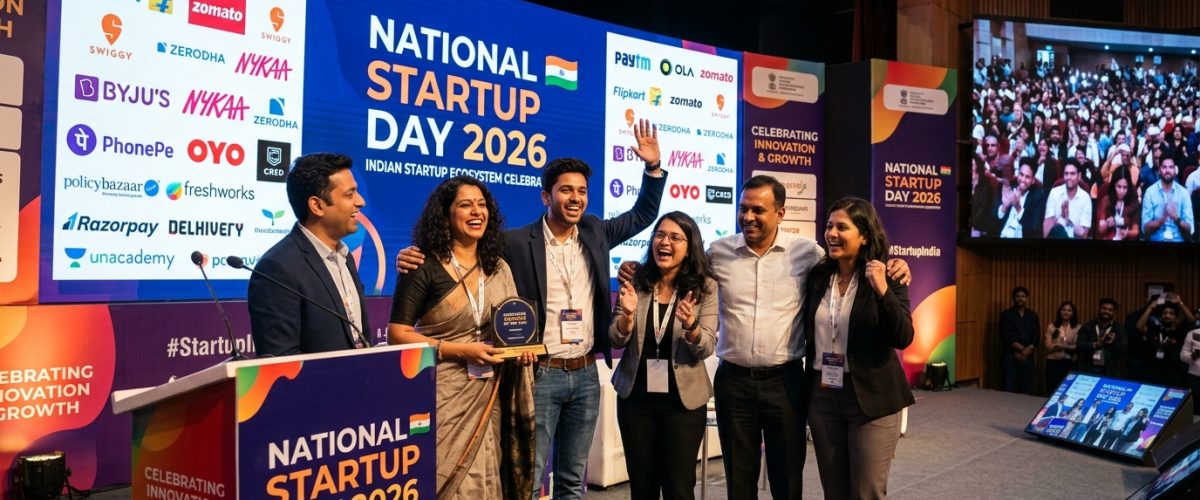
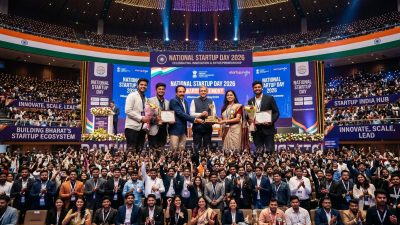
National Startup Day 2026, observed on January 16, cast a spotlight on the remarkable transformation of India’s entrepreneurial landscape. As the country celebrated the anniversary of the Startup India initiative, the day served as both a reflection on how far the ecosystem has come and a forward-looking assessment of the founders and ventures that will shape India’s innovation trajectory for the next decade. From fintech and artificial intelligence to healthcare, deep-tech, and sustainability, the featured founders represent a diverse, ambitious, and increasingly globally competitive generation of Indian entrepreneurs.
The State of India’s Startup Nation: By the Numbers
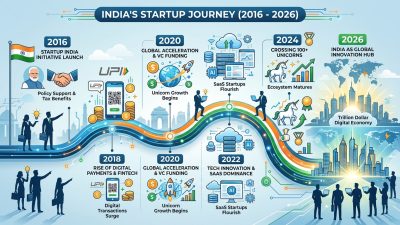
The numbers tell a compelling story. Since the Startup India programme’s launch in 2016, over 1,15,000 startups have been recognised by the Department for Promotion of Industry and Internal Trade (DPIIT). India is home to 87 unicorn companies valued at over $1 billion. The startup ecosystem employs directly over 14 lakh people, with indirect employment effects reaching multiples of that figure. Startup hubs have expanded from three major cities to more than 50, with representation from every state and union territory.
Venture capital investment in Indian startups, while below the 2021-22 peaks, has stabilised at sustainable levels of approximately $8-10 billion annually. More importantly, the quality of investment has improved, with capital flowing toward companies demonstrating clear unit economics, addressable market validation, and realistic paths to profitability. The ecosystem’s maturation is evident in the growing number of profitable startups, the increasing IPO pipeline, and the emergence of a robust secondary market for startup equity.
Founders in the Spotlight: Leaders Across Sectors
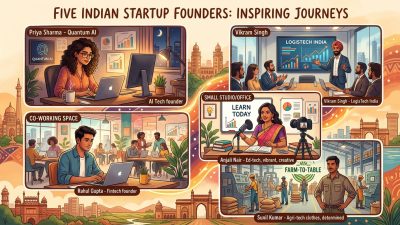
Gaurav Goel, Co-Founder and CEO of Toprankers EdTech Solutions, exemplifies the category of founders building comprehensive ecosystems rather than point solutions. Toprankers has grown into one of India’s most comprehensive career platforms, moving beyond conventional engineering and medical pathways to guide learners in law, management, design, public service, and emerging competitive fields. Under Goel’s leadership, the company has leveraged AI-driven personalisation to create customised preparation pathways for diverse career aspirations.
In fintech, founders are building infrastructure that serves India’s massive unbanked and underbanked population. Entrepreneurs creating solutions for micro-lending, insurance access, and digital payment services for rural India are addressing needs that affect hundreds of millions of citizens. Their work intersects with the broader digital payments revolution that has made UPI a 20-billion-transaction-per-month platform transforming India’s financial landscape.
Healthcare founders are tackling India’s most pressing medical challenges through technology. Companies building AI-powered diagnostic tools, affordable medical devices, and digital health platforms are creating solutions that could dramatically improve healthcare access for India’s 1.4 billion population. Their innovations are built on the growing digital health infrastructure of the Ayushman Bharat Digital Mission, which now connects over 834 million citizens.
The Deep-Tech Revolution: India’s Most Ambitious Founders
Among the most exciting developments in India’s founder ecosystem is the emergence of deep-tech entrepreneurs. These founders are building companies in semiconductor design, quantum computing, space technology, artificial intelligence research, and advanced materials—areas that require significant technical expertise, patient capital, and longer development timelines but offer the potential for transformative impact and defensible intellectual property.
India’s space technology sector, catalysed by ISRO’s policy opening for private participation, has produced a vibrant cluster of startups. Companies developing small satellite launch vehicles, Earth observation platforms, and space-based communication systems are positioning India as a competitor in the global space economy. The convergence of space technology with India’s AI capabilities, as discussed in our analysis of the AI Summit 2026 and India’s technology ecosystem, creates unique opportunities for Indian founders.
Semiconductor design companies are building on India’s established strength in chip design—a sector where Indian engineers have contributed to global semiconductor development for decades through captive design centres of companies like Intel, Qualcomm, and Texas Instruments. The transition from designing chips for global companies to building Indian semiconductor IP represents a natural evolution that several founders are pursuing with venture backing.
Sustainability-Driven Founders: Building for Planet and Profit
Climate technology and sustainability have emerged as a defining theme for India’s newest generation of founders. Entrepreneurs are addressing India’s environmental challenges—air pollution, water scarcity, agricultural sustainability, and waste management—through technology-enabled business models that align commercial viability with environmental impact.
The electric vehicle ecosystem has produced founders building not just vehicles but the supporting infrastructure—charging networks, battery swapping systems, fleet management platforms, and recycling solutions. Solar energy financing platforms are making rooftop solar accessible to middle-class households and small businesses. Sustainable agriculture ventures are helping farmers adopt practices that improve soil health, reduce water consumption, and maintain yields in the face of climate change.
These sustainability-focused founders benefit from growing consumer awareness, regulatory tailwinds from India’s Net Zero 2070 commitment, and dedicated climate funds that have entered the Indian venture market. The intersection of sustainability with India’s growing consumer market creates opportunities that are uniquely Indian in their scale and complexity.
Global Ambitions: Indian Founders on the World Stage
A distinguishing feature of India’s 2026 founder class is their global ambition. Unlike earlier generations of Indian startups that primarily served the domestic market, today’s founders increasingly view India as a launchpad for global businesses. SaaS companies born in India now serve customers across 100+ countries. AI startups trained on India’s diverse data environments are deploying solutions in global markets. Consumer brands rooted in Indian traditions—Ayurveda, yoga, ethnic fashion—are finding international audiences through digital channels.
This global orientation is supported by India’s growing soft power, the success of Indian-origin executives at leading global companies, and the maturation of the Indian diaspora as a bridge between Indian innovation and global markets. Founders who combine deep understanding of Indian market dynamics with global product thinking are creating companies that can compete—and win—against well-funded international competitors.
The Institutional Framework: What the Government Is Getting Right
The Startup India programme has evolved from its initial focus on registration and basic support to a more sophisticated ecosystem development approach. Key policy interventions include tax holidays for eligible startups, simplified compliance through the Startup India Hub portal, government procurement preferences through GeM (Government e-Marketplace), intellectual property facilitation, and international market access support through various trade agreements.
State governments have become active participants in ecosystem building. Karnataka’s Elevate programme, Telangana’s T-Hub, Kerala’s Startup Mission, and Maharashtra’s policy framework each offer tailored support that addresses local strengths and opportunities. This competitive federalism in startup policy has broadened the ecosystem’s geographic footprint and created diverse models of innovation support.
Challenges Ahead: What Founders Still Need
Despite the progress, significant challenges remain. Access to early-stage capital for founders outside major cities is still inadequate. Regulatory complexity—particularly for startups operating across multiple Indian states—creates administrative burden that diverts resources from product development and market building. The talent market, while vast, faces skill gaps in specialised areas such as AI/ML engineering, product management, and deep-tech research.
Perhaps most importantly, the ecosystem needs more tolerance for failure. While the stigma around startup failure has diminished considerably, the social and financial consequences of entrepreneurial failure remain high in Indian society. Creating safety nets—in terms of social acceptance, financial support, and re-employment pathways—for founders whose ventures do not succeed is essential for encouraging the risk-taking that drives innovation. The economic environment of strong growth and low inflation, as reflected in the RBI’s optimistic outlook for India’s macro trajectory, provides a supportive backdrop for entrepreneurial risk-taking in 2026 and beyond.
As India marks another National Startup Day, the overwhelming sense is one of maturing confidence. The ecosystem has weathered its first major correction cycle, learned from its excesses, and emerged more disciplined, diverse, and globally competitive. The founders who gathered on January 16 to celebrate and reflect represent not just individual achievement but a collective national capability that is redefining India’s economic identity in the 21st century.

- India’s Edtech Reboot: How BYJU’S Collapse Reshaped the Sector and Who Is Rising in 2026 - March 26, 2026
- India Real Estate 2026: Housing Sales Hit Record High as Luxury Segment Outpaces Affordable Market - March 26, 2026
- India GDP Growth Forecast 2026: RBI Holds Optimistic Outlook Despite Global Trade Headwinds - March 26, 2026