Indian Healthtech Startups Win Fresh Funding at IIT Bombay’s ATMAN 3.0 as Digital Health Accelerates

ATMAN 3.0: Where Deep Science Meets Startup Capital
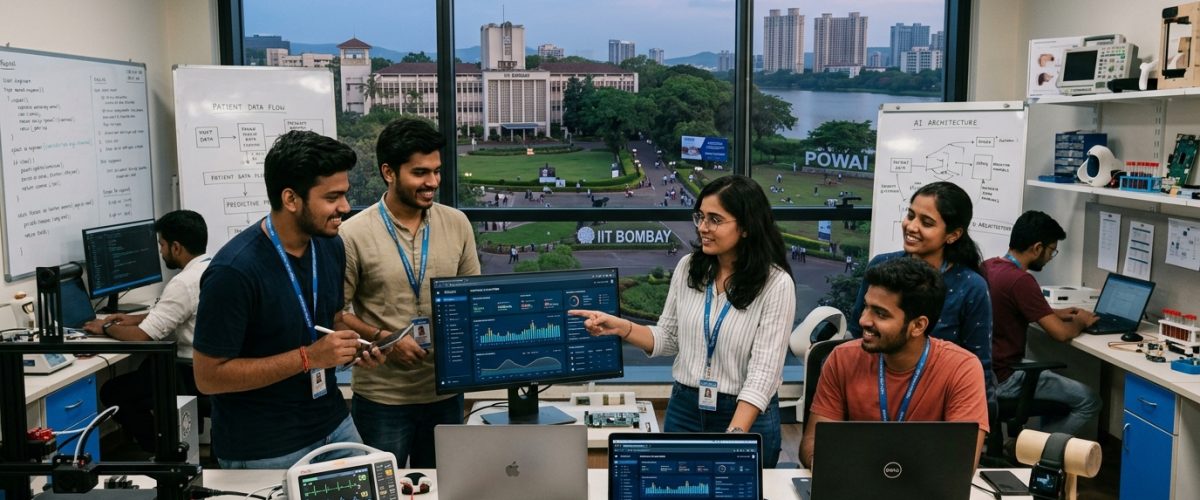
In January 2026, six Indian healthtech startups collectively secured ₹6 crore in funding at IIT Bombay’s ATMAN 3.0 healthcare accelerator—a sum that, while modest by venture capital standards, represents something far more significant for India’s healthcare innovation ecosystem. The funded companies are tackling some of the most pressing challenges in Indian healthcare: antimicrobial resistance testing, point-of-care diagnostics, AI-powered radiology, maternal health monitoring, mental health accessibility, and affordable prosthetics. These are not consumer apps seeking viral growth but deep-science ventures addressing fundamental gaps in a healthcare system that serves 1.4 billion people with resources designed for a fraction of that number.
ATMAN (Accelerating Translational Advances in Medicine and Allied Sciences), now in its third edition, has emerged as India’s premier healthcare-focused accelerator, bridging the gap between laboratory research and commercial viability. The programme, housed within IIT Bombay’s biomedical engineering department, provides startups with access to world-class research infrastructure, clinical partnerships with leading hospitals, mentorship from healthcare industry veterans, and structured pathways to regulatory approval. This institutional approach to healthtech incubation reflects a growing recognition that healthcare innovation requires a different support ecosystem than typical technology startups.
The Six Startups: Solving Real Healthcare Problems
Among the ATMAN 3.0 cohort, MedSense stands out for its work on rapid antimicrobial resistance (AMR) testing. AMR is estimated to cause over 58,000 neonatal deaths annually in India—a staggering toll that could be reduced significantly if doctors could quickly identify which antibiotics will be effective against a patient’s specific infection. MedSense’s portable testing device delivers AMR results in under two hours, compared to the 48-72 hours required by traditional culture-based methods. This speed advantage can be the difference between life and death in intensive care settings.
DiagnoAI, another ATMAN 3.0 graduate, has developed an AI-powered radiology platform that can detect tuberculosis, lung cancer, and cardiac abnormalities from chest X-rays with accuracy comparable to experienced radiologists. In a country where there are only 15,000 radiologists serving 1.4 billion people—a ratio roughly 10 times worse than in developed nations—AI-assisted diagnostics can dramatically expand access to specialist-level interpretation, particularly in district hospitals and primary health centres that lack trained radiologists.
MatriHealth focuses on maternal health monitoring using a wearable device that continuously tracks vital signs—blood pressure, heart rate, foetal heart rate, and uterine activity—and transmits data to healthcare providers via a mobile app. India accounts for approximately 12 per cent of global maternal deaths, with many occurring in rural areas where women lack access to regular prenatal monitoring. MatriHealth’s affordable, cellular-connected wearable (priced at ₹2,500) could enable remote monitoring of high-risk pregnancies, allowing timely intervention before complications become emergencies. These healthtech innovations connect to India’s broader technology aspirations, as explored in our coverage of India’s AI Summit 2026.
The Broader Healthtech Funding Landscape
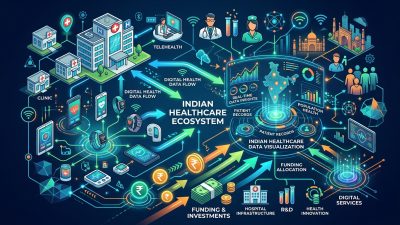
The ATMAN 3.0 cohort is part of a broader renaissance in Indian healthtech funding. After a challenging period in 2023-2024 when healthtech investments declined alongside the broader startup funding contraction, the sector has rebounded in early 2026. Data from multiple tracking sources indicates that healthtech startups raised approximately $400 million in Q1 2026, a 60 per cent increase over the same period in 2025. The investment is flowing across multiple subsectors: telemedicine, digital therapeutics, medical devices, pharmaceutical technology, and health insurance technology.
The government’s Ayushman Bharat Digital Mission (ABDM), which aims to create a national digital health infrastructure connecting patients, healthcare providers, and insurers, has been a significant catalyst for healthtech investment. The ABHA (Ayushman Bharat Health Account) system, which has generated over 60 crore unique health IDs, provides a standardised digital identity layer upon which healthtech companies can build interoperable products and services. This government-created infrastructure reduces the cost and complexity of customer acquisition for healthtech startups, addressing one of the sector’s historical challenges.
Telemedicine: From Pandemic Necessity to Permanent Infrastructure
Telemedicine, which gained massive adoption during the COVID-19 pandemic, has evolved from an emergency measure to a permanent feature of India’s healthcare delivery system. Practo, India’s largest telemedicine platform, now facilitates over 5 lakh virtual consultations daily, covering general medicine, dermatology, mental health, gynaecology, and paediatrics. The company’s revenue has grown to approximately ₹1,500 crore annually, demonstrating that sustainable business models in digital health are achievable at scale.
MediBuddy, Tata 1mg (acquired by Tata Digital), and Apollo 24/7 have built competing telemedicine platforms, each leveraging different competitive advantages. Apollo 24/7, backed by the Apollo Hospitals network, offers seamless integration between virtual consultations and in-person hospital visits—a hybrid model that addresses the limitation of telemedicine for conditions requiring physical examination or diagnostic tests. Tata 1mg, with its established pharmacy delivery network, provides an integrated consultation-prescription-delivery experience that maximises patient convenience.
The regulatory environment for telemedicine has matured significantly since the pandemic-era emergency guidelines. The Telemedicine Practice Guidelines, updated in 2025, provide a clear framework for virtual consultations, including standards for patient consent, data privacy, prescription protocols, and follow-up requirements. This regulatory clarity has encouraged both investment and adoption, with telemedicine now covered by most health insurance policies in India.
Digital Pharmacy and Medicine Delivery
India’s digital pharmacy market has grown into a $3 billion industry, driven by the convenience of doorstep medicine delivery and the cost savings available through online generic drug options. PharmEasy, which completed its acquisition of Thyrocare Laboratories, has built an integrated diagnostic and pharmacy platform that serves over 50 lakh customers monthly. The company’s ability to bundle diagnostic tests with medication delivery creates a comprehensive healthcare convenience platform that competes effectively with traditional pharmacy and diagnostic chains.
However, the digital pharmacy sector faces persistent challenges around regulatory compliance, medicine authenticity, and the balance between convenience and responsible prescription practices. SEBI and the Drug Controller General of India have issued guidelines requiring online pharmacies to verify prescriptions for scheduled drugs and maintain cold chain compliance for temperature-sensitive medications. These regulatory requirements, while necessary for patient safety, add operational complexity and cost that challenge the profitability of online pharmacy models.
Mental Health Tech: Addressing India’s Silent Crisis
India’s mental health crisis—characterised by a ratio of only 0.3 psychiatrists per 100,000 population compared to the WHO recommendation of at least 3 per 100,000—has created an acute need for technology-enabled mental health solutions. Startups like Amaha (formerly InnerHour), YourDOST, and Wysa are building platforms that combine AI-powered self-help tools with access to trained therapists via video, chat, and phone consultations.
Wysa, which uses an AI chatbot as a first-line mental health support tool, has attracted over 5 million users globally, with India being its largest market. The company’s model—free AI-based support supplemented by paid human therapist sessions—addresses the accessibility and affordability barriers that prevent most Indians from seeking mental health care. As the transformation of personal finance habits in India reflects broader societal changes, mental health awareness too is evolving as part of India’s development story.
The Path Forward: From Startups to Healthcare Infrastructure
India’s healthtech sector stands at an inflection point in 2026. The foundational digital infrastructure—ABDM, UPI for health payments, e-prescription systems—is maturing. The investment climate is improving. Regulatory frameworks are becoming clearer. And most importantly, consumer acceptance of digital health services has reached critical mass, particularly in urban India.
The challenge now is to extend these benefits beyond the urban middle class to the 65 per cent of Indians who live in rural areas and often lack access to even basic healthcare facilities. Point-of-care diagnostics, teleconsultation services, and AI-powered screening tools, deployed through the existing network of 1.5 lakh Health and Wellness Centres under Ayushman Bharat, could transform healthcare access for hundreds of millions of Indians. As India’s economy grows and investment flows strengthen, as evidenced by the startup funding rebound in Q1 2026, healthtech entrepreneurs have an unprecedented opportunity to build companies that are simultaneously profitable and profoundly impactful.

- India’s Edtech Reboot: How BYJU’S Collapse Reshaped the Sector and Who Is Rising in 2026 - March 26, 2026
- India Real Estate 2026: Housing Sales Hit Record High as Luxury Segment Outpaces Affordable Market - March 26, 2026
- India GDP Growth Forecast 2026: RBI Holds Optimistic Outlook Despite Global Trade Headwinds - March 26, 2026