Malaysia Enforces Social Media Ban for Children Under 16 from June 1 — Platforms Must Verify Age and Limit Account Registration

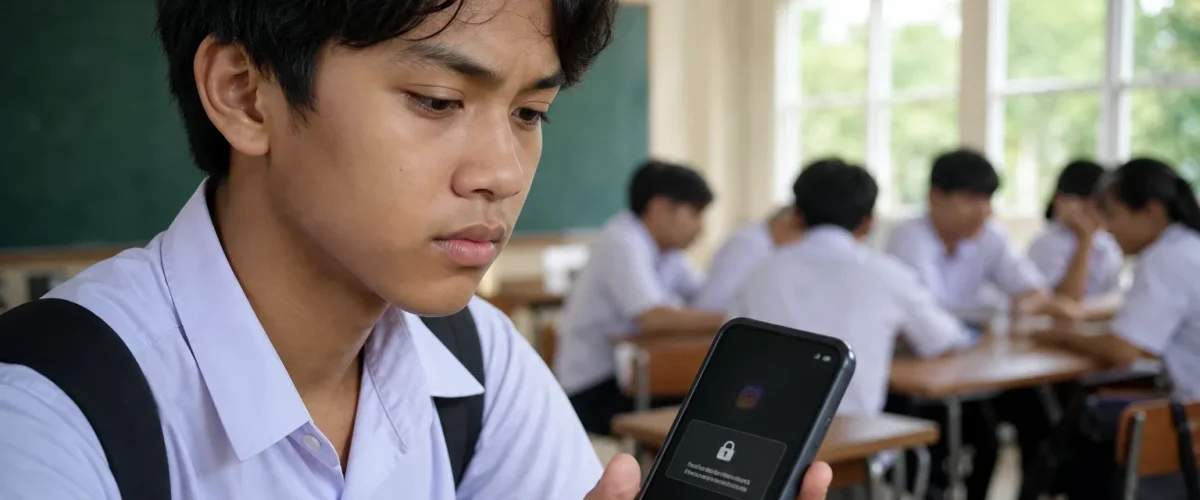
Malaysia has become the latest country to enforce restrictions on social media access for minors, with new rules taking effect from 1 June that require digital platforms to implement safeguards limiting account registration and ownership by users under the age of 16. The regulations, announced by the Malaysian Communications and Multimedia Commission (MCMC) on 22 May, also mandate stronger content governance measures to reduce young users’ exposure to harmful material online.
The enforcement makes Malaysia one of the most prominent Southeast Asian nations to follow Australia’s lead in restricting children’s access to social media — a policy trend that is gaining momentum globally as governments, parents, and child safety advocates grapple with mounting evidence of social media’s impact on adolescent mental health, attention spans, and exposure to harmful content.
What the New Rules Require
The MCMC regulations are structured around two pillars: age verification and content governance. On age verification, online service providers must include technical safeguards that prevent users under 16 from creating new accounts and limit the functionality of existing accounts held by minors. The regulations do not specify a single mandatory verification method — instead, they are described as “outcome-based,” giving platforms flexibility to adopt solutions that meet safety, privacy, and legal requirements.
Platforms may use a combination of age self-declaration (with parental consent), identity document verification, or biometric age estimation — the last being a technology that uses facial analysis to estimate a user’s age range without storing biometric data. A reasonable grace period will be given to service providers to complete verification processes and comply with the new requirements, the MCMC said.
On content governance, platforms must implement stronger moderation for content categories that Malaysian authorities consider harmful: online gambling, scams, child pornography and grooming, cyberbullying, and content related to race, religion, and royalty — the last category reflecting Malaysia’s unique legal framework that criminalises speech deemed insulting to the monarchy or likely to incite racial or religious tensions.
How This Compares to Australia and Other Countries
Australia passed its Online Safety Amendment (Social Media Minimum Age) Act in December 2025, setting 16 as the minimum age for social media accounts and imposing fines of up to A$50 million on platforms that fail to comply. The Australian law has been praised by child safety advocates but criticised by technology companies and some digital rights organisations who argue that age verification technologies are either too invasive (requiring identity documents) or too unreliable (facial age estimation has accuracy issues with younger demographics).
The European Union’s Digital Services Act takes a different approach, requiring platforms to assess and mitigate risks to minors without imposing a blanket age ban. France has legislated a requirement for parental consent for social media accounts held by users under 15, while China restricts minors to 40 minutes of short-video content per day and bans access between 10 PM and 6 AM.
Malaysia’s approach sits between the Australian model and the EU framework. It mandates age restrictions but gives platforms flexibility in implementation — a pragmatic recognition that no single age verification technology is mature enough for universal deployment. Communications and Multimedia Minister Teo Nie Ching emphasised that the rules aim to be “proportionate and implementable” rather than aspirational.
The Evidence — Why Governments Are Acting
The regulatory push is driven by a body of evidence that has grown substantially over the past three years. US Surgeon General Dr. Vivek Murthy’s 2023 advisory on social media and youth mental health described a “profound risk of harm” for adolescents, citing research linking heavy social media use to increased rates of anxiety, depression, sleep disruption, and body image disorders.
Internal documents from Meta, which recently launched paid subscriptions for Instagram and WhatsApp, revealed that the company’s own researchers had found Instagram to be “toxic” for a significant percentage of teenage girls — findings that Meta downplayed publicly while internally struggling to address them. Similar internal research from TikTok, revealed through litigation, showed that the platform’s algorithm deliberately served increasingly extreme content to younger users because it maximised engagement metrics.
In Malaysia specifically, a 2025 survey by the National Health and Morbidity Survey found that 29.4 percent of secondary school students reported symptoms of depression, with heavy social media use identified as one of the strongest correlating factors. Cyberbullying reports to the MCMC increased 47 percent year-on-year in 2025, with the majority involving victims under 18.
Industry Response and Implementation Challenges
Technology companies have responded to the Malaysian regulations with a mix of public compliance and private concern. Meta, TikTok, Google (which owns YouTube), and X have all issued statements expressing commitment to child safety while noting the technical complexity of age verification at scale. None has publicly opposed the regulations, but industry lobby groups have cautioned that overly rigid enforcement could push young users toward unregulated platforms or virtual private networks that circumvent geographic restrictions.
The fundamental technical challenge remains unsolved: how do you verify a user’s age without collecting sensitive personal data that itself becomes a privacy and security risk? The tension between child safety and data protection is unresolved in every jurisdiction that has attempted to legislate in this space.
Implications for India and the Broader Region
India, the world’s largest social media market by active users, has not yet legislated a minimum age for social media accounts, though the Digital Personal Data Protection Act 2023 requires verifiable parental consent for processing children’s data. The Ministry of Electronics and Information Technology has indicated that it is studying international developments, and the DPDP Act’s implementation rules — expected by mid-2026 — may include specific provisions on age gating for digital platforms.
With technology adoption surging across Asia and shifting demographics changing how younger populations interact with technology, the pressure for India to act will only intensify. Malaysia’s experience — whether its outcome-based approach proves effective or merely cosmetic — will provide a useful precedent for Indian policymakers navigating the same dilemma.

- India’s Startup Funding Crosses $7.2 Billion in H1 2026 - July 1, 2026
- After Ireland Shock, India’s T20I Side Faces Bigger Test - July 1, 2026
- Ireland Stun World Champions India 2-0 in Belfast, Sooryavanshi Debate Rages On - June 29, 2026