ISRO Maps Out Its Busiest Year Yet With Gaganyaan G1 and Over 10 Missions Planned for 2026

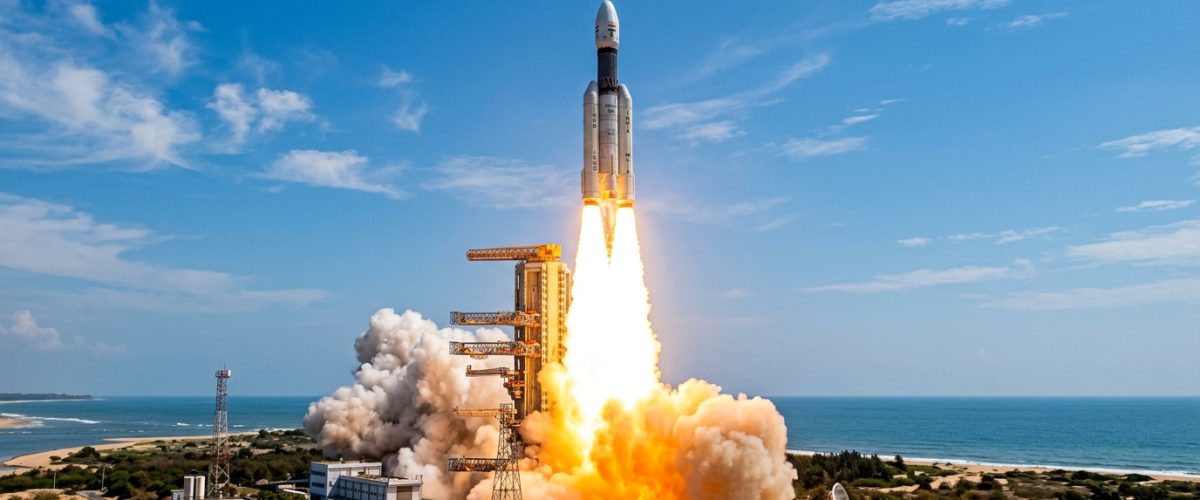
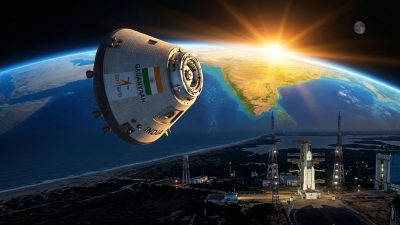
The Indian Space Research Organisation has mapped out its most ambitious launch calendar yet for 2026, with over 10 missions planned across PSLV, GSLV Mk II, and LVM3 rockets. The centrepiece is the Gaganyaan G1 mission — the first uncrewed orbital test flight of India’s crewed spacecraft — which is expected to launch in the second half of this year from the Satish Dhawan Space Centre in Sriharikota.
Gaganyaan: India’s Path to Human Spaceflight
The G1 mission will send the 5.3-tonne Gaganyaan capsule into a 400-kilometre orbit for testing its autonomous systems, re-entry heat shield, and parachute-based recovery sequence. ISRO Chairman V Narayanan confirmed that all systems are in place for the test, which follows the successful completion of crew module well-deck recovery trials with the Indian Navy in December 2024.
Two more uncrewed test flights — G2 and G3 — are planned before the inaugural crewed Gaganyaan mission, tentatively scheduled for 2027. If successful, India would become the fourth country after the United States, Russia, and China to independently send humans into space.
Full 2026 Launch Lineup
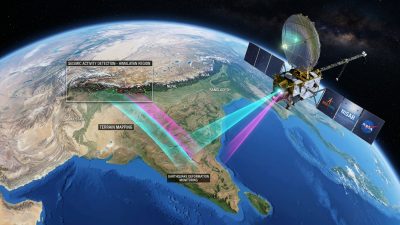
Beyond Gaganyaan, the 2026 calendar includes missions across defence, communication, earth observation, and navigation. GISAT-1A (EOS-05), an earth observation satellite for continuous monitoring of the Indian subcontinent, is scheduled for launch on a GSLV Mk II. TDS-01, a technology demonstration satellite, will test payloads from the Institute of Plasma Research and CSIR-CEERI.
Two IDRSS (Indian Data Relay Satellite System) satellites will be launched on GSLV Mk II rockets to support the Gaganyaan communications infrastructure. EOS-10 (Oceansat-3A) will continue ISRO’s ocean observation programme on a PSLV-XL. The NVS-03 satellite will replace an ageing component of India’s NavIC navigation system. Multiple PSLV flights are also planned for commercial and technology demonstration payloads.
50 Launches in Five Years
ISRO Chairman Narayanan has declared a target of 50 rocket launches over the next five years, up significantly from the agency’s historical pace. The announcement followed the successful CMS-03 (GSAT-7R) communication satellite launch in November 2025, which strengthened India’s naval communication systems.
The ambitious pace reflects growing demand from both government and commercial customers. India’s Axiom-4 microgravity experiments on the International Space Station and the NASA-ISRO NISAR satellite mission have both delivered scientific firsts in recent months.
Looking Further Ahead
Chandrayaan-4, India’s lunar sample-return mission, is planned for 2027 with a four-module design. The Venus Orbiter Mission is targeted for 2028, and the ISRO-AIIMS space medicine MoU is already producing research that will support extended crewed missions. The Bharatiya Antariksha Station (BAS-01), India’s first space station module, is scheduled for completion by December 2028.

- IPL 2026: Shreyas Iyer’s 33-Ball 69 Powers Punjab Kings to 6-Wicket Win Over Sunrisers Hyderabad - April 11, 2026
- ISRO Maps Out Its Busiest Year Yet With Gaganyaan G1 and Over 10 Missions Planned for 2026 - April 11, 2026
- Asian Boxing Championships 2026: India Women Top Medal Charts With Four Golds in Ulaanbaatar - April 10, 2026