Rising Temperatures Reshape Wildlife Behaviour Across India as Scientists Sound Climate Alarm


Scientists across India are documenting significant changes in the behaviour of plants and wildlife as rising temperatures reshape ecosystems from the Himalayas to the Western Ghats. Research published in early 2026 shows that flowering seasons are shifting, migratory patterns are altering, and heat-sensitive species are moving to higher altitudes at rates faster than previously modelled. The findings come as environmental protests intensify in India and new data reveals both progress and setbacks in the country’s pollution management efforts.
Climate Change India Wildlife 2026: Scientists Document Measurable Ecosystem Shifts
Research teams from the Wildlife Institute of India (WII), the Indian Institute of Science (IISc), and several state biodiversity boards have published peer-reviewed findings confirming that temperature increases are driving observable changes in animal behaviour. In the Western Ghats, the endangered Nilgiri tahr is moving to higher elevations at approximately 15 metres per decade, nearly double the rate recorded between 2000 and 2015.
Migratory bird data from the Bombay Natural History Society (BNHS) reveals that several wintering waterfowl species now arrive at Indian wetlands two to three weeks later than their 30-year averages. They also depart earlier, compressing the total residence period and disrupting wetland ecosystems that depend on these birds for seed dispersal and nutrient cycling.
India’s Project Cheetah conservation programme at Kuno National Park faces related pressures. As ambient temperatures rise and grassland moisture patterns shift, habitat suitability for reintroduced cheetahs must be continually reassessed. Conservationists warn that climate modelling should be integrated into all future wildlife reintroduction plans.
Flowering Seasons Shift With Consequences for Farmers and Pollinators
Botanists at IISc Bengaluru have documented flowering-time shifts across more than 200 plant species in the Western Ghats biodiversity hotspot. On average, flowering is occurring seven to 12 days earlier than baseline records from the 1990s. For wild species, this creates potential mismatches with pollinator activity — bees, butterflies, and birds may not adjust their lifecycles at the same pace.
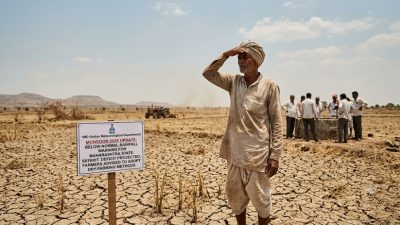
Agricultural impacts are already visible. Mango growers in Maharashtra and Karnataka reported premature flowering in December 2025 triggered by unseasonal warm spells, followed by frost damage in January. The erratic pattern reduced mango output by an estimated 20 per cent in these regions, contributing to higher wholesale prices nationwide.
Coffee plantations in Coorg and Chikmagalur are experiencing similar disruption. The arabica variety, which requires specific temperature ranges during flowering and fruit development, is showing reduced yields in lower-altitude plantations. Some growers have begun experimenting with shade-grown techniques and heat-resistant cultivars, though these adaptations require years of research investment.
Himachal Pradesh API Plant Triggers Pollution Protests
In a separate but significant development, residents of Himachal Pradesh have launched sustained protests against India’s first Active Pharmaceutical Ingredient (API) manufacturing plant, alleging air and water contamination in a region historically valued for its pristine environment. Demonstrators carrying banners reading “We can’t breathe” have blocked access roads and demanded an independent environmental impact assessment.
The central government views API manufacturing as strategically important. India currently imports approximately 68 per cent of its pharmaceutical raw materials from China, a dependency that became politically untenable during the pandemic years. However, communities near proposed facilities insist that industrialisation must not come at the cost of public health. Advances in biological research across India’s medical institutions are simultaneously documenting the health impacts of industrial pollutants on vulnerable populations.
The Himachal case reflects a pattern playing out nationwide. As India expands its manufacturing capacity under the Make in India and production-linked incentive schemes, environmental clearances have accelerated. Green tribunals and local communities increasingly find themselves in conflict with development agendas, creating legal and political friction.
Plastic Recycling Crosses 20 Million Tonnes but Gaps Persist
Parliamentary data released on 23 March 2026 showed that 20.7 million tonnes of plastic packaging waste have been recycled since Extended Producer Responsibility (EPR) guidelines came into force in 2022. The figure represents a significant achievement for India’s waste management infrastructure, which was virtually non-existent for packaging waste a decade ago.
However, environmental analysts from Down to Earth caution that the headline number obscures important gaps. The majority of recycled volume consists of rigid PET bottles and HDPE containers, which have established recycling markets. Flexible multi-layer packaging — sachets, chip bags, and composite wrappers — remains extremely difficult to recycle. Only an estimated 12 per cent of such waste is effectively processed, with the remainder ending up in landfills, waterways, or informal burning.
India’s FSSAI has also announced tightened labelling requirements for food-grade recycled plastics, creating additional compliance burdens for small recyclers while improving consumer safety standards. The tension between environmental ambition and ground-level implementation capacity remains a central challenge.
Kerala’s People’s Charter for Ecological Renewal
In southern India, a coalition of environmental organisations, fishing communities, and tribal groups has drafted a people’s charter seeking to reshape Kerala’s approach to ecological management. The charter calls for integrated coastal zone management, sacred grove protection, community-led water governance, and a moratorium on mining in Western Ghats ecologically sensitive zones.
Organisers report that over 500 gram panchayats have endorsed the document, which draws on both traditional ecological knowledge and satellite-based environmental monitoring. India’s research institutions are increasingly recognising indigenous land management practices as valuable data sources for climate adaptation strategies.
The Kerala charter is notable for its participatory methodology. Rather than relying on top-down policy prescriptions, it builds consensus from village-level consultations upward. If adopted even partially, it could serve as a model for community-driven environmental governance in other Indian states.
The Climate Challenge in an Election Year
India’s environmental challenges in 2026 unfold against a charged political backdrop. State elections in several ecologically sensitive regions are expected to put green issues on campaign agendas. The central government’s decision to reduce the clean air budget despite worsening air quality index readings in major cities has drawn criticism from health professionals and advocacy groups.
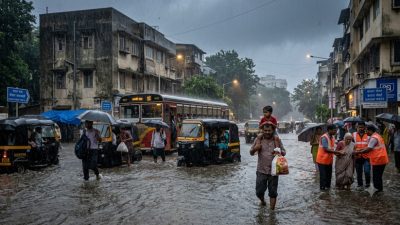
With the monsoon approaching and extreme weather events becoming more frequent, the pressure on policymakers is mounting. Scientists urge that wildlife data, agricultural disruption, and pollution trends be treated as interconnected challenges rather than isolated policy problems. The evidence from India’s forests, farms, and cities tells a consistent story: the climate is changing faster than institutions are adapting, and the gap carries real consequences for people, livelihoods, and biodiversity.