ISRO and AIIMS Sign Landmark MoU for Space Medicine Research Ahead of Gaganyaan Mission

The Indian Space Research Organisation (ISRO) and the All India Institute of Medical Sciences (AIIMS), New Delhi, have signed a framework Memorandum of Understanding for cooperation in space medicine and research. Announced in March 2026, the partnership formalises a collaboration that will directly support India’s Gaganyaan human spaceflight programme and position the country as a contributor to the emerging global discipline of space medicine. The MoU arrives at a critical moment, as ISRO simultaneously advances multiple flagship missions and expands its scientific outreach across the country.
ISRO AIIMS Space Medicine Gaganyaan 2026: What the MoU Covers
The framework agreement establishes structured cooperation across several domains. These include research into the physiological effects of microgravity on the human body, radiation protection protocols for astronauts in low-Earth orbit, development of telemedicine systems for space missions, and creation of specialised medical screening standards for astronaut candidates — known in India’s programme as vyomanauts.
AIIMS will contribute its clinical expertise, research infrastructure, and specialists in cardiology, neurology, ophthalmology, and musculoskeletal medicine — all disciplines critical to understanding how the space environment affects human health. ISRO provides access to its microgravity simulation facilities at the Astronaut Training Centre in Bengaluru, mission planning data, and astronaut health records.
The collaboration is expected to produce joint research publications, shared training protocols, and medical guidelines that will be used during the Gaganyaan mission’s critical phase. ISRO Chairman S. Somanath stated that “space medicine is not optional for human spaceflight — it is foundational. This partnership ensures our vyomanauts receive the best possible medical support.”
Gaganyaan Programme: Where Things Stand
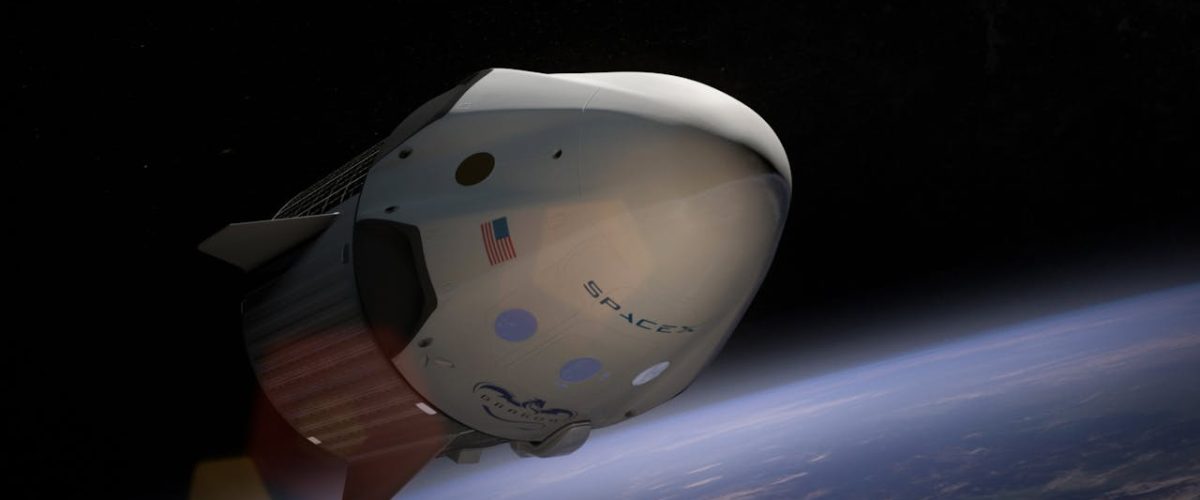
The Gaganyaan programme, India’s plan to send Indian astronauts into low-Earth orbit, has undergone several timeline revisions since its announcement in 2018. The uncrewed test flight is now expected later in 2026, with the crewed mission targeted for 2027 or 2028. Delays have been attributed to the complexity of developing human-rated life-support systems, crew escape mechanisms, and qualifying the GSLV Mk III launch vehicle for manned flight.
Four Indian Air Force test pilots have been training as vyomanaut candidates at ISRO’s facilities and, previously, at the Gagarin Cosmonaut Training Centre in Russia. Their physical and psychological preparation includes simulated microgravity exposure, emergency egress drills, and extended periods in isolation chambers. The ISRO-AIIMS MoU strengthens the medical dimension of this preparation by bringing India’s premier medical institution into the support structure.
Astronauts in low-Earth orbit experience bone density loss at approximately one per cent per month, muscle atrophy, cardiovascular deconditioning, and vision changes due to intracranial pressure shifts. Even missions lasting seven to 14 days — Gaganyaan’s planned duration — require pre-flight medical baselines, in-flight monitoring, and post-flight rehabilitation protocols.
Aditya-L1 Contributes to Global Solar Storm Research
In a parallel scientific achievement, ISRO’s Aditya-L1 solar observatory has joined an international effort studying a landmark solar storm event. Positioned at Lagrange Point 1, approximately 1.5 million kilometres from Earth, Aditya-L1 provided observational data that complemented measurements from the European Space Agency’s Solar Orbiter and Proba-3 missions.
The joint ISRO-ESA Heliophysics Workshop discussed findings from this collaborative campaign, which tracked a coronal mass ejection from its origin on the Sun’s surface through its propagation across interplanetary space. Solar storms can disrupt satellite communications, GPS navigation, power grids, and aviation safety, making prediction and understanding a priority for space agencies worldwide.
Aditya-L1’s contribution demonstrates that India’s space science capabilities now extend well beyond Earth observation and launch services into fundamental solar physics. The mission’s seven payloads have been operational since early 2024, collecting data on the solar corona, photosphere, and solar wind that complement observations from NASA and ESA instruments. The ISRO-NASA NISAR satellite collaboration represents another dimension of India’s expanding international space partnerships.
START 2026 and Science Outreach Expand ISRO’s Reach
ISRO inaugurated its Space Science and Technology Awareness Training (START) 2026 programme on 11 March, offering online courses and workshops designed to introduce undergraduate students to careers in space science. The programme covers topics including satellite engineering, planetary science, astrophysics, and space weather, with content developed by ISRO scientists alongside academic partners.
The 23rd National Space Science Symposium (NSSS-2026), held at the North Eastern Space Applications Centre in Umiam, Meghalaya, brought together researchers from across India. The symposium covered planetary science, atmospheric physics, and space weather prediction. The choice of a northeastern venue signals ISRO’s intent to decentralise space science engagement beyond its traditional centres in Bengaluru, Thiruvananthapuram, and Ahmedabad.
India’s broader research ecosystem is increasingly collaborating with ISRO on space-adjacent technologies including advanced materials, radiation-hardened electronics, and AI-driven mission planning. These cross-disciplinary partnerships are essential as ISRO’s mission portfolio grows in complexity.
Space Medicine’s Terrestrial Benefits
Space medicine research has historically produced innovations with direct applications on Earth. Technologies developed for astronaut health monitoring — including wearable biosensors, remote diagnostic platforms, and telemedicine protocols — have been adapted for rural healthcare delivery and disaster response. For India, where specialist medical access remains limited in many regions, space medicine spinoffs could have outsized impact.
AIIMS researchers involved in the ISRO partnership have noted that microgravity studies offer unique insights into osteoporosis, muscle wasting, and cardiovascular disease. Understanding how the human body responds to extreme environments helps clinicians develop better treatment protocols for patients with similar conditions caused by aging, immobility, or chronic illness.
India’s Space Ambitions Enter a New Phase
The ISRO-AIIMS MoU, Aditya-L1’s solar observations, and the START programme collectively illustrate that India’s space programme is evolving from a launch-services operation into a comprehensive exploration and science enterprise. With Gaganyaan approaching its test phase, NISAR nearing launch, and a proposed lunar polar exploration mission in planning, India’s space ambitions have never been broader.
The partnership with AIIMS ensures that as India prepares to send its citizens into space, their safety and wellbeing will be supported by the best medical science the country can offer. As ISRO Chairman Somanath put it: “Launching a rocket is engineering. Bringing people home safely is medicine, and we need the best of both.”