Indian Marine Biologists Map New Deep-Sea Species in Bay of Bengal as National Biodiversity Mission Enters Critical Phase

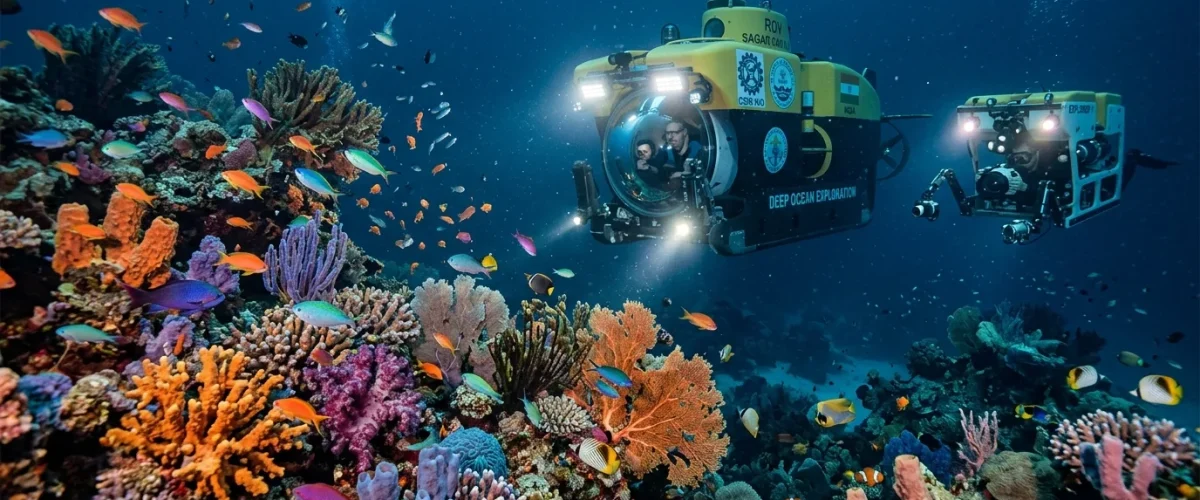
Indian marine biologists have catalogued 47 previously unknown deep-sea species in the Bay of Bengal during the first quarter of 2026, marking the most productive survey period in Indian oceanographic history. The discoveries, announced jointly by the CSIR-National Institute of Oceanography and the National Centre for Polar and Ocean Research, include 12 species of deep-water fish, 18 invertebrates, 9 species of coral and 8 microbial organisms found at depths exceeding 3,000 metres.
The breakthroughs come as India’s National Biodiversity Mission, a Rs 1,200 crore initiative launched in the 2025-26 Union Budget, enters its critical operational phase. The mission aims to map every known species within Indian territorial waters and establish baseline biodiversity data for conservation planning. These findings come alongside research showing that rising temperatures reshaping wildlife behaviour across India, adding urgency to documentation and protection efforts.
What Scientists Found in the Deep Bay of Bengal
The survey, conducted aboard research vessel Sindhu Sadhana over a 90-day expedition from December 2025 to March 2026, deployed remotely operated vehicles equipped with high-definition cameras, specimen collection arms and environmental DNA sampling systems.
Among the most significant discoveries is a new genus of bioluminescent anglerfish found at 4,200 metres depth in the Andaman Backarc Basin. Dr Anuradha Patel, the expedition’s chief scientist, described the species as “unlike anything previously documented in the Indian Ocean.” The fish produces a distinctive blue-green luminescence through a symbiotic relationship with a newly discovered bacterial species.
Other notable finds include a deep-water octopus species adapted to extreme pressure conditions, three species of hydrothermal vent shrimp living near underwater volcanic activity, and a colony of black corals estimated to be over 2,000 years old. The coral discovery is particularly significant because black corals are indicator species for ocean health and climate stability.
National Biodiversity Mission: Mapping India’s Natural Wealth
The deep-sea discoveries are the most visible output of the National Biodiversity Mission, which represents India’s largest-ever investment in biological documentation. The mission deploys over 500 scientists across 35 research institutions to survey marine, terrestrial and freshwater ecosystems simultaneously.
On land, parallel expeditions in the Western Ghats, Eastern Himalayas and Thar Desert have identified 123 new plant species and 67 new insect species in the same period. The mission uses a combination of traditional field taxonomy and cutting-edge environmental DNA technology, where water and soil samples are analysed for genetic traces of species that may be too small or elusive for visual identification.
The work contributes to India’s record-breaking research output in 2026 that has positioned the country as a leading contributor to global scientific knowledge. India is now ranked fourth globally in biodiversity research publications, behind the United States, China and Brazil. Follow the latest Science and Space news for continuing coverage of India’s research breakthroughs.
Deep-Sea Mining Debate Adds Urgency to Conservation
The discoveries have intensified the debate over India’s deep-sea mining ambitions. The country holds exploration rights for polymetallic nodules across 75,000 square kilometres of the Central Indian Ocean Basin. These nodules contain manganese, nickel, cobalt and copper — minerals critical for electric vehicle batteries and renewable energy infrastructure.
Environmental scientists argue that mining operations could devastate ecosystems that are only now being understood. The 47 newly discovered species inhabit areas that overlap with proposed mining zones, according to mapping data shared with the Ministry of Earth Sciences. Dr Rajiv Nigam, former director of NIO, warned that “extracting minerals from areas we have barely begun to study could cause irreversible damage to ecosystems millions of years in the making.”
The government has indicated it will complete a comprehensive environmental impact assessment before any commercial mining begins, a process expected to take at least three years. In the meantime, the Biodiversity Mission data will inform which areas should be designated as marine protected areas. Stay updated on environmental science coverage for the latest developments on this critical intersection of science and policy.
Technology Powering India’s Ocean Exploration
India’s deepwater research capabilities have advanced dramatically. The indigenous deep-ocean mission vehicle Samudrayaan, developed by the National Institute of Ocean Technology in Chennai, completed its deepest test dive to 1,500 metres in February 2026. The three-person submersible is on track to reach its target depth of 6,000 metres by 2028, which would make India only the sixth nation with manned deep-sea exploration capability.
Satellite-based ocean monitoring has also expanded. ISRO’s Oceansat-3 satellite, launched in late 2025, provides daily chlorophyll concentration and sea surface temperature data that guides research vessels to biologically productive areas. The synergy between space technology and marine biology exemplifies the interdisciplinary approach that defines Indian science in 2026, similar to how ISRO expanding into interdisciplinary scientific research in fields beyond traditional space missions.
Why This Matters for India and the World
The Bay of Bengal discoveries have implications far beyond taxonomy. Deep-sea organisms produce unique enzymes, proteins and bioactive compounds with potential pharmaceutical applications. The bioluminescent bacteria from the new anglerfish species, for instance, are already being studied for possible use in medical imaging.
India’s biodiversity documentation also strengthens its position in international climate and conservation negotiations. As a megadiverse nation hosting an estimated 8 per cent of the world’s species, India’s ability to quantify its biological wealth gives it leverage at forums like the Convention on Biological Diversity. The 2026 findings are expected to feature prominently in India’s updated national biodiversity action plan, due for submission to the UN by December this year.