India Qualifies Record 12 Players for Asian Games Esports as BGMI and Valorant Drive Competitive Gaming Surge

India Names Its Strongest Esports Squad for the Asian Games
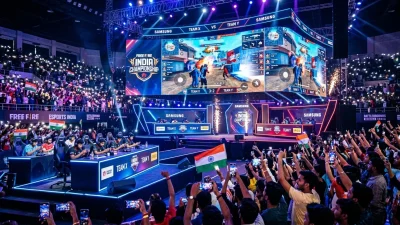
The Esports Federation of India (ESFI) announced on 25 March 2026 the final 12-member squad that will represent the country at the 2026 Asian Games in Nagoya, Japan, where esports features as a full medal event for the first time. The selection, made through the National Esports Championships (NESC) held across 14 cities over three months, represents India’s most competitive and professionally prepared team in the discipline’s history.
The squad includes five players for BGMI (Battlegrounds Mobile India), five for Valorant and two for EA Sports FC, covering three of the seven medal events at Nagoya. India opted not to field teams in League of Legends, Street Fighter 6, PUBG PC and Dota 2, focusing resources on the titles where Indian players are most competitive.
BGMI Squad: Jonathan, Neyoo and India’s Mobile Gaming Dominance
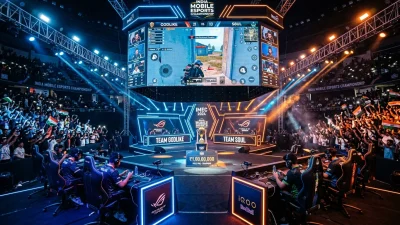
India’s BGMI team, captained by Jonathan “Jonathan” Amaral, is considered a genuine medal contender. Jonathan, widely regarded as the best BGMI player globally, has led his team GodLike Esports to three consecutive BGMI Master Series titles. His teammates include Neyoo (Suraj Majumdar), Zgod (Abhishek Choudhary), ClutchGod (Vivek Aabhas) and Goblin (Mavi Malik).
The team’s preparation has been unusually rigorous. ESFI partnered with SAI (Sports Authority of India) to provide the BGMI squad with the same support structure available to traditional sports athletes: dedicated coaches, sports psychologists, physiotherapists for wrist and posture issues, and a nutrition plan designed to sustain focus during 8-hour tournament days.
“This is the first time we’ve been treated like real athletes by the system,” Jonathan told reporters at the squad announcement. “We have physio sessions, mental conditioning and even altitude training camps to prepare for the pressure. It’s a different level.” The professionalisation mirrors trends in console gaming trends in India, where players increasingly follow structured training regimens.
Valorant: India’s Rising Force in Tactical Shooters
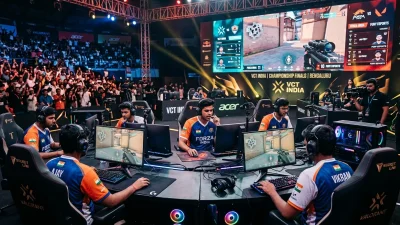
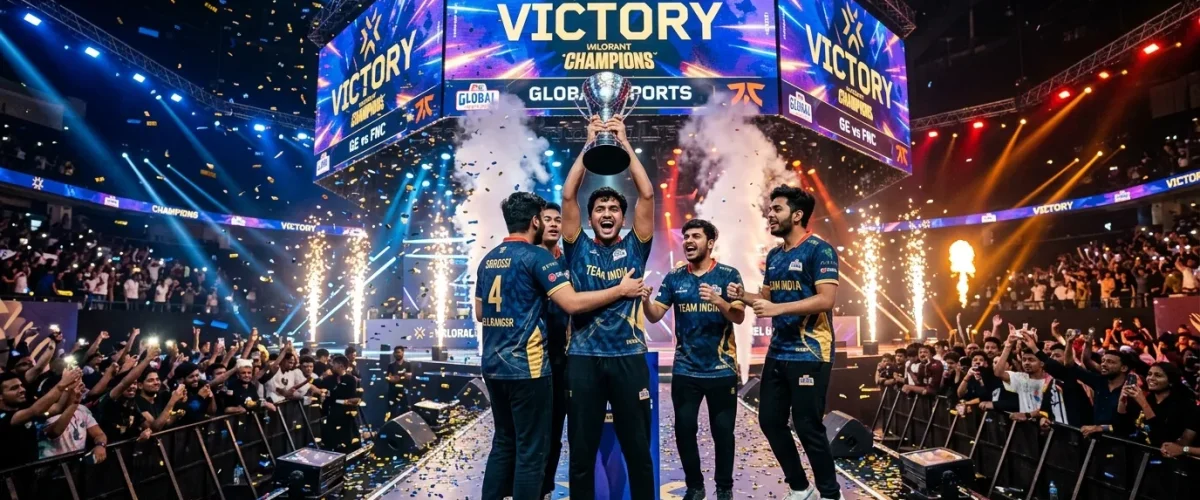
India’s Valorant squad, led by in-game leader Excali (Akram Virani) of Global Esports, represents the nation’s fastest-growing competitive gaming community. The team, which won the NESC Valorant qualifiers in Hyderabad with a dominant 3-0 final victory, includes Lightningfast (Pranav Prabhu), SkRossi (Ganesh Gangadhar), Monyet (Sabyasachi Bose) and Rawfiul (Rawfiul Islam).
Valorant’s ecosystem in India has exploded over the past 18 months. Riot Games’ decision to host a VCT Challengers league in South Asia, with dedicated Indian slots, has provided a structured competitive pathway that BGMI’s mobile-first scene lacked until recently. The game’s monthly active player count in India crossed 15 million in February 2026, making it the country’s most-played PC title.
Global Esports, which acquired a VCT Pacific franchise slot in 2025, has invested heavily in training infrastructure at its Hyderabad facility, including custom-built scrim rooms, replay analysis suites and a dedicated PC gaming setup that replicates tournament conditions. The investment appears to be paying off: the team reached the VCT Pacific quarter-finals earlier this month, the best result by an Indian organisation.
The NESC Selection Process: Professionalising Indian Esports
The NESC 2026 was the most comprehensive esports selection event India has ever conducted. Open qualifiers attracted over 180,000 individual registrations across three game titles, with state-level rounds held in all 28 states and 8 union territories. The finals, hosted at the Thyagaraj Sports Complex in New Delhi, were broadcast live on JioCinema, drawing peak viewership of 4.2 million concurrent viewers for the BGMI grand final.
The selection criteria went beyond in-game performance. ESFI introduced a fitness assessment, including reaction time tests, cardiovascular endurance benchmarks and psychological evaluations, as required by the Olympic Council of Asia for all medal sport participants. Three players who performed well in-game were initially deselected on fitness grounds before appeals and additional testing restored their eligibility.
This rigorous approach contrasts sharply with the informal selections of previous international competitions and has been welcomed by the gaming community. It also aligns with the Indian government’s AVGC (Animation, Visual Effects, Gaming and Comics) policy framework, which recognises esports as a legitimate sporting discipline.
Industry Growth: Sponsorship, Streaming and Careers
India’s esports industry is valued at approximately Rs 1,200 crore in 2026, up from Rs 700 crore in 2024, according to a report by Lumikai Fund and EY. Sponsorship revenue has grown 55 per cent year-on-year, with brands including JioStar, Red Bull, HyperX and Razer all increasing their India esports budgets.
The streaming economy around esports continues to expand. Indian gaming content creators on YouTube collectively garnered 28 billion views in 2025, making India the largest gaming content market by viewership. Creators like Mortal, Scout and Dynamo have transcended gaming to become mainstream entertainment figures, with brand endorsement portfolios rivalling those of traditional sports stars.
Career pathways in esports are also diversifying. Beyond playing, roles in shoutcasting (commentary), coaching, event management and data analytics are attracting professionals from adjacent industries. IIT Madras and Symbiosis International University now offer elective courses in esports management, reflecting academia’s recognition of the sector’s growth potential. The convergence of gaming with AI advancements is also creating roles in game analytics, anti-cheat development and performance optimisation.
Challenges: Regulatory Uncertainty and Social Stigma
Despite the progress, Indian esports faces persistent challenges. The regulatory distinction between esports (skill-based competitive gaming) and real-money online gaming remains blurred in several state laws. Esports organisations have lobbied for explicit carve-outs in gaming legislation, arguing that competitive gaming on non-monetary platforms should not be subjected to the same regulatory framework as betting or gambling.
Social stigma around gaming as a career also persists, particularly in tier-2 and tier-3 cities. While the Asian Games medal event status provides legitimacy, many parents still view professional gaming with scepticism. ESFI’s school outreach programme, which has conducted esports awareness workshops in 500 schools across 12 states, aims to address these perceptions by positioning esports alongside traditional sports in the school ecosystem.
Infrastructure gaps are another concern. Reliable high-speed internet, essential for competitive gaming, is unavailable in many areas where talented players live. ESFI has partnered with India’s 5G expansion efforts to establish subsidised gaming centres in 50 district headquarters by 2027.
Nagoya 2026: India’s Medal Prospects
At the Nagoya Asian Games, India’s realistic medal prospects lie in BGMI and Valorant. In BGMI, India’s mobile gaming dominance — driven by a domestic player base exceeding 150 million — gives the squad deep competitive experience. However, stiff competition from South Korea, Japan and China, where mobile esports benefits from greater institutional support, makes anything above bronze an achievement.
In Valorant, India enters as an underdog but one capable of upsets. The team’s recent VCT Pacific run demonstrated competitiveness against established Korean and Japanese rosters, and the game’s tactical nature means that a well-prepared squad can overcome individually superior opponents through superior strategy and teamwork.
Regardless of the medal outcome, the squad’s participation represents a watershed for Indian esports. For a community that has fought for recognition, wearing the Indian flag at a multi-sport continental games is the validation that years of grassroots effort and India’s mobile gaming revolution have been building toward.
- India’s Startup Funding Crosses $7.2 Billion in H1 2026 - July 1, 2026
- After Ireland Shock, India’s T20I Side Faces Bigger Test - July 1, 2026
- Ireland Stun World Champions India 2-0 in Belfast, Sooryavanshi Debate Rages On - June 29, 2026