Blackstone-Backed AirTrunk Plans to Invest $30 Billion in India Data Centre Infrastructure by 2030 with 5GW Capacity Target

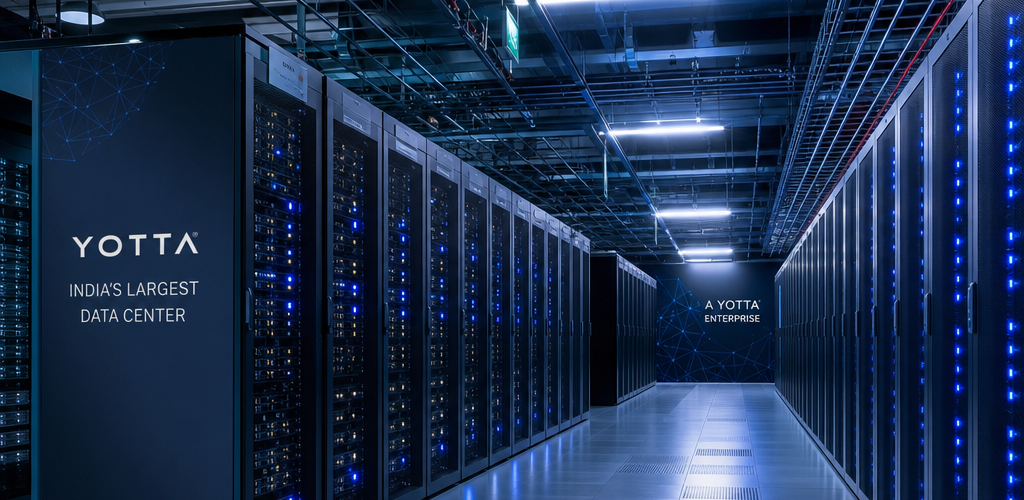
Australian data centre giant AirTrunk announced plans to invest more than INR 3,000 billion ($30 billion) in India by 2030, positioning the country as a cornerstone of the company’s global growth strategy and one of its most significant long-term investment markets. Backed by Blackstone — one of the largest foreign investors in India — and Canada Pension Plan Investment Board (CPPIB), the proposed investment would rank among the largest digital infrastructure initiatives currently being considered in the country.
The company’s proposed development pipeline spans multiple states and union territories, with a combined capacity target of over 5 gigawatts (GW) of data centre infrastructure designed to support India’s ambitions of becoming a global destination for artificial intelligence and cloud computing.
Why India, Why Now
AirTrunk’s announcement comes amid an unprecedented surge in data centre demand across India, driven by three converging forces: the explosive growth of AI workloads that require massive computing infrastructure, the migration of Indian enterprises to cloud platforms, and the Indian government’s push to position the country as a hub for digital services.
India’s data centre market, valued at approximately $4.5 billion in 2025, is projected to more than triple by 2030. The country currently has around 1.1 GW of installed data centre capacity — a figure that pales in comparison to the United States (over 25 GW) and even Southeast Asian markets like Singapore. AirTrunk’s 5 GW target alone would more than quadruple India’s current installed base.
“India is at an inflection point for digital infrastructure,” said Robin Khuda, AirTrunk’s founder and CEO. “The combination of a digitally ambitious government, a massive and growing consumer base, and increasing enterprise cloud adoption creates a generational investment opportunity.”
The Blackstone Connection
Blackstone’s backing gives AirTrunk access to one of the deepest pools of private capital in the world, and the investment firm’s existing India portfolio — which spans real estate, infrastructure, and technology — provides a platform for cross-sector synergies. Blackstone acquired AirTrunk in 2024 in one of the largest data centre transactions globally, signalling its conviction that hyperscale data centres would become as critical as traditional infrastructure.
Also read: India’s record-breaking power demand of 265 GW
CPPIB’s involvement adds another layer of institutional credibility and long-term capital commitment. Pension funds, with their multi-decade investment horizons, are increasingly viewing data centres as core infrastructure assets that generate stable, long-term returns — similar to toll roads, ports, and power plants.
The India Pipeline
AirTrunk’s existing development pipeline in India includes 600 megawatts of capacity across Mumbai, Chennai, and Hyderabad — three cities that serve as India’s primary data centre hubs due to their submarine cable connectivity, power infrastructure, and proximity to major enterprise customers.
The $30 billion expansion will extend beyond these established markets into emerging data centre corridors. Industry sources indicate that AirTrunk is evaluating sites in Pune, Delhi-NCR, Kolkata, and potentially Tier-2 cities that benefit from state government incentives and lower land costs.
Each major project is expected to support tens of thousands of local jobs during the development and construction phase, with ongoing operational employment once facilities are commissioned. The company is also exploring partnerships with Indian renewable energy producers to power its data centres with green energy — a critical requirement as hyperscale facilities face increasing scrutiny over their carbon footprints.
Competition Heats Up
AirTrunk is not alone in recognising India’s data centre potential. Reliance Industries pledged $109.8 billion in investments over seven years during the AI Summit 2026, while the Adani group unveiled plans for a $100 billion AI data centre expansion. Global operators including Equinix, Digital Realty, and NTT have also expanded their India footprints.
The competitive dynamics mean that execution — securing land, obtaining power allocations, and building out capacity quickly — will determine which players capture the most market share. India’s notoriously complex land acquisition processes and inconsistent power supply in some regions present practical challenges that even well-capitalised operators cannot ignore.
Also read: the growing cost of AI infrastructure globally
“The announcements are impressive, but the real test is how much capacity actually gets built and commissioned within the stated timelines,” said Sanchit Vir Gogia, chief analyst at Greyhound Research. “India has seen plenty of large investment announcements in infrastructure that didn’t fully materialise. Data centres are no different — execution risk remains high.”
For now, AirTrunk’s $30 billion commitment represents a powerful vote of confidence in India’s digital future. Whether it translates into actual infrastructure that serves the country’s AI ambitions will depend on how effectively the company navigates India’s complex regulatory, power, and real estate landscape in the years ahead.
Policy Enablers and Remaining Hurdles
The Indian government’s Data Centre Policy 2020, supplemented by state-level incentive schemes in Maharashtra, Tamil Nadu, Telangana, and Uttar Pradesh, has created a policy framework that actively courts data centre investment. Infrastructure status for data centres, which provides access to cheaper long-term financing, was among the key policy enablers that unlocked the current investment wave.
However, significant hurdles remain. Power allocation is the most critical constraint — hyperscale data centres are massive electricity consumers, and securing reliable, affordable power supply in India remains challenging outside of a few well-served corridors. Water availability for cooling systems, land acquisition in urban peripheries, and connectivity to submarine cable landing stations all add complexity.
Also read: SoftBank’s AI-driven rise to become Japan’s most valuable company
“The investment announcements are encouraging, but the industry needs faster clearance processes and guaranteed power supply to actually deliver on these targets,” said Neeraj Verma, president of the India Data Center Association. “Every month of delay in commissioning translates to lost revenue and competitive advantage. India is competing with Singapore, Malaysia, and Indonesia for the same pool of global data centre capital.”
AirTrunk’s $30 billion commitment adds considerable momentum to India’s data centre ambitions. Whether the country can convert these pledges into operational capacity at the pace demanded by the AI revolution will determine whether India claims its place as a global digital infrastructure hub — or watches that opportunity migrate to faster-moving competitors in Southeast Asia.

- India’s Startup Funding Crosses $7.2 Billion in H1 2026 - July 1, 2026
- After Ireland Shock, India’s T20I Side Faces Bigger Test - July 1, 2026
- Ireland Stun World Champions India 2-0 in Belfast, Sooryavanshi Debate Rages On - June 29, 2026