SoftBank Overtakes Toyota to Become Japan’s Most Valuable Company as AI Bet Pays Off Under Masayoshi Son’s Vision Fund Strategy

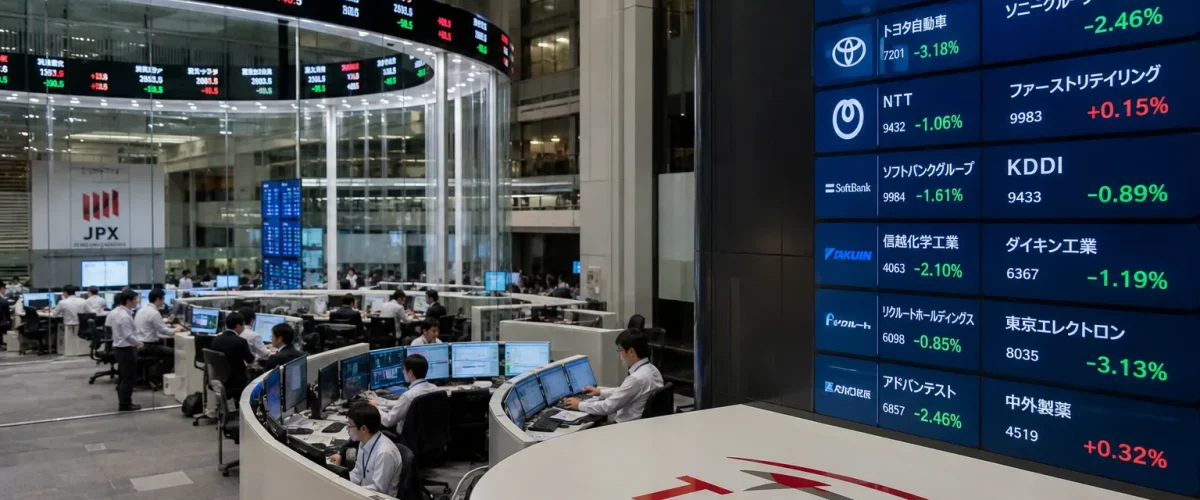
SoftBank Group has overtaken Toyota Motor Corporation to become Japan’s most valuable listed company by market capitalisation — a milestone that caps a remarkable turnaround for Masayoshi Son’s technology conglomerate and reflects the seismic shift in global capital allocation from traditional manufacturing toward artificial intelligence and semiconductor infrastructure.
SoftBank’s market cap crossed ¥58 trillion (approximately $390 billion) on Friday, surpassing Toyota’s ¥57.2 trillion after a 4.3 percent rally driven by upgraded earnings guidance and the continued surge in the share price of ARM Holdings, the British chip design company in which SoftBank holds approximately 90 percent ownership. The achievement would have seemed unthinkable two years ago, when SoftBank was nursing record losses from its Vision Fund investments and Masayoshi Son was being written off as a reckless gambler who had destroyed shareholder value.
How SoftBank Got Here — The ARM Bet
The story of SoftBank’s ascent is inseparable from the story of ARM. When SoftBank acquired the Cambridge-based chip designer for $32 billion in 2016, many analysts questioned the rationale. ARM designed processors for mobile phones — a mature market with slowing growth. Son’s thesis that ARM’s energy-efficient chip architecture would become the foundation for everything from IoT devices to autonomous vehicles to data centres was viewed as aspirational at best.
The AI revolution proved Son right in ways that even he may not have fully anticipated. ARM’s chip designs — which prioritise power efficiency over raw performance — turned out to be ideally suited for the massive data centres that power generative AI workloads. Nvidia’s AI GPUs, which dominate the training market, rely on ARM architecture. Apple’s M-series chips, which have redefined laptop and server computing, are ARM-based. Amazon Web Services’ Graviton processors, which power a growing share of cloud computing, are ARM designs.
ARM’s IPO in September 2023, which valued the company at $54.5 billion, was the catalyst for SoftBank’s renaissance. Since then, ARM’s share price has more than tripled, driven by surging demand for AI chip designs and licensing revenue that grows with every new AI accelerator, smartphone, and IoT device shipped. SoftBank’s 90 percent stake in ARM alone is now worth approximately $320 billion — more than Japan’s entire automotive sector.
Vision Fund — From Catastrophe to Quiet Recovery
SoftBank’s Vision Fund operations, which dominated financial headlines for years due to massive losses on investments in WeWork, Didi, and other overvalued startups, have quietly stabilised. Vision Fund 1, the $100 billion Saudi Arabia-backed vehicle, has returned to profitability on paper, driven by recoveries in Coupang (South Korea’s largest e-commerce company), DoorDash, and a handful of AI-focused portfolio companies.
Vision Fund 2, which Son funded largely from SoftBank’s own balance sheet after failing to attract external investors, remains in the red but has trimmed losses significantly. The fund’s AI-focused investments — including stakes in Figure AI (humanoid robotics), Tempus AI (healthcare AI), and several Indian AI startups — are benefiting from the same sectoral tailwind that has lifted ARM.
Son has also pivoted SoftBank’s investment strategy decisively toward AI infrastructure. In February 2026, SoftBank announced a $100 billion commitment to build AI data centres and computing infrastructure in the United States, in partnership with Oracle and OpenAI. The scale of the commitment — roughly equivalent to Japan’s annual defence budget — was met with scepticism by some analysts, but the market has rewarded the ambition with a rising stock price.
What This Means for Toyota — And for Japan
Toyota’s displacement from the top of Japan’s market cap rankings is symbolic of broader forces reshaping the global economy. The company that perfected lean manufacturing, built the world’s most reliable vehicles, and dominated the hybrid electric market for two decades is being valued by investors at less than a technology holding company whose primary asset is a chip design firm.
Toyota’s challenge is not operational — the company remains the world’s largest automaker by volume and continues to generate substantial cash flows. The challenge is narrative. In a market environment where SpaceX’s historic IPO filing is reshaping tech valuations globally and AI spending across enterprises is reaching unprecedented levels, investors are willing to pay significantly higher multiples for companies positioned to benefit from the AI transition than for those in capital-intensive manufacturing.
Toyota’s EV strategy, which has been criticised as too cautious compared to Tesla and BYD, adds to the perception that the company is on the wrong side of a generational technology shift. While Toyota’s leadership has argued — with considerable engineering justification — that a diversified powertrain strategy including hybrids, plug-in hybrids, hydrogen fuel cells, and battery EVs is more sensible than an all-electric bet, the market has consistently rewarded companies that are perceived as “all-in” on the future rather than those hedging across multiple technologies.
The India Connection — SoftBank’s Portfolio and Market Impact
SoftBank’s rise has direct implications for India’s technology ecosystem. The company is one of the largest foreign investors in Indian startups, with current or past stakes in Flipkart (exited), Ola, OYO, Meesho, Lenskart, and several smaller companies. The health of SoftBank’s balance sheet directly influences its willingness to deploy capital in India, and the current period of financial strength has already resulted in increased activity.
SoftBank’s Vision Fund participated in three Indian investment rounds in Q1 2026, totalling approximately $800 million — a sharp increase from the near-zero deployment during the fund’s crisis period in 2022-2023. With the Indian startup IPO wave in 2026 potentially creating exit opportunities for Vision Fund portfolio companies, the symbiotic relationship between SoftBank’s global fortunes and India’s startup ecosystem is set to intensify.
For Masayoshi Son, who once called himself “a man from the future” and was mocked for it, the overtaking of Toyota represents vindication of a worldview that has always prized technological disruption over industrial continuity. Whether that worldview proves sustainably correct — or whether it is another peak before a correction — is a question that only time can answer. But for now, in the measure that matters most in public markets, Son’s bet on the future is worth more than Japan’s industrial past.

- India’s Startup Funding Crosses $7.2 Billion in H1 2026 - July 1, 2026
- After Ireland Shock, India’s T20I Side Faces Bigger Test - July 1, 2026
- Ireland Stun World Champions India 2-0 in Belfast, Sooryavanshi Debate Rages On - June 29, 2026