Indian Startup IPO Wave 2026 — Zepto Flipkart OYO and 24 Others Line Up for Record Rs 47000 Crore Year

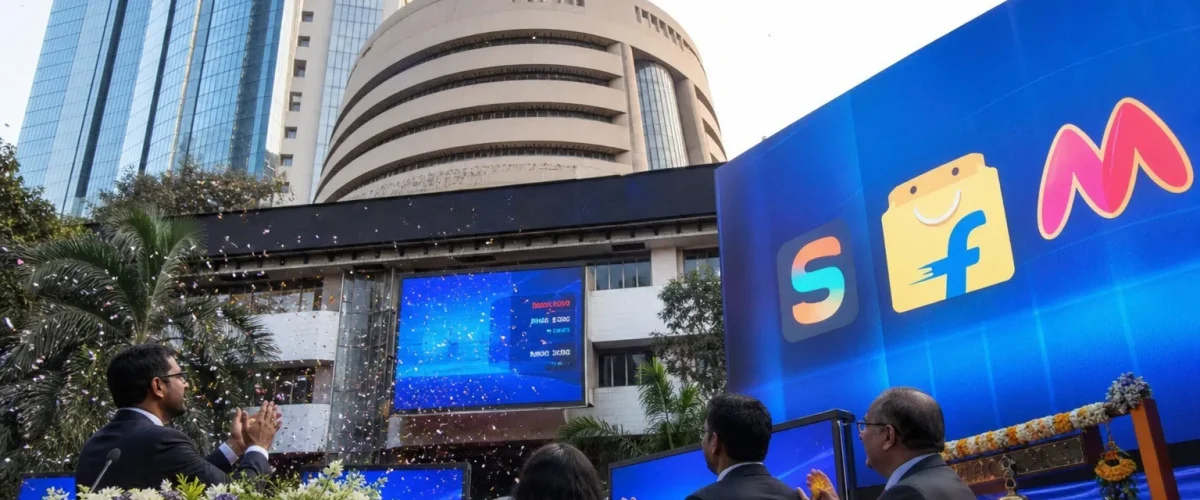
India’s startup ecosystem is poised for its biggest year on the public markets, with 24 new-age technology companies having already filed Draft Red Herring Prospectuses (DRHPs) with SEBI and another 26 in various stages of finalising IPO plans. If the pipeline holds, Indian startups could collectively raise over Rs 47,000 crore in 2026 — shattering the record Rs 41,248 crore raised by 18 startups in 2025 and marking the arrival of Indian tech companies as a dominant force on Dalal Street.
Yet beneath the headline numbers lies a more nuanced reality. Early 2026 listings have been largely flat or disappointing, investor sentiment has shifted decisively toward profitability over growth, and at least one marquee name — Flipkart — has deferred its IPO to 2028. The year’s outcome will depend on whether companies like Zepto, OYO, and InMobi can deliver on their public market ambitions without the same investor exuberance that fuelled the 2021 listing frenzy.
The Big Names — Who Is Coming and Who Is Waiting
Quick commerce unicorn Zepto is the most anticipated near-term listing, targeting a Rs 11,000 crore IPO by July 2026. The Aadit Palicha-led company has filed its DRHP with SEBI and secured regulatory approval, with merchant bankers reportedly targeting a valuation of Rs 45,000 to Rs 50,000 crore. Zepto’s pitch to investors centres on its path to profitability — the company reported its first-ever EBITDA-positive quarter in Q4 FY26, driven by advertising revenue and private label margins that now contribute nearly 18 percent of gross merchandise value.
OYO, the Ritesh Agarwal-founded hospitality platform, has been in the IPO queue since 2021 but has repeatedly postponed its listing. The company refiled its DRHP in January 2026, targeting a Rs 4,500 crore offering at a significantly reduced valuation of approximately Rs 18,000 crore — down from the Rs 74,000 crore it was valued at during its last private funding round. The markdown reflects both the broader tech valuation correction and OYO’s own operational restructuring, which saw it exit over 100 international markets to focus on India, Southeast Asia, and Europe.
InMobi, the Bengaluru-based mobile advertising platform, has secured SEBI approval for a Rs 3,300 crore IPO that would make it one of the few Indian adtech companies to list publicly. Zetwerk, the B2B manufacturing marketplace, is planning a Rs 4,000 crore offering, while PhysicsWallah, the edtech company that became India’s youngest unicorn in 2022, is preparing a Rs 3,500 crore listing.
The biggest surprise has been Flipkart’s decision to defer its IPO to at least 2028. The Walmart-owned e-commerce giant, which was widely expected to list in the first half of 2026, cited the need for “further operational consolidation” and a desire to achieve full-year profitability before approaching public markets. Flipkart’s deferral is significant — its IPO alone could have been worth Rs 15,000 to Rs 20,000 crore, and its absence narrows the pipeline considerably.
Q1 2026 Listings — Mixed Results Set the Tone
Six new-age tech companies debuted on Indian stock exchanges in the first quarter of 2026, but the results were sobering. Only two — the payment gateway BillDesk (which listed at a 22 percent premium) and the SaaS platform Postman (which gained 15 percent) — delivered meaningful listing-day gains. The remaining four, including two D2C brands and a logistics company, either listed flat or traded below their issue prices within the first week.
The pattern reflects a fundamental shift in investor behaviour. During the 2021 IPO boom, investors poured money into loss-making companies on the promise of future growth. In 2026, the calculus has reversed. “IPO-bound startups in 2026 will be increasingly defined by their ability to demonstrate predictable cash flows, sustainable unit economics, and operational discipline rather than headline growth alone,” observed an investor note from Kotak Institutional Equities.
This shift has forced companies to adjust. Several startups have delayed their listings to achieve profitability benchmarks, while others have reduced their target valuations — sometimes dramatically. The average IPO valuation markdown for Indian startups listing in 2026 is approximately 35 percent compared to their last private funding round, according to data from Tracxn.
Why 2026 Could Still Be a Record Year
Despite the cautious atmosphere, structural factors support a strong year for startup IPOs. India’s public markets are flush with liquidity — domestic institutional investors deployed a record Rs 2.3 lakh crore in equities in FY26, while retail demat account openings crossed 18 crore, providing a deep and growing investor base. The SpaceX filing for the largest IPO in history has also revived global appetite for tech listings, creating a positive sentiment spillover for Indian peers.
SEBI’s regulatory reforms have also made the process more transparent. New disclosure requirements introduced in 2025 mandate detailed unit economics reporting, customer acquisition cost breakdowns, and segment-level profitability data in the DRHP — giving investors more information to make informed decisions and reducing the information asymmetry that plagued earlier tech listings.
The secondary market performance of 2025 IPO alumni has also been encouraging. Swiggy, which listed in November 2025, is now trading 40 percent above its issue price after delivering four consecutive quarters of narrowing losses. FirstCry has gained 25 percent since listing, driven by strong same-store sales growth. These success stories provide confidence to both companies contemplating listings and the retail investors who will subscribe to their IPOs.
Risks and Cautionary Tales
Not all startup IPO stories end well, and the market has painful reminders of what happens when companies list prematurely. Byju’s legal crisis and founder imprisonment serves as the starkest cautionary tale — a company once valued at $22 billion that collapsed under governance failures, opaque accounting, and unsustainable growth spending.
Paytm’s continued struggle on public markets — its stock still trades below its 2021 IPO price despite operational improvements — is another reminder that public market investors have long memories and limited patience for companies that fail to deliver on their listing promises.
For the 50-plus startups evaluating IPO plans in 2026, the message is clear: public markets will reward discipline and punish hubris. The companies that go public with clean books, proven unit economics, and realistic valuations will likely find enthusiastic investors. Those that attempt to replicate the 2021 playbook of growth-at-all-costs will face a very different — and far less forgiving — reception.
With Reliance’s green energy push through its Jamnagar giga complex and other established players expanding into startup territory, the competition for investor attention and capital allocation will only intensify. The second half of 2026 promises to be one of the most consequential periods in the history of India’s startup economy.