India Census 2026 Goes Digital: Self-Enumeration, Caste Data, and What It Means for 1.4 Billion People

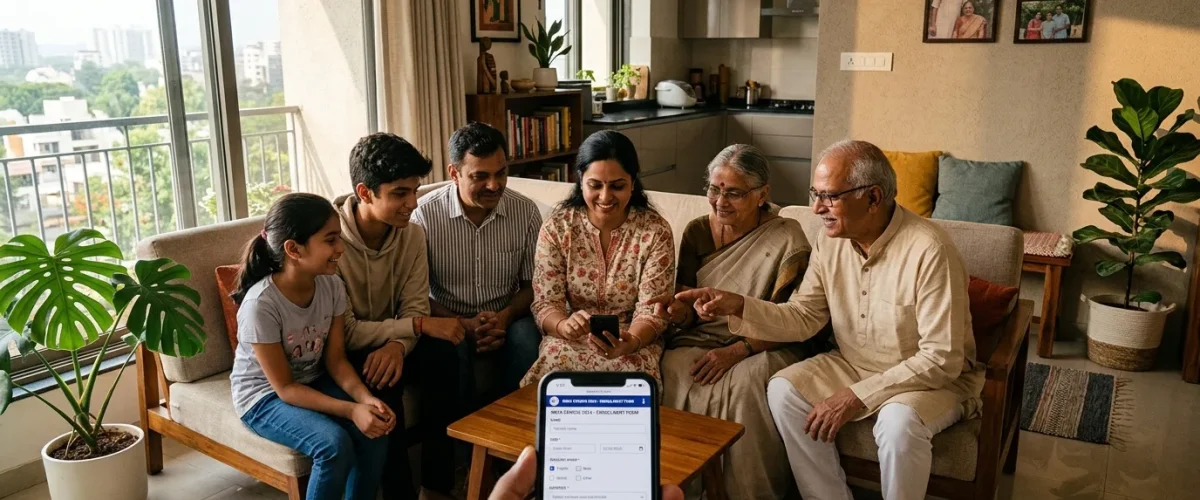
India’s decennial census — delayed by six years due to COVID-19 and political complications — is finally under way, and it has gone digital for the first time in the country’s history. Self-enumeration through an official online portal began on April 1, 2026, allowing citizens to register and submit household data without waiting for an enumerator to knock on their door. The move marks a watershed moment for a nation of 1.4 billion people and has sparked intense debate around data privacy, caste enumeration, and the digital divide.
Six-Year Delay: Why the Census Was Postponed
India’s census was originally scheduled for 2021, a constitutionally mandated exercise that occurs every ten years and traces its origins to 1871. The COVID-19 pandemic made door-to-door enumeration impossible in 2021, but even after the pandemic receded, the government did not announce new dates. Political analysts point to several reasons for the extended delay: the sensitivity of updated population data ahead of delimitation (redistribution of parliamentary seats), the politically charged question of including caste data, and the logistical challenge of digitising a process that has traditionally relied on millions of paper forms and manual counting.
The announcement in late 2025 that the census would proceed in two phases — houselisting and housing census from April to September 2026, followed by population enumeration in 2027 — was met with cautious optimism. The inclusion of a caste data column, demanded by opposition parties and several state governments, was the most politically significant feature of the new design.
How Digital Self-Enumeration Works
For the first time, Indian citizens can complete the census online. The government launched a dedicated portal and mobile application on April 1, offering a 15-day window for self-enumeration. Households can log in using their Aadhaar number, mobile OTP, or a unique enumerator code to fill in details about family members, housing conditions, assets, and — for the first time since 1931 — caste.
The system was designed by the Registrar General and Census Commissioner’s office in collaboration with the National Informatics Centre (NIC) and has been tested in pilot districts across five states. Officials claim the portal can handle 50 million concurrent users, though skeptics point out that India’s internet infrastructure is uneven — broadband coverage drops sharply in rural India and the Northeast, where digital literacy remains a challenge.
Caste Data: The Most Controversial Feature
The inclusion of a caste column has turned the 2026 census into a political lightning rod. Multiple state governments had conducted their own caste surveys between 2022 and 2025, but a national exercise carries far greater implications: it could reshape the debate on reservations, welfare targeting, and affirmative action for decades. Critics worry that the data could be weaponised by political parties to consolidate vote banks; supporters argue that accurate caste data is essential for designing effective social policies.
The Registrar General has assured that individual-level caste data will not be made public and will only be used for aggregate statistical analysis. However, Right to Information (RTI) activists have raised concerns about whether the government’s data-protection framework — still governed by the relatively new Digital Personal Data Protection Act of 2023 — is robust enough to prevent leaks.
Digital Divide: Who Gets Counted?
India’s UPI revolution — which saw 228 billion digital transactions in 2025 — is often cited as proof that the country is ready for digital governance at scale. But the census is fundamentally different from a payment: it requires literacy, access to a stable internet connection, and a degree of trust in government data systems that not everyone shares.
Approximately 35 per cent of Indian households still lack reliable internet access, and digital literacy rates among women over 50 and rural populations in states like Bihar, Jharkhand, and Chhattisgarh are well below the national average. To address this, the government has deployed over 3.2 million enumerators who will visit households that have not self-enumerated during the 15-day digital window. This hybrid model — digital-first, enumerator-backed — is India’s answer to the tension between technological ambition and ground reality.
Population Projections and Delimitation
Demographers estimate that India’s 2026 census will record a total population of approximately 1.44–1.46 billion, confirming India’s status as the world’s most populous nation. More significant than the headline figure will be the state-by-state breakdown: Southern states like Kerala, Tamil Nadu, and Karnataka have seen fertility rates drop to below-replacement levels, while Northern states like Bihar and Uttar Pradesh continue to grow. This disparity is central to the delimitation debate — if parliamentary seats are redistributed based on updated population data, Southern states could lose seats despite having better governance outcomes on health, education, and family planning.
The last delimitation was based on 2001 census data, and a constitutional freeze on seat redistribution expires in 2026. Unsurprisingly, this has made the census a deeply sensitive exercise that intersects with broader cultural and regional identity trends.
Global Context
India is not the only country modernising its census. The United Kingdom moved to a digital-first model in 2021, and Japan has used online enumeration since 2015. China’s 2020 census incorporated mobile apps but still relied primarily on door-to-door visits for 1.4 billion people. India’s hybrid approach draws lessons from all three while facing uniquely Indian challenges of scale, diversity, and digital infrastructure.
What’s Next
The houselisting phase will run through September 2026, with the full population enumeration expected in early 2027. Provisional results could be available by late 2027 — seven years after the original scheduled date. For policymakers, researchers, and citizens alike, the data will be transformative: every government scheme, from welfare distribution to urban planning, depends on accurate population data. For now, India’s census is simultaneously a technological leap and a high-wire political act.
Follow Social Trends on Daily Tips for the latest on India’s evolving society and digital transformation.