Everest 2026: North Side Closed, Nepal Tightens Rules, and Indian Climbers Eye the Summit

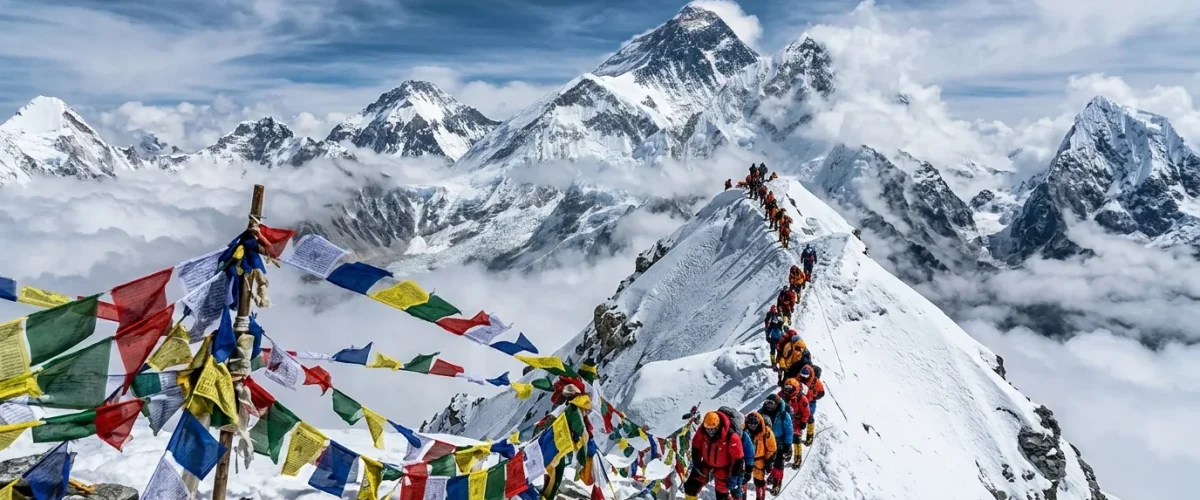
The spring 2026 Everest climbing season is shaping up to be one of the most consequential in the mountain’s history. China has closed the northern route entirely, Nepal has introduced strict new regulations, and a growing cohort of Indian climbers is attempting the world’s highest peak amid questions about ethics, sustainability, and the commercialisation of altitude. Here is a comprehensive look at what is happening on Everest — and across India’s mountain landscape — this April.
Everest 2026: North Side Closed
In an unprecedented decision, the China Tibet Mountaineering Association (CTMA) announced in March 2026 that the north-side route (from Tibet) to Everest will be completely closed for the spring season. The closure is attributed to ongoing environmental remediation work near Advanced Base Camp and the Chinese government’s broader effort to limit overcrowding on the mountain. The north side has historically attracted climbers seeking to avoid Nepal’s permit fees and the dangers of the Khumbu Icefall on the south-side approach.
With the northern route shut, all commercial traffic this spring is funnelling through Nepal — and Nepal is ready. The Icefall Doctors, the elite Sherpa team responsible for fixing ropes and ladders through the treacherous Khumbu Icefall, arrived at Base Camp in late March and began preparing the route to Camp 2 in the Western Cwm. The Nepali government has issued over 400 permits for the spring season, each costing $11,000 per climber — a record number that reflects both the mountain’s enduring allure and the concentration effect of the northern closure.
New Nepal Regulations
Nepal has introduced several new rules for the 2026 season in response to years of criticism about safety, littering, and the deaths of inadequately prepared climbers:
- Mandatory GPS Tracking: Every climber must carry a satellite-linked GPS device that transmits their location in real time. This allows rescue coordinators to deploy helicopters more quickly in emergencies and gives families live updates on their loved ones’ progress.
- Garbage Deposit: Each expedition must deposit $4,000 per member, refundable only when they bring down a specified weight of waste. Previous seasons saw tonnes of oxygen bottles, tents, and food packaging left on the mountain.
- Health Certificate: Climbers must provide a medical fitness certificate from an approved physician, including a cardiac stress test and a pulmonary function evaluation. The rule is aimed at reducing deaths among under-prepared trekkers who sign up with budget operators.
Indian Climbers on Everest
India has a strong and growing presence in high-altitude mountaineering. Among the Indian climbers attempting Everest this spring is Saanika Shah, a young mountaineer from Mumbai who announced her expedition in February 2026 and has been documenting her training, mindset, and preparation on YouTube. Shah’s expedition is notable not just for her personal ambition but for the visibility it brings to female mountaineering in India — a space still dominated by men.
Several Indian Army and ITBP (Indo-Tibetan Border Police) teams are also on the mountain this season, continuing a tradition that dates back to the first Indian ascent in 1965 by Nawang Gombu. India’s National Mountaineering Foundation reports that the number of Indian Everest applicants has tripled since 2019, driven by social media inspiration, improved economic conditions, and a cultural shift that values experiential achievement alongside traditional career success. This dovetails with the broader Himalayan adventure tourism boom that is transforming mountain economies across Uttarakhand, Himachal Pradesh, and Sikkim.
Rhododendron Season: Spring’s Other Mountain Spectacle
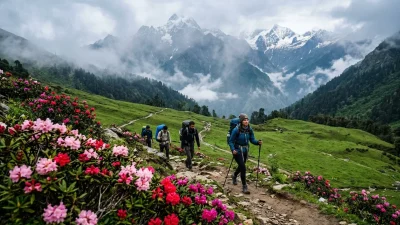
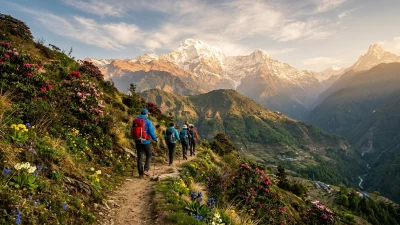
While Everest dominates headlines, the more accessible story for most Indian mountain enthusiasts is the rhododendron bloom. Spring in the Himalayas — March through April — paints the hillsides in electric reds, pinks, and whites as rhododendron forests burst into flower at elevations between 2,500 and 4,000 metres. The Sino-Indian Himalayas are home to the world’s greatest diversity of rhododendron species, and trekking through them is one of the most visually spectacular experiences the Indian outdoors can offer.
Popular rhododendron treks include the Ranthan Kharak trek in Uttarakhand, the Barsey Rhododendron Sanctuary trek in Sikkim, and the Chopta-Tungnath trail that passes through dense rhododendron forests en route to the world’s highest Shiva temple. Indiahikes, one of the country’s largest trek-organising platforms, reports that spring 2026 bookings are up 35 per cent over the previous year.
Hill Station Overcrowding: A Growing Crisis
India’s hill stations — Shimla, Manali, Mussoorie, Nainital — are buckling under the weight of tourist numbers that far exceed their carrying capacity. Traffic jams stretching kilometres, water shortages, and garbage-strewn trails have become annual summer features. Uttarakhand officials have noted that since mid-March, close to 1.9 lakh tourists have already visited Mussoorie alone, placing enormous strain on the town’s century-old water system and narrow roads.
The problem is structural: India’s mountain destinations were designed as small-scale colonial retreats for a few thousand visitors. They now receive millions annually. Proposals for visitor caps, congestion pricing, and shuttle systems (modelled on European mountain resorts) have been discussed for years but face political resistance — tourism is the economic lifeblood of these communities. The Char Dham Yatra corridor, which opened this week for the 2026 pilgrimage season, will add significant additional traffic to Uttarakhand’s already strained infrastructure.
Climate Change and the Mountains
Underpinning all of these developments is the accelerating impact of climate change on the Himalayas. Glacial retreat, erratic snowfall, and increasingly frequent extreme weather events (cloudbursts, flash floods, landslides) are altering the mountain landscape in real time. The Everest region itself has seen measurable thinning of the Khumbu Glacier, and mountain guides report that crevasse patterns are changing in ways that make established routes less predictable.
For India, which depends on Himalayan glacial meltwater for rivers that sustain 600 million people, the stakes could not be higher. The intersection of adventure tourism and environmental sustainability is no longer a niche concern — it is central to the future of India’s mountains.
Planning Your Mountain Adventure
Whether you are eyeing Everest or a weekend rhododendron trek, spring 2026 is a remarkable time to be in the mountains. Plan early, respect the environment, and support local communities — the mountains give us everything, and they ask only that we tread lightly in return.
Find trekking guides, destination reviews, and adventure news on Mountains at Daily Tips.

- India’s Startup Funding Crosses $7.2 Billion in H1 2026 - July 1, 2026
- After Ireland Shock, India’s T20I Side Faces Bigger Test - July 1, 2026
- Ireland Stun World Champions India 2-0 in Belfast, Sooryavanshi Debate Rages On - June 29, 2026