India Reservoirs Fall Below 45 Per Cent Capacity as Central Water Commission Warns of Deepening Summer Crisis


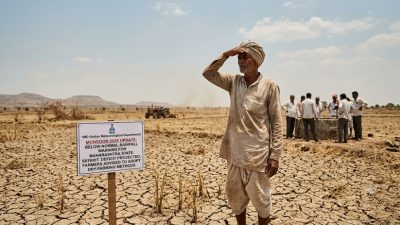
Water levels in India’s major reservoirs have fallen below 45 per cent of total live storage capacity, according to the latest data from the Central Water Commission released on 11 April 2026. The CWC, which monitors 166 reservoirs across 20 river basins, has flagged a sharp decline that raises serious concerns about water availability during the peak summer months. Several reservoirs have reached critically low or zero levels, with southern and western India experiencing the steepest drops.
Scale of the Decline
The 166 reservoirs tracked by the CWC hold a combined live storage capacity of 183.565 billion cubic metres, which accounts for approximately 71.2 per cent of India’s estimated total reservoir capacity of 257.812 billion cubic metres. Current water levels across these reservoirs have dropped below the 45 per cent mark, with most of the country’s 20 river basins now operating between 30 and 60 per cent of capacity.
The decline is not uniform. Northern basins fed by Himalayan snowmelt, including the Indus, Ganga, and Brahmaputra systems, are in relatively better condition, though still below optimal levels. In contrast, river basins in peninsular India, particularly the Krishna, Cauvery, Godavari, and Narmada systems, have experienced more severe drawdowns. In Bihar, the Chandan dam has run completely dry, illustrating the extreme nature of the situation in certain pockets. The broader environmental challenges facing India in 2026 extend well beyond reservoir levels to include temperature extremes and ecological disruption.
Southern India Faces the Steepest Drop
Southern India has emerged as the most water-stressed region in the current cycle. The Cauvery basin, which serves Karnataka and Tamil Nadu, is operating at critically low levels ahead of what is expected to be a particularly hot summer. The Krishna basin, shared by Maharashtra, Karnataka, Telangana, and Andhra Pradesh, is similarly depleted. The Godavari basin, one of India’s largest, shows levels that are below the 10-year average for this time of year.
The situation in Tamil Nadu is especially concerning. The Mettur Dam, a critical source of irrigation water for the delta region, has been steadily declining since the end of the northeast monsoon in December. With summer temperatures already pushing past 40 degrees Celsius in parts of the state, the pressure on available water resources is intensifying. The India Meteorological Department has issued heatwave alerts across several southern and central states, compounding the water stress.
Causes of the Accelerated Decline
Several factors have contributed to the current reservoir crisis. The 2025 southwest monsoon, while adequate at the national level, was unevenly distributed. Several southern states received below-average rainfall, resulting in lower-than-expected reservoir replenishment. The northeast monsoon, which is critical for Tamil Nadu, Andhra Pradesh, and parts of Karnataka, also underperformed in its later stages.
Rising temperatures have accelerated evaporation losses from open reservoirs. Studies by the Indian Institute of Tropical Meteorology indicate that surface evaporation rates from major reservoirs have increased by 5 to 8 per cent over the past decade, a trend linked to broader climate warming patterns. This means that even with normal inflows, reservoirs are losing more water to the atmosphere than in previous decades.
Agricultural water demand has also intensified. The rabi crop season, which runs from October to March, draws heavily on reservoir storage for irrigation in states that lack extensive canal networks. With wheat, mustard, and gram cultivation expanding to meet growing food demand, the pressure on stored water has increased year on year.
Groundwater Depletion Adds to the Crisis
India’s water crisis extends beyond surface reservoirs. The Annual Ground Water Quality Report 2024, published by the Central Ground Water Board, revealed that the average stage of groundwater extraction across India stands at 60.4 per cent. In several states, including Punjab, Haryana, Rajasthan, and Tamil Nadu, extraction rates exceed 100 per cent of annual recharge, meaning groundwater tables are falling faster than they can naturally replenish.
India holds approximately 4 per cent of the world’s freshwater resources while supporting 18 per cent of its population. The World Bank has classified India as one of the most water-stressed countries globally, and projections suggest that many parts of the country could face severe water scarcity by 2040 if current trends in demand growth, management inefficiency, and climate change continue unchecked.
Urban Water Stress and the Summer Outlook
Major cities are already feeling the impact. Bengaluru, Chennai, Hyderabad, and Pune have implemented water rationing measures or reduced supply schedules as reservoir levels decline. In Bengaluru, the Cauvery water supply has been curtailed, forcing residents and businesses to rely increasingly on private tankers and borewells. Chennai, which experienced a devastating water crisis in 2019, has activated its desalination plants at full capacity to supplement supply.
The India Meteorological Department’s long-range forecast for the 2026 summer season predicts above-normal temperatures across most of peninsular India, which will further strain water availability. The southwest monsoon onset is expected in early June, meaning the gap between current reservoir levels and the arrival of fresh rainfall is approximately six to eight weeks, a period during which demand will peak. Scientists tracking the impact of rising temperatures on India’s ecosystems note that the water crisis affects not just human populations but also wildlife and agriculture.
Government Response and Policy Measures
The central government has directed state administrations to implement water conservation measures and prioritise drinking water supply over agricultural and industrial use during the crisis period. The Jal Shakti Ministry has activated its drought monitoring cell and is coordinating with state agencies to assess district-level water availability and plan tanker-based supply for the most affected areas.
Long-term solutions being pursued include the interlinking of rivers under the National River Linking Project, watershed management programmes under the MGNREGA scheme, and the promotion of micro-irrigation techniques that use 30 to 50 per cent less water than conventional flood irrigation. The broader scientific community continues to call for stronger policy interventions on water management.
A Crisis That Demands Urgent Attention
The fall in reservoir levels below 45 per cent of capacity in April, well before the hottest months of May and June, signals that India’s water management systems are under severe stress. Without significant rainfall in the pre-monsoon period or aggressive conservation measures, millions of Indians in both rural and urban areas could face acute water shortages in the coming weeks. The health implications of the summer heat combined with water scarcity make this a public health concern as much as an environmental one. The data from the CWC serves as a stark reminder that water security remains one of India’s most pressing and under-addressed challenges.

- Indian Army Gets New Chief as General Dwivedi Hands Over Command Amid Push for Indigenous Defence Tech - July 1, 2026
- Ayodhya Ram Temple Donation Scandal Deepens as Trustees Resign and SIT Arrests Eight - June 29, 2026
- Bengal Seven Weeks On: Modi’s Historic Win and the Questions That Won’t Go Away - June 28, 2026