Kerala Shatters Tourism Record in 2025 With 2.58 Crore Visitors — Idukki Emerges as Top Domestic Destination

Kerala, the southern Indian state known globally as ‘God’s Own Country,’ has shattered all previous tourism records by welcoming 2,58,80,365 tourists in 2025 — the highest-ever footfall in the state’s history. The figures, released by the Kerala Tourism Department in February 2026, represent a 12.5 per cent increase over the 2024 total of 2,29,85,363 visitors, confirming Kerala’s position as one of India’s most sought-after travel destinations.
The record-breaking year was driven primarily by a surge in domestic tourism. 2,50,58,366 domestic tourists visited Kerala in 2025, up from 2,22,46,989 in 2024 — a year-on-year increase of 12.6 per cent. International tourist arrivals also contributed to the growth, though at a more modest pace, reflecting the ongoing global trend of domestic travel outpacing international tourism in post-pandemic recovery patterns.
Idukki: The Surprise Champion
Perhaps the most striking finding in the 2025 tourism data was the emergence of Idukki as Kerala’s top domestic tourist destination, recording 46,79,800 visitors. The hill district, home to Munnar’s tea gardens, Thekkady’s Periyar Tiger Reserve, and the stunning Meesapulimala peak, has undergone a remarkable transformation from a quiet agricultural region to a tourism powerhouse.
Idukki’s rise can be attributed to several factors. The growing popularity of Munnar as a year-round destination for both domestic weekenders and international visitors has driven hotel construction and infrastructure development. Social media has played a significant role, with viral Instagram reels and YouTube vlogs showcasing Munnar’s misty landscapes, the Mattupetty Dam, and the Eravikulam National Park (home to the endangered Nilgiri tahr) generating enormous interest among younger Indian travellers.
Ernakulam, which includes the commercial city of Kochi and the historic Fort Kochi area, ranked second with 44,29,899 visitors. The port city’s combination of colonial architecture, the Kochi-Muziris Biennale (India’s largest contemporary art exhibition), and its role as a gateway to Kerala’s famous backwaters makes it a perennial favourite. Thiruvananthapuram, the state capital, recorded 43,75,846 visitors, while Thrissur — known for the spectacular Thrissur Pooram festival — also featured prominently in the top five.
Tourism Revenue and Economic Impact
Kerala’s tourism earnings have grown in tandem with visitor numbers. Total tourism earnings (direct and indirect) reached ₹45,053.61 crore in 2024, marking a 3.28 per cent increase from ₹43,621.22 crore in 2023. While 2025 revenue figures are yet to be officially released, the 12.5 per cent jump in visitor numbers strongly suggests that earnings for 2025 will substantially exceed the 2024 figure.
Direct domestic tourism earnings in 2024 stood at ₹28,446.78 crore, while direct foreign exchange earnings from international tourists were ₹6,631.02 crore — both representing increases over the previous year. The tourism sector is one of Kerala’s largest employers, supporting an estimated 15 lakh (1.5 million) direct and indirect jobs across hospitality, transport, food service, retail, and cultural sectors.
The economic significance of tourism to Kerala’s GDP cannot be overstated. The state government has identified tourism as a strategic sector for economic growth, investing in infrastructure development, marketing campaigns, and sustainable tourism initiatives designed to attract higher-spending visitors while managing the environmental impact of mass tourism.
What Is Driving the Boom?
Several structural factors underpin Kerala’s tourism surge. First, India’s broader domestic travel boom — fuelled by rising middle-class incomes, budget airline expansion, and a cultural shift towards experiential travel — has benefited Kerala disproportionately. The state’s well-maintained road network, high literacy rate (which translates into better service standards), and diverse offerings across beaches, hills, backwaters, wildlife, and culture make it an attractive all-in-one destination.
Second, Kerala’s brand positioning as ‘God’s Own Country’ remains one of the most successful destination marketing campaigns in Indian tourism history. The brand, managed by the Kerala Tourism Department with support from international advertising agencies, is instantly recognisable across India and in key international markets including the UK, Germany, France, and the Gulf countries.
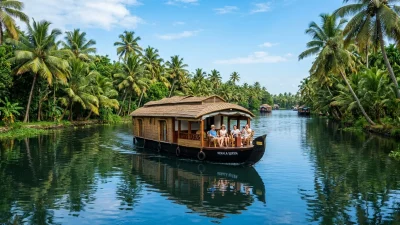
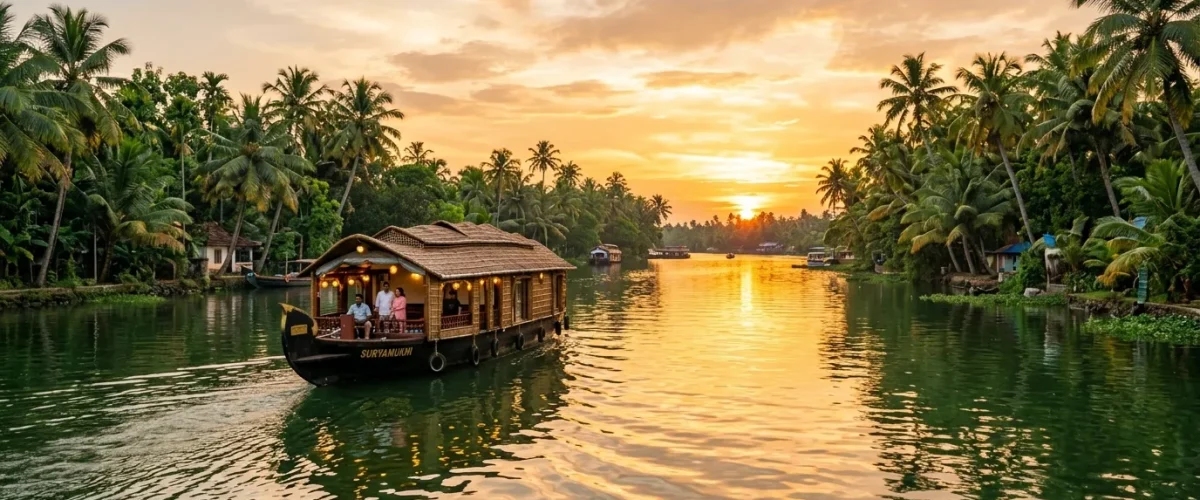
Third, the houseboat experience on Kerala’s backwaters — particularly in Alappuzha (Alleppey) and Kumarakom — continues to be a unique selling proposition that no other Indian state can replicate. The backwater network, which covers over 900 kilometres of interconnected canals, rivers, and lagoons, offers a tranquil, photogenic experience that has become a bucket-list item for Indian and international tourists alike.
Challenges: Sustainability and Over-Tourism
Kerala’s tourism success has not come without challenges. Popular destinations including Munnar, Fort Kochi, and the Alappuzha backwaters have experienced episodes of over-tourism, with traffic congestion, waste management issues, and strain on local resources. The 2024 Wayanad landslide, which devastated parts of the scenic hill district, also highlighted the vulnerability of Kerala’s tourism infrastructure to extreme weather events — a concern exacerbated by climate change.
The Kerala government has responded with a mix of regulatory and developmental measures. A ‘Responsible Tourism’ initiative, launched in partnership with the UN World Tourism Organization, encourages visitors to engage with local communities and minimise environmental impact. Daily visitor caps at certain ecologically sensitive sites, including Eravikulam National Park and the Athirappilly waterfalls, have been introduced to prevent overcrowding.
The broader environmental challenges facing India, including water scarcity and heatwaves, also affect Kerala’s tourism planning. The state’s monsoon season (June to September), once considered the off-season, has been rebranded as the ‘Ayurvedic season’ — promoting Kerala’s traditional wellness treatments as a unique monsoon offering.
Looking Ahead: 2026 and Beyond
With the 2025 record now in the books, Kerala Tourism has set ambitious targets for 2026 and beyond. The state aims to cross 3 crore (30 million) annual visitors by 2028, with a particular focus on increasing international arrivals and average spending per tourist. New circuit tourism packages, improved rail and air connectivity (including the expansion of Kochi’s international airport), and the development of emerging destinations like Wayanad, Vagamon, and Poovar are all part of the strategy.
For travellers planning a visit, the 2026 domestic tourism season is expected to be busier than ever. Advance booking is strongly recommended, particularly for peak periods including the December-January winter season and the post-monsoon October-November window. Whether it is the misty tea gardens of Munnar, the golden beaches of Kovalam, or the serene backwaters of Alappuzha, Kerala’s record-breaking 2025 is a clear signal that God’s Own Country has never been more popular — or more ready to welcome the world.

- India’s Startup Funding Crosses $7.2 Billion in H1 2026 - July 1, 2026
- After Ireland Shock, India’s T20I Side Faces Bigger Test - July 1, 2026
- Ireland Stun World Champions India 2-0 in Belfast, Sooryavanshi Debate Rages On - June 29, 2026