India Wheat Production Eyes New Record in 2025-26 as Rabi Harvest Progresses Despite Rising Summer Temperatures

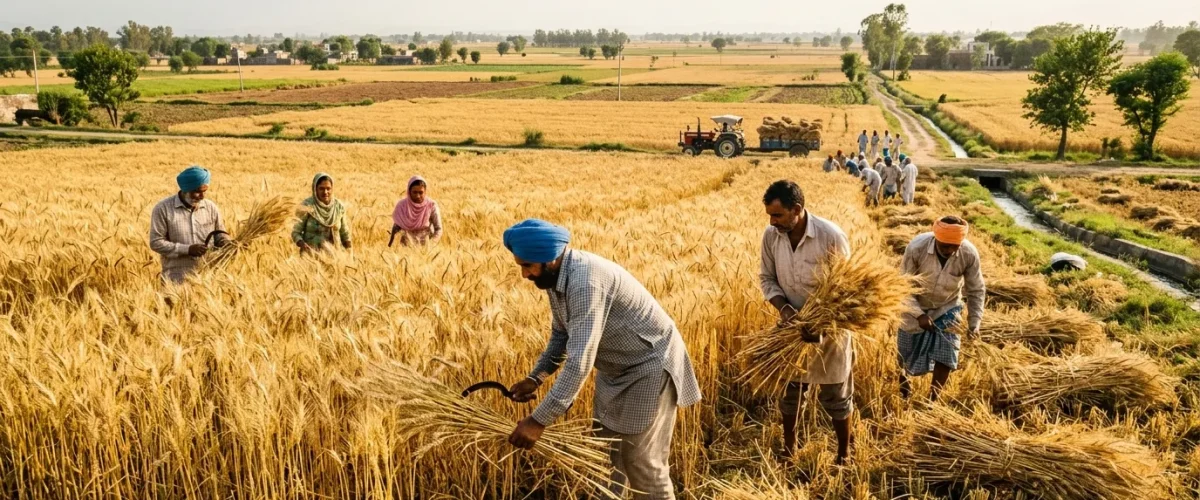
India’s rabi wheat harvest is progressing across the country’s major growing states in April 2026, with the government and agricultural experts projecting a record production year despite concerns over rising temperatures in the northern plains. The wheat crop, planted between October and December and harvested from March to May, is expected to surpass the previous year’s output, buoyed by favourable soil moisture conditions from a strong 2025 monsoon, increased minimum support prices, and expanded cultivation area.
Record Production Estimates for 2025-26
According to the Ministry of Agriculture and Farmers Welfare’s final estimates for Indian Crop Year 2024-25, India achieved record grain production of 357.7 million metric tonnes, including record harvests of rice, wheat, and corn. For the current 2025-26 crop year, early projections suggest that wheat production could approach or exceed 115 million metric tonnes, which would represent the country’s largest wheat harvest in history.
The United States Department of Agriculture’s Foreign Agricultural Service, in its latest Grain and Feed Update for India, noted that above-normal 2025 monsoon rainfall improved soil moisture and irrigation water availability in key wheat-growing states. These conditions, combined with the government’s increased minimum support price for wheat at Rs 25,850 per metric tonne for the 2025-26 season, up from Rs 24,250 in the previous year, encouraged farmers to expand the area under wheat cultivation. The Indian economy’s agricultural sector continues to be a critical pillar of rural livelihoods and national food security.
State-Level Harvest Progress
The wheat harvest is most advanced in the central Indian states of Madhya Pradesh and Rajasthan, where warmer temperatures accelerate crop maturity. In Madhya Pradesh, which has emerged as India’s largest wheat-producing state in recent years, procurement operations are already underway at government-designated mandis across the state. Rajasthan’s harvest is similarly progressing ahead of schedule.
In the traditional wheat belt of Punjab and Haryana, the harvest typically peaks in the second and third weeks of April. Reports from agricultural extension officers indicate that the crop standing in fields across these states looks healthy, with no significant pest or disease outbreaks recorded during the growing season. Uttar Pradesh, the most populous state and a major wheat producer, is also reporting satisfactory crop conditions, though the late-season heat has raised concerns about potential yield losses in some districts.
The Heatwave Threat to Wheat Quality and Yield
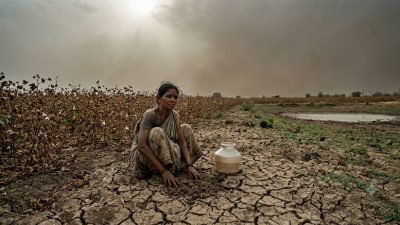
While overall production figures look promising, agricultural scientists have raised concerns about the impact of rising temperatures on wheat quality and yield during the critical grain-filling stage. Wheat is a temperature-sensitive crop, and exposure to sustained heat above 35 degrees Celsius during the final weeks before harvest can cause terminal heat stress, reducing grain size and weight.
The India Meteorological Department has issued heatwave warnings across several northern and central states during April 2026, with daytime temperatures in parts of Rajasthan, Gujarat, Madhya Pradesh, and eastern Uttar Pradesh exceeding 42 degrees Celsius. While the wheat crop in most areas has already matured sufficiently to withstand moderate heat, late-sown varieties in certain regions remain vulnerable. The broader pattern of early and intense heatwaves across India adds urgency to the harvest timeline.
Agricultural research institutions, including the Indian Council of Agricultural Research and the Indian Institute of Wheat and Barley Research in Karnal, have been developing heat-tolerant wheat varieties to mitigate the impact of rising temperatures. Several of these varieties are now in commercial cultivation across the northern plains, and early results suggest they perform 10 to 15 per cent better than conventional varieties under heat stress conditions.
Government Procurement and MSP Operations
The central government’s wheat procurement operation for 2026 is expected to be one of the largest in recent years. The Food Corporation of India and state procurement agencies have set a target of acquiring 30 to 35 million metric tonnes of wheat at the MSP of Rs 25,850 per metric tonne. This procurement is critical for replenishing the country’s strategic grain reserves and ensuring a stable supply for the Public Distribution System, which provides subsidised grain to over 800 million Indians.
Procurement centres have been established across the major wheat-growing states, with facilities for weighing, grading, and storing the grain. The government has also directed that payments to farmers be made within 72 hours of procurement, a measure aimed at preventing the delays and cash flow problems that have historically plagued the system.
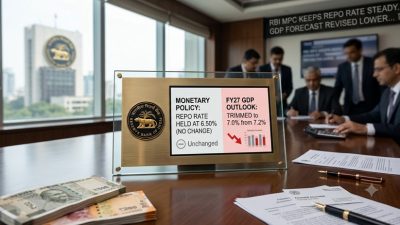
The increased MSP for wheat has been a point of debate. While farmer organisations have welcomed the higher price, economists have pointed out that the MSP increase could contribute to food inflation if retail wheat and flour prices rise in response. The Reserve Bank of India’s monetary policy stance takes food inflation into account when setting interest rates, creating a delicate balancing act between supporting farm incomes and managing consumer prices.
Wheat Exports and Global Market Context
India’s wheat export policy remains restrictive following the ban imposed in 2022 to protect domestic supplies. While occasional government-to-government exports have been permitted, commercial wheat exports remain largely prohibited. The global wheat market in 2026 is characterised by tight supplies due to weather-related production challenges in Russia, Ukraine, and Australia, which has kept international wheat prices elevated.
If India’s 2025-26 wheat harvest meets or exceeds expectations, there could be renewed calls to partially relax the export ban, particularly for processed wheat products such as flour and semolina. Such a move would benefit India’s food processing industry while helping to stabilise global wheat prices. However, any decision on exports will depend on the final production figures, the success of the government’s procurement operation, and the adequacy of the national grain stockpile.
Agricultural Technology and the Future of Indian Wheat
India’s wheat sector is increasingly adopting modern agricultural technologies to boost productivity and resilience. Precision agriculture techniques, including drone-based crop monitoring, satellite imagery for yield estimation, and sensor-based irrigation management, are being deployed across the wheat belt. The government’s Digital Agriculture Mission, launched in 2024, aims to bring data-driven farming practices to 10 million farmers by 2027.
The broader challenge for Indian agriculture remains clear: producing more food from less land and water in a warming climate. The 2025-26 wheat harvest, if it achieves the projected record, will demonstrate that India’s agricultural sector can still deliver strong results. But the narrowing margin between success and climate-driven losses underscores the need for continued investment in research, infrastructure, and farmer support systems. The India GDP growth forecast for 2026 depends in part on a strong agricultural performance to sustain rural demand and keep inflation in check.