India Faces First Major Heatwave of 2026 as Temperatures Cross 43°C Across Delhi, Rajasthan, and Madhya Pradesh


India is staring down the barrel of its most punishing heatwave season in recent memory. As of April 20, 2026, the India Meteorological Department (IMD) has issued heatwave and severe heatwave alerts for at least 10 states, with temperatures in parts of Delhi, Rajasthan, Uttar Pradesh, Madhya Pradesh, and Maharashtra crossing 43°C — a staggering 4 to 7 degrees above the seasonal average for mid-April. The culprit? A potent combination of El Niño conditions that have lingered since late 2025, reduced pre-monsoon moisture, and urban heat island effects that are turning India’s cities into furnaces.
This is not just a weather story — it’s a public health emergency, an economic crisis in the making, and a stark reminder that climate change is no longer a future threat for India. It is the present. For Environment, these developments represent the most urgent environmental challenge facing the nation this summer.
IMD’s Alarming Forecast: Where the Heat Is Worst
The IMD’s latest bulletin, issued on the morning of April 20, identifies western Madhya Pradesh, Vidarbha (eastern Maharashtra), and Chhattisgarh as the epicentres of the current heatwave, with severe heat conditions expected to persist until at least April 23. Eastern Uttar Pradesh, eastern Rajasthan, and eastern Madhya Pradesh are under heatwave alerts specifically for April 20-21.
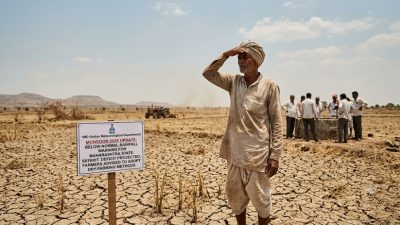
In Rajasthan, the desert city of Churu recorded 44.2°C on April 19 — the highest temperature anywhere in India so far this season. Delhi’s Safdarjung observatory, the official weather station for the capital, recorded 41.8°C on April 19, making it the earliest 40°C-plus reading in Delhi since 2022. Nagpur, in Maharashtra’s Vidarbha region, hit 43.5°C, prompting the Gondia district administration to take the extraordinary step of shutting down traffic signals during peak afternoon hours to prevent heat-related accidents.
The IMD has also warned that northwest India, including Delhi-NCR, Punjab, and Haryana, will see a gradual temperature escalation through April 25, with peak temperatures potentially reaching 45°C in isolated pockets of Rajasthan and western UP. Related: CSIR and IITs Lead India’s Push for Scientific Self-Reliance with
El Niño’s Lingering Shadow: Why 2026 Is Different
The 2025-26 El Niño event, which peaked in December 2025 with sea surface temperature anomalies of +1.8°C in the equatorial Pacific, has weakened but not dissipated. The IMD’s Climate Research and Services division confirmed on April 15 that “weak El Niño conditions” are likely to persist through June 2026, which has two critical implications for India.
First, El Niño typically suppresses pre-monsoon rainfall in India, reducing the moisture content in the atmosphere that normally provides some relief from spring heat. March 2026 saw 35 percent below-normal rainfall across India, according to IMD data. This means soil moisture is already depleted heading into summer. Second, El Niño events are historically associated with delayed monsoon onset in India. The IMD has projected the monsoon to arrive in Kerala by June 3, which is slightly later than the average date of June 1. For Science & Space, this means continued scrutiny of climate patterns and their impact on India’s environment.
However, even more concerning is the interaction between El Niño and long-term climate change. A study published in Nature Climate Change in February 2026, co-authored by researchers from IIT Delhi and the Potsdam Institute, found that heatwave intensity in India has increased by 0.5°C per decade since 2000, with El Niño years amplifying the effect by an additional 1.2°C. “What we’re seeing in April 2026 is not just El Niño — it’s El Niño superimposed on a warming baseline,” said Dr. Raghu Murtugudde of IIT Bombay.
Human Cost: Heat-Related Deaths, Hospital Surges, and Labour Impacts
India’s heatwaves are not just uncomfortable — they are deadly. The National Disaster Management Authority (NDMA) reported that heat-related deaths in India reached 3,245 in 2025, the highest on record, and 2026 is on pace to exceed that grim milestone. In the first three weeks of April alone, at least 47 suspected heat-related deaths have been reported across Uttar Pradesh, Bihar, Madhya Pradesh, and Maharashtra, though officials caution that the actual number is likely much higher due to underreporting.
Hospitals in affected regions are reporting sharp spikes in heat exhaustion and heatstroke cases. Safdarjung Hospital in Delhi admitted 312 patients with heat-related symptoms between April 10-19, a 60 percent increase over the same period last year. Outdoor workers — construction labourers, agricultural workers, street vendors, and delivery personnel — bear the brunt, as India lacks comprehensive national legislation mandating heat-hour work restrictions. As explored in Indian Scientists Discover New Fungal Species: Expanding Frontier, the intersection of environment and public health is becoming a critical policy frontier.
Urban Heat Islands: Why Cities Are Suffering More
India’s cities are experiencing temperatures 3-5°C higher than surrounding rural areas, a phenomenon known as the urban heat island (UHI) effect. A 2026 study by the Centre for Science and Environment (CSE) in Delhi found that the UHI effect in Delhi has intensified by 25 percent since 2015, driven by rapid concretization, loss of green cover, and increasing density of air-conditioned buildings (which pump heat outdoors).
The study found that areas like Connaught Place, Chandni Chowk, and South Extension in Delhi recorded surface temperatures up to 52°C during peak afternoon hours in April 2025, even when the ambient air temperature was ‘only’ 43°C. “The surface temperature is what matters for pedestrians, street workers, and children,” said CSE Director General Sunita Narain. “At 52°C, touching a metal railing can cause burns.”
Government Response: NDMA Guidelines and State-Level Actions
The NDMA activated its Heat Action Plan on April 1, earlier than the usual April 15 activation date, signalling awareness of the elevated risk. The plan mandates that state governments maintain cool-water stations at public locations, restrict outdoor construction work between 12 PM and 3 PM during heatwave alerts, issue colour-coded (yellow, orange, red) warnings through mobile phone alerts, and ensure hospitals stock oral rehydration salts and IV fluids. Coverage of related infrastructure developments: Bharatiya Antariksh Station: India’s Space Station Programme Take
Several states have gone further. Rajasthan declared a “heat emergency” on April 18, authorising district collectors to shut schools and restrict outdoor gatherings. Odisha, which lost 77 people to heatstroke in 2024, has deployed mobile medical units in 14 districts. Telangana mandated that all new commercial buildings must incorporate white or reflective roofing — a low-cost measure that can reduce indoor temperatures by 2-3°C.
Looking Ahead: May and June Could Be Worse
Climate scientists warn that the current heatwave is likely just the opening act. May and June — the peak pre-monsoon months — are expected to bring even more extreme temperatures, with the IMD’s seasonal outlook projecting above-normal temperatures across most of India through June 2026. The combination of El Niño persistence, below-normal pre-monsoon rainfall, and the long-term warming trend suggests that India may be heading into one of its most challenging summers on record.
For India’s 1.4 billion people, the message is urgent: the heatwave is here, it’s early, and it’s not going away soon. The actions taken by governments, employers, and individuals in the next eight weeks will determine whether 2026’s heat season is managed — or whether it becomes a catastrophe.